Search

Sam van Zweden

Writer

Teaser Tuesday

Teaser Tuesday is hosted by MizB at Should Be Reading.

  • Grab your current read.
  • Let the book fall open to a random page.
  • Share with us two (2) “teaser” sentences from that page.
  • You also need to share the title of the book that you’re getting your “teaser” from … that way people can have some great book recommendations if they like the teaser you’ve given!

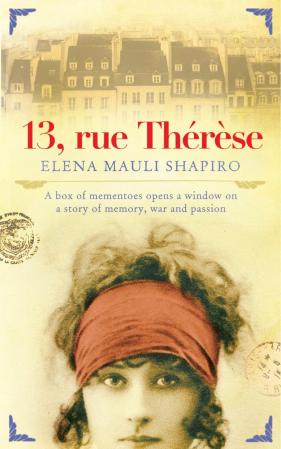
“The box is nothing extraordinary, though its contents have been known to induce fevers. At least, that is one of the effects it had on Josianne when it first came to her – perhaps she decided to pass on her gift as much from a need to get it away from herself as to share it with another.”
From Elena Mauli Shapiro’s 13, rue Therese, p3.

Lazy Sunday Reading

It’s not a lazy Sunday for me; it’s a sped-up Sunday. I’m doing everything I’d do on a lazy Sunday, but I got up earlier and am doing it all a bit faster because I have to work later.

Part of this is reading. I’m reading Martin Amis’ Yellow Dog, and am very very very close to finished, but I’ve also been catching up on my Google Reader feed.

Some highlights, to make your Sunday more enjoyable:

– Jo Case has written an insightful review of Battle Hymn of the Tiger Mother.
– Alec Patric at Verity La talks to Nathan Curnow about transferrable skill sets, whether these skill sets exist at all, and the ways in which novel writing resembles The Wizard of Oz.
– On the anniversary of the Black Saturday fires, Claire Zorn at Overland writes about bearing witness for the 173 lives lost that day.
– An interesting post on Virgule about their 2010 submission statistics. It makes me feel amazing for getting in there.
– Some big news for page seventeen, as editor Tiggy Johnson moves on. I owe a huge amount of thanks to page seventeen for accepting my first published short story, and Tiggy has been amazing, wonderful, supportive, and welcoming. I wish her the best of luck in whatever she moves onto next, and look forward to the reveal of the next page seventeen editor!

Enjoy!

A Voice: A Basic Human Right

“Young World, your work has the power to provoke movement from silence to empowerment, based in libratory pedagogy, and youth development. It democratizes a civic population of youth by giving them a platform to speak. Your elders in rhyme challenge you to find your own voice, to work hard to apply it, and to do so responsibly. If you’re not afraid of your own potential, we promise you that we won’t be. Hey, Young World, the word is yours…” (Marc Bamuthi Joseph, “(Yet Another) Letter to a Young Poet”)

Melbourne has no shortage of words – a UNESCO City of Literature since 2008, Melbourne is a dictionary, a thesaurus, a veritable fountain pen of words. A writing and reading hub, Melbourne’s poetry scene is particularly strong – while parts are firmly grounded in traditional forms, others are reflexive, vibrant, and fast. The recent explosion of dialogue between hip-hop and spoken word communities stands as proof of this.

The Wheeler Centre resides in the glorious prime real estate at the corner of Little Lonsdale and Swanston, and the city catches festival fever over some literary event or other right throughout the calendar, but words in our city tend generally to cater for the privileged – those who can afford books, workshops, tickets. Those with the cash can buy themselves a voice.

Words and their application are the crux of a slew of social problems and barriers. Policies, laws, rule books – they’re written with words. They dictate what you can and cannot do. They record and perpetuate people’s social standing and potential for upward mobility. They lay out the guidelines for how you’re treated. If you can’t access the words, you can’t access the rules, let alone change them. But, all things being true in their consequences, even if you can’t access the words, you’ll certainly know about what the words dictate for you. Things at a policy-level trickle down until everyday things like ordering a cup of coffee can be met by judgement.

With access to words comes a voice. A voice that is heard. With that voice comes agency, and the possibility for social change.

The recent launch of Melbourne not-for-profit organization the Centre for Poetics and Justice is a move to pull words down from their pedestals, making them accessible and useful for the people who need them the most. The driving forces behind the organization, Joel McKerrow (responsible for most of the ground work), Luka Haralampou and Bronwyn Lovell, are all admirable poets in their own right, known in Melbourne for their ability to move their listeners. The CPJ knocks down the walls between those who have the cash and connections to access words and all they have to offer, and those who don’t.

By running tailored workshops for minority and underprivileged communities, the CPJ hopes to arm its workshop participants with a voice, and a stage.

Having been disappointed by the “gaps in the community development industry”, founding member Luka Haralampou hopes that CPJ “bring[s] voices forward and support[s] the stories of all of the participants”. Moving away from the top-down teaching model that often proves largely unengaging, Luka says that CPJ aims for a two-way learning experience, with workshop facilitators’ attitude, “’teach us and we will help you make something beautiful from what is shared’”.

By running “cultural learning workshops” for facilitators before they enter each workshop, CPJ aims to run workshops which educate both facilitators and participants.  Participants work together with facilitators, “understanding and articulating their own lives and their social existence as well as developing their literary and artistic skills.”

The “gaps” that Luka has observed in previous efforts, he attributes to “poor administration and lack of cultural awareness many organisations were working with … and the damage poor processes can cause when development is attempted without quality consultations”. This, given that many organisations want to cater to everyone by ticking the ‘right’ boxes on grant applications, results in events that are often unorganised and unsure of their own genre or purpose.

Where other organisations (though certainly not all – Express Media, and SLV’s New Australia Media both genuinely cater for often ignored sectors) can be motivated by a need to doff their cap to being “inclusive”, the Centre for Poetics and Justice is undoubtedly moved by a genuine desire to empower, and acknowledgement of existing blind spots.

Melbourne’s general attitude toward new literary efforts is wondrously supportive – the opening event for the Wheeler Centre packed out the Melbourne Town Hall. Smaller regular poetry readings, such as Dogs Tails in St Kilda, or Passionate Tongues in Brunswick, seem to attract something of a sporadic crowd, but a supportive one – one which is often willing to give new voices space to be heard. Hopefully the respect that the founding members of CPJ have cultivated through their own careers (being performance poets, many-time slam finalists, representatives for Australia overseas, educators and interns) and the amount of support Melbourne has to give means that the poets who find their voices through CPJ workshops will be given the air time they deserve.

“Words are empowering,” says Luka, “because they articulate concepts. And concepts are powerful because they help us see from each other’s eyes. For underprivileged people to have the opportunity to articulate their thoughts in front of their peers and the wider community is one of the most empowering acts that can be performed. Especially when these thoughts are often ignored or considered unimportant by the majority. Without words and concepts we cannot begin to become each other’s keepers. We cannot share the gamut of experience that is this world and march forward towards mutual understanding and ultimately, peace.”

We are an active writing and publishing city, we are a vibrant sharing and learning city. And now, we are a stronger, more diverse, listening city which aims to correct its own imbalances through efforts like the Centre for Poetics and Justice.

Thanks heaps to Luka for taking the time to talk to me, and best of luck to the CPJ boys and girls with their project – it’s exciting stuff!
A Mind of Its Own

I’ve recently committed myself to 3 “morning pages” per day. For the 3 days that I’ve done these, they’ve mainly consisted of reflections about my writing, which has been helpful, and has also raised some questions.

Yesterday I found myself reflecting on a piece I planned to write based on the recent mouse plague in our kitchen. Having scribbled down some initial images, I was pondering where to take these ideas. A poem would lend itself well to the strong imagery I wanted to use. But, I also thought, perhaps our mice would do well in a short story too. In my morning pages I wrote something like, “I’m not sure yet what this piece wants to be.”

What it wants to be… It struck me as such a strange idea. To think of a story or poem as a separate being with a mind of its own. As a free-thinking agent.

Should a piece of writing be able to want anything? Does this kind of attitude make me a lazy writer? Shouldn’t I be wrangling my words in whatever way I want? If I sit back and let a story guide itself, it may have an internal logic, but will it be the best story or poem that it can be?

I don’t have an answer to these questions, but they’re things that my morning pages brought up for me today.

What do you think? Can stories or poems have a mind of their own? Should they?

Swim For Life

I grew up on Phillip Island. Chances are you’ve heard of it – you’ve seen it on a TV travel show, or you’ve been there.

While I’m now living in Melbourne, and loving it, I still have a soft spot for the Island. My mum and her partner live down there, as well as many friends and their families. I still get annoyed when I hear about a lack of resources there.

In 2008, the local hospital, Warley, shut down. My father worked there for some time, and I’ve had cause over the years for a few visits. To see the hospital sitting there, dead, is surreal and sad. This being the only hospital on the Island, there is now no other choice but to drive 30 minutes (an optimistic estimate) to Wonthaggi Hospital, or to be airlifted to Melbourne. For seriously injured people, as well as the elderly (which the Island is absolutely crawling with now), this isn’t good enough. It’s a really worrying situation.

A girl I grew up with, Amanda Drennan (paralympian and crazy awesome swimmer) will be swimming the entire circumference of Phillip Island (about 65k’s) in March to raise awareness of the issue, and money to fund a much-needed 24-hour medical facility.

Check out her website, there’s more information about Mandy and about the hospital situation. They will soon be open for donations, and this is so so important.

Please share this if you can. I really wish Mandy all the best with the project, and hope it leads to the resource that Phillip Island needs.

A Month Of Reading

A MONTH OF READING: JANUARY 2010:

Books Bought:
The Great Gatsby, by F Scott Fitzgerald

Books Borrowed/Received:
Library:
With Borges, by Alberto Manguel
Me Talk Pretty One Day, by David Sedaris

Books Read:
The Best Australian Stories 2010, edited by Cate Kennedy
The Crying of Lot 49, by Thomas Pynchon
Lullaby, by Chuck Palahniuk
With Borges, by Alberto Manguel
White Teeth, by Zadie Smith

Reading:
Yellow Dog, by Martin Amis
Poemcrazy, by Susan Goldsmith Wooldridge

Turn Around, Look Back

Messiah’s Blood

I want to cover you in
All the dirt that I can find
Wrap you in tiny places
Disguised in blood of your own kind.

Breathe deep,
and deep,
and deeper…
Unwind.

Your literary hair is dripping wet
Birthing tears from every strand
Criticise the stains –
Messiah’s blood on cripple’s hands.

Breathe deep,
and deep,
and deeper…
Expand.

Questioning

The last few weeks have contained more questions than I’ve had to ask in quite a while.

I’ve found myself a spot reviewing books for RMIT’s magazine “Catalyst”, which is incredibly exciting. It’s a really well-produced glossy thing, with an incredibly patient and helpful editor. The last few weeks have seen me drafting and re-drafting before submitting, then re-drafting and re-editing, re-working, re-submitting. My final submission was something I’m proud of. It was a hard task to review a whole collection in just 500 words, but I feel like I gave it a pretty good shot, and produced something I’ll be proud to see in print.

Writing reviews for print is new to me. As was raised in a comment on my last post, reviews for my blog are quite a bit different – they can be almost throw-away, conversational pieces full of half-baked impressions. I’m not entirely sure I’m happy with this difference, and want to move LGWABP toward a more permanent style of reviewing.

All this aside, the whole process of writing a review for print, to be put before an editor, made me realise how much I don’t know. I’ve sent out copious emails to various people in the last few weeks.

“Do I put ‘ed’, or ‘edited by’?”
“What’s conventional to include at the top of a review?”
“Invert the paragraph? What does that mean?”
“What’s a word for overly comprehensive, in a negative way?” (This question did get a pretty fantastic reply in the form of a metaphor about an obsessive lepidopterist whose rampant cataloging robs his obsession of beauty… Unfortunately that didn’t make it into the review, but by far the best answer possible to such a question. Thanks, Tully!)
“Can I have a random subjective paragraph in here?”
“How academic does this need to be?”
“Do I italicise the title, or put it in inverted commas?”

Even though I’ve been reviewing books for ages now, both for TV and for my blog, there’s so much I still need help with.

Somehow this gets me excited – I’m actively seeking out things I don’t really know how to do. Forcing myself out of my comfort zone. Getting stuff done.

I’ve got a similar project coming up – I’m writing an article about a new local not-for-profit organisation, which I’ve never done before, nor anything like it… But I know I’ve got plenty of people to ask when I run into questions, and that I’ll be learning and expanding my skill set. Wish me luck!


A question to the floor: this new gig with Catalyst means that more than ever I’m keen on keeping abreast of new-release books, preferably before they’re released. So my current question is, how do I do that? Do I just need to keep tabs on publishers’ websites, or is there somewhere that brings all publishers together and talks about future releases from everywhere?


The BAS review will appear in RMIT’s Catalyst, which comes out on the 14th of February.

Reviewing: The Problem of the Accidental Steal

I’ve recently finished reading “The Best Australian Stories 2010”. I’m reviewing it for publication, so I have pages and pages full of notes. I feel awkward scribbling in the margins of reviewing books, though it does sound like a more effective strategy. There’s something about defacing books I own that I just can’t come to terms with.

I plan on sitting down tomorrow, when everything’s had a few days to percolate, and making sense of those notes. In the mean time though, many other people who bought the book recently are finishing it too. I exchanged impressions with Alec Patric yesterday, which I found helpful in expressing some of my ideas about the stories. I talked to another friend last night about what I’d expected from certain authors in the collection and what I hope for them in future. Talking to people helps me get my ideas straight before I start writing.

However, I feel a little hesitant to read printed reviews. I have ideas about what I liked and didn’t, and suspicions as to why, but overall I’m still a baby reviewer and at times I feel like I don’t have the literary knowledge to say things with conviction in case someone tells me I’m wrong.

This morning in my Google Reader feed appeared Claire Zorn’s review of the collection on the Overland website.

The uncertainty of my own authority mentioned above means that I’m torn as to whether or not I should read this review. Overland – that’s got some heft. Good writing, authoritative voices, established opinions.

I have two options. I can ignore the review until I’ve written my own, insuring that my ideas are all mine. Or I can read the review and risk an “accidental steal”.

You know the ones. You’re reading a lot of Jane Austen, and somehow her language starts showing up in your own writing. You’re listening to a lot of hip-hop and you accidentally end a sentence with “yo”. It’s not done on purpose, but things influence you. The external worms its way in. Especially really good things – it’s natural.

I see connecting themes in the collection, and I think I’ve nutted out stylistic approaches, strengths of the stories. I have a half-baked review in my head. Claire’s review is sitting in my Google Reader feed, but I can’t decide whether I should read it yet or not, lest my review echoes hers too much.

I wonder if you’ll be able to tell from my own review whether I decided to read it or not?

Blog at WordPress.com.

Up ↑