Search

Sam van Zweden

Writer

The Daily Review and Getting Paid to Write

Image
Photo via Flickr Creative Commons, doug88888

Today’s big news in the writing world is the Crikey bloggers’ open letter about non-payment of The Daily Review writers. The issue first got attention when Andrew Stafford published a piece with mUmBRELLA explaining why he had turned down an offer to write for The Daily Review – in short, it’s because they wouldn’t pay him, even though they can afford to. This morning three writers who blog for Crikey (Bethanie Blanchard, Byron Bache and Laurence Barber) published an open letter calling for freelancers to take the same stand that Stafford did, and refuse to write for The Daily Review for free. The publication can afford to pay its other staff, the letter states, but allows no budget (that’s $0) to commission work from writers.

My first published piece didn’t pay. Neither did the second one, or the third. To be honest, it’s only recently, almost four years after that initial publication, that I’ve actually started to think about payment for my work as an issue. The first few times I got paid, I felt very lucky – people wanted to publish my work and pay me for it?! Too many good things at once! Sometimes I still get that feeling.

Now that it is something that I think about, I feel like I’ve got a fairly considered view on it, though as I grow as a writer, my personal ‘policy’ on it is constantly refined. It’s a difficult issue, and one with so many nuances. I’ll attempt to tease some of it out here, acknowledging that there’s a lot to be said, and this is only my tiny contribution to a very long and ongoing larger discussion.

I agree with what the Crikey writers have done. I admire it. It takes a lot of guts to stand for something, especially when that involves standing up to people who employ you. There’s something at risk for these writers in telling the world that they think something is wrong here, and I can’t applaud that enough.

There’s been a heap of responses all over the internet today, and they’re fantastic too. This conversation is vibrant and impassioned, and we can all only hope that it’s the push that this argument needs to be paid some heed – by CEOs and chairs and boards and the people who create budgets.

Elmo Keep makes a great argument here. She simplifies what’s going on, and in doing so makes it sound ridiculous. Because it is:

“… working for free on behalf of someone else, in order to grow that person’s business. And you will not see a cent.”

For the case in point, this is spot-on. People are being asked to donate their significant skills to a for-profit business, and this is why it’s unbelievable. It’s kind of easy to look at the evidence and the argument and call it ridiculous.

What’s hard is the practice of saying no. For already-established writers with firm footholds, it’s relatively easy to refuse work without pay. For writers who are new to the game and desperate for publication, sometimes money isn’t a consideration. Getting work out trumps getting paid for it.

I’m okay with emerging writers working for varying levels of payment, provided it’s fair. I’ve written before about some of the many exceptions to getting paid in money, and things that I’ve done without pay that I’m comfortable to have done in order to learn and get experience under my belt. Often payment has been in forms that aren’t monetary – editorial patience and attention, learning opportunities. With each publication, I have taken the time to consider and weigh it up – if I’m not being paid in dollars, what am I being paid in? There’s always been something, even if it’s just the good feeling of helping a friend get their new publication off the ground.

That’s not the issue at hand here, though. The problem is with publications who have sufficient money behind them to pay their writers, but elect not to.

‘Fairness’ as a rule applies to everyone: whether it’s a zine or a major national or international website. Can you afford to pay your writers? Then do it.

The demand for there to be a blanket rate of payment across the industry is probably impractical. Smaller and younger publications can’t afford to pay their writers hundreds of dollars for work. What’s fair is to pay writers what can be afforded.

I’m proud to say that over at Writers Bloc, we pay our writers. It’s often a really small amount. It could be as little as $15 (this is what we pay for a review). We’re transparent about this. When I started this job, founding editor Geoff and I did a bit of talking about the issue and agreed that it’s important to tell writers that their work is worth money. They deserve to be financially rewarded for the time, heart, and skill that goes into their writing. I have to tip my hat here to Daniel Young (founding editor of Tincture Journal), who has made it clear that this model works. This is what we can afford to do, and so we do it.

I’m posting these thoughts because I support what the Crikey bloggers and Andrew Stafford have done to draw attention to this issue. I’m posting these thoughts because I want to call for fairness, too.

There are so many good, kind, and fair people in this industry. Be one of them.

The Tools That Save My Life Pt II

Image

A while back I made a post about the tools that save my life. In it, I talked about the useful tools which help me work efficiently. We’re all busy people. We all need bits and bobs that make our hectic lives easier to handle. And in this world of apps and websites and programs and shares, and being the organization geek that I am, I’m always trying to implement new systems.

Introducing:

Coffitivity
I’ve long known that it’s impossible to work in silence. The more silent my writing space is, the louder it gets. My head takes over, criticising every word I write, until I can no longer put anything down on the page. This is lessened a little by handwriting, possibly because the motor skill of writing by hand is somehow (whyyy?!) less automatic than typing. But either way, I can’t work in silence.

Coffitivity is the answer. It’s a nifty website that plays café sounds in the background while you work. You know the cliché of writers in cafes not writing, just pretending? If you’re an actual writer, I imagine this image makes you a bit squeamish. And so Coffitivity will allow you to take the useful noise levels home with you. If it’s the act of getting out of your house that helps… Sorry. I can’t help you with that one. Maybe on the next post.

This has really solved the problem of working when my boyfriend’s home too. He watches TV loudly, and I can no longer work…unless I put headphones in and Coffitivity my way through!

Nature Sounds
You’re on the tram, and there’s a bogan on the phone screaming about last Friday’s rager. You don’t care; you’re trying to concentrate on your book. Reading at the tram stop you got into a fantastic scene, but now Bogan Lady’s screaming in your ear and it’s a bit hard to concentrate. Other commuters are wearing headphones to block her out, but they’re just staring out the window. Listening to music while reading might be hard for you, because taking in two different streams of words is confusing and not helpful for concentration.

So? Nature Sounds! There’s chirping birds and whatnot, which are as bad as music. But I like to listen to heavy rain or waterfalls. It allows me to focus on my book, and turn an otherwise kind of pissed-off tram ride into reading time.

For more information about ambient noise, how it works, and other programs you can use, try here. Seriously, it’s changed things for me.

Evernote
I have so many problems that are solved by Evernote, and only one that isn’t.

Evernote is a digital folder. It allows you to take notes, and organize them. You can categorize into ‘notebooks’, and order and view your notes however is most useful for you. You can tag your notes for easy finding later.

In motion: I have a Writers Bloc notebook, which contains a note with logins, a note with a to-do list, a note with contacts, a note with a blog schedule, a note with payment details, etc etc. I have a Quotes notebook, in which I log any quotes I want to save. I tag them, so that when I remember a vague “thing” later that I’d like to use somehow, I can just look it up.

Evernote does not contain a calendar. For my blog schedules, I just type out dates and separate weeks by dividers. So it’s not impossible, it’s just not TOTALLY streamlined.

What IS streamlined is multi-platform use. I use this on my phone and my laptop, and it syncs constantly so that all my content is always up to date.

Windows Live Mail
I have a big problem with push notifications. They’re great, because I have everything with me all the time!

But they also mean that I have everything with me all the time.

There’s no switching off from work, because it’s all mixed up with the things that aren’t work. Pushing all my emails means also pushing work mail. Until Windows Live Mail! This is probably too specific to my circumstances to be useful, but I’m sharing it anyway.

The majority of my Writers Bloc email now goes through a separate mail account, which goes through a separate email client, which I can turn notifications OFF – on my computer I need to open a separate program to access it, and on my phone I’ve usually got the notifications off so that I don’t get alerts when an email’s there. I don’t feel compelled to do everything NOW because I don’t know it exists now, and that’s really the best thing for me.


What organization and efficiency tools save your life?

Review: Every Love Story is a Ghost Story

Any biography of David Foster Wallace is inevitably going to be a bit uncomfortable and problematic. From all reports, DFW was not someone who revelled in being in the limelight. He disliked the spectacle of The Writer as separate to the person who actually exists, and writes. The Writer as commodity.

In his 2004 essay Borges on the Couch, Wallace talks about the “unhappy paradox” of literary biographies:

“The majority of readers who will be interested in a writer’s bio … will be admirers of the writer’s work. They will therefore usually be idealizers of that writer and perpetrators (consciously or not) of the intentional fallacy. Part of the appeal of the writer’s work for these fans will be the distinctive stamp of that writer’s personality, predilections, style, particular tics and obsessions – the sense that these stories were written by this author and could have been done by no other. And yet it often seems that the person we encounter in the literary biography could not possibly have written the works we admire. And the more intimate and thorough the bio, the stronger this feeling usually is.”

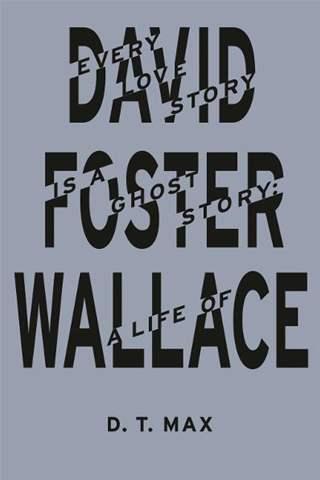
every-love-story-is-a-ghost-storyAccording to Wallace, in literary biographies the spectacle and the actual writer clash, and this is confronting for readers. I’d like to know what Wallace would have said about DT Max’s Every Love Story is a Ghost Story: A Life of David Foster Wallace.

The book seems thoroughly researched – lots of single-line quotes from important figures in DFW’s life, and extracts from letters and journals. Lots of anecdotes from publishers and students. There’s a lot of ‘behind the book’ type reveals, matching up what was happening in DFW’s life when a certain piece of work was taking shape or being published.

Some of the material Max uncovered in his research is truly gorgeous and insightful – my favourite little grab was a note Wallace made about what perfect balance would look like in his life:

What Balance Would Look Like:
2-3 hours a days in writing
Up at 8-9
Only a couple late nights a week
Daily exercise
Minimum time spent teaching
2 nights/week spent with other friends
5 [recovery meetings a] week
Church”

It gave me insight to what DFW wanted, and it made me think a lot about my own priorities.

The majority of Max’s focus, however, is on Wallace’s mental health. We follow his hospital visits, his time in rehab, his unstable relationships, his time on and off medications. While this kind of information is interesting to a certain point, and not something that can be left out of DFW’s biography, it’s also only part of Wallace’s life.

In the preface of his biography of David Foster Wallace, DT Max talks about the way that DFW fans “read their own lives in Wallace’s. They identify with his genius, his depression, his anxiety, his loneliness, his frustrations, his early success, his amazement that the world isn’t gentler, and his upset at how hard it is to say what you mean. They know or intuit his struggles. They talk about how hard he worked to stay sane and happy in a difficult world.”

While perhaps some people do feel an affinity with Wallace’s struggle (there was lots of “Mmm, what would I do in that situation?”), it is reductive and beside-the-point to be raising him up as the poster boy for mental illness and tortured artists. For me, it’s the parts of DFW’s life that I can’t relate to that make him such an admirable figure. He overcame his struggles and turned them into useful things. He was prolific and so.fucking.clever.

The hype around David Foster Wallace chucks his amazing work to the side and is overly preoccupied with that “staying sane and happy in a difficult world” hero. I don’t want to diminish his struggle, but I also want to say that we all have our stuff, and none of us are as clever or useful about it as DFW was.

Good Old Neon was the first DFW story I read, and I was struck by how wonderfully he could communicate human isolation (paradox alert). In it, the narrator speaks at length about how impossible it is to truly understand anyone because we can’t get inside anyone else’s head. This is a part of being human that just cannot be overcome. We’re doomed to aloneness and an inability to ever connect in a real way. Wallace did his best to write about this difficulty, and while the problem is ultimately a bind with no way out, he still wrote something beautiful about it, and publishing that work was the best he could do towards bridging the divide. Instead of sitting on his hands and bemoaning this fact (as most of us more inclined to do), Wallace used it.

By writing a biography whose major focus is on how tortured the artist was, DT Max’s Every Love Story … seems to function mainly to feed the spectacle. It lacks heart.

The subtitle may be telling – A Life of David Foster Wallace. A life. Just one possible life of the many lives – perhaps this is Max’s way of saying that he’s aware that this biography is narrow-minded. In reading the book though, it seems to imply that DFW’s work was the mental illness, and that the mental illness was the work.

In reading Every Love Story…, I can’t say that I felt confronted by the dissonance that DFW talks about in literary biographies. So much of the DFW mythos is about the tortured artist stuff anyway – for a writer who committed suicide, perhaps it’s inescapable. I mainly felt sad that DT Max hadn’t tried to do anything new with the material. Instead, he bought into the spectacle and reduced all David Foster Wallace’s work to his mental health or illness.

God forbid that should happen to any of us.

Monday Mix Tape: The NaNo Mix

I’ve just been writing about NaNoWriMo for Writers Bloc, and the general excitement of more than 150,000 writers putting down 50,000 words each in a month is kind of getting to me.

So, today’s mix tape is a handful of songs about the act of writing.

Paperback wriiiiiterrrrr! Classic. The other day this song started playing over the shopping centre speakers the second I stepped into the centre. They knew I was there… Despite my never having written a paperback, per se.

It’s just the one line, but god it captures the feeling. “A white blank page, and a swelling rage” – I know this feeling. And Marcus Mumford in a book store! Who needs porn?

Yeahhhh, I know, a lot of people find her whiny. But I think she’s elfin and gorgeous. This one’s all about writing, and not being able to write, and thinking you’re able to write and then ending up with a heap of nonsense.

Ah, writer’s block. “Send that stuff on down to me” – please!


What are your favourite songs about writing?

Appearances in Places

Today’s the first day of content for me as Online Editor of the fabulous Writers Bloc. My first post has gone up, and it includes an honest portrait of the disarray that is my writing desk. If you’ve ever wondered – wonder no more! A big thanks to the website’s founding editor and creator, Geoff Orton, for having faith in me and my work, and giving me this role. These are exciting times! And fear not, you’ll still be hearing from me here.

Image

Also just a quick reminder that I’ve got a feature and a whole-page review in the latest edition of The Big Issue. It’s still available from your local vendor until this Thursday, so keep an eye out. The review is of Elizabeth Gilbert’s latest, a tome titled The Signature of All Things. I had fun with the extra word allowance, stretching my legs after the frustrating brevity of the usual TBI reviews.

The feature is about the advice that my dad, a chef, handed down to me that “What’s said in the kitchen stays in the kitchen”. As the article explains, it’s solid advice that is applicable far beyond the literal kitchen.

On Being It

I’m back in town, and back in business. Tasmania was beautiful, the seafood and cheese were fantastic (Tassie must be sad for vegans), the landscape was lovely, and the time “away from it all” was particularly divine.

There’s a certain amount of post-holiday anti-climax that happens to everyone after being away – even on a small scale. This is why Mondays are so rough for Monday-Friday workers. Returning to a very full inbox and feeling pretty overwhelmed, I turned to Big Emotional Music for solace.

For a while, this made it worse. Album of choice was The Avett Brothers’ “Emotionalism”, and I’d just started formulating a new rule about Not Listening to Music About Feels When You’re Already Buried In Them, when a different song came on and helped. The Avett Brothers’ “Head Full of Doubt”.

While most of the song isn’t the most cheerful thing ever, one particular line jumped out at me.

Decide what to be, and go be it.

This is the key, in a number of ways. There’s that adage that you are what you repeatedly do – your actions define you. I try to decide, in every action, that I’m honest, compassionate, creative, curious. I try to show up to my work. The “Head Full of Doubt” lyric is urging you to make a link between what you’d like, and your actual life. I love this line because it doesn’t put up with that nonsense of, “I’ll be one day” (I’ll be a writer when I graduate). Bullshit you will, go do it now.

It also occurred to me that writers are lucky in this sense. Other careers seem (at least to me) to involve deciding “what you’ll be”, and then not really having a lot of wiggle-room within that decision.

As writers, we get to decide what to be every time we sit down to write. The act of sitting down at your desk and writing speaks to that first thought about defining yourself through your actions, but I’m talking about something else. Every new piece of writing gives us another opportunity to “go be it”. I’m a fiction writer. I write poetry. I write memoir. I’m a songstress. I can be anything I want, because my job involves creating something from nothing. Being creative is an umbrella, and we get specific every time we practice.

Decide what to be, and go be it.

We are a lucky bunch.

A Quick Update

This blog will be quiet for a week or so – I’m going on holiday! My partner and I have forgotten what each other looks like, and as we’re about to get even busier soon, we’re taking some time off to head to Tasmania. We’ll be visiting MONA, and eating lots of seafood, and taking a road trip up to the top end. He hasn’t flown before, and I haven’t been to Tassie since I was a kid – we’re excited.

I’m also updating you with my happy news – which you probably have already seen if you know me personally, or follow me on Facebook or Twitter.

I’m joining the team at The Writers Bloc! It’s a website designed to help writers share their work. At the blog, founding editor Geoff Orton has done a great job of sharing reviews, interviews, and bizarre stories about what writers do for a living. I’m looking forward to continuing his good work, and expanding on it, in my new role as Online Editor. 

The Writers Bloc will be bringing you regular content from 21st October onwards. In the meantime – oysters! Breakfasts! Artwork! Excuse me, I’ve a holiday to get to.

Teaser Tuesday

Teaser Tuesday is hosted by MizB at Should Be Reading.

  • Grab your current read.
  • Let the book fall open to a random page.
  • Share with us two (2) “teaser” sentences from that page.
  • You also need to share the title of the book that you’re getting your “teaser” from … that way people can have some great book recommendations if they like the teaser you’ve given! 

Image


“Wallace held so fast to his sparse emotional certainties that when they proved unstable, the impact was crushing. Then unleashed feelings of hurt and confusion would go round and round, bending in on themselves, mixing with guilt, until his brain reached a point of exhaustion.”

– from Every Love Story is a Ghost Story: A Life of David Foster Wallace, by D.T. Max, p51.

Burial Rumours

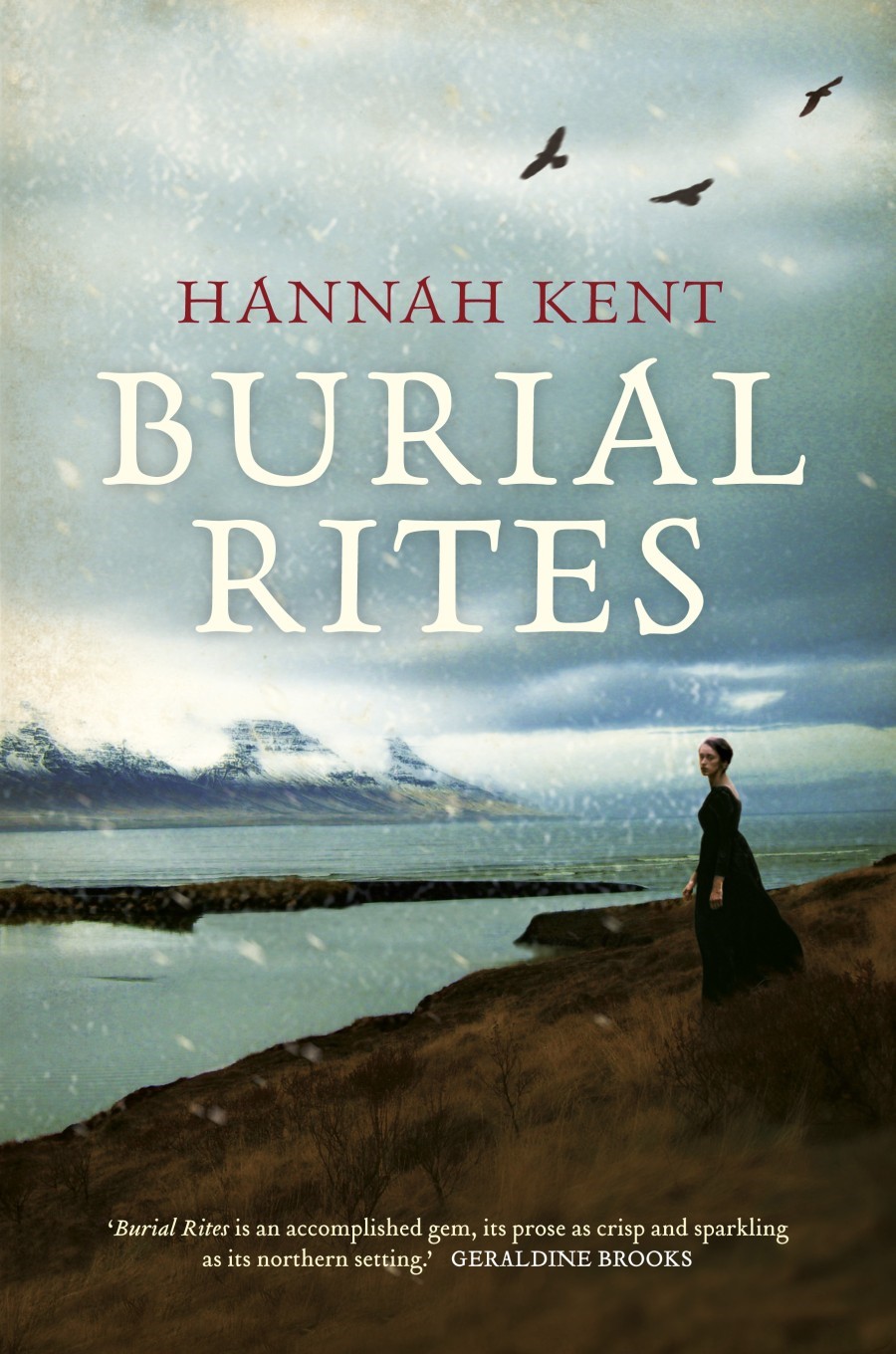
In today’s edition of the ‘Amusements and Distractions’ weekly round-up on the Killings blog, Jessica Alice included a link to the news that Jennifer Lawrence is likely to play Agnes Magnusdottir in the film adaptation of Hannah Kent’s absolutely brilliant Burial Rites.

Burial Rites is easily the best book I’ve read this year, and in a long while. I’ve ranted about my love for it before. I’m pretty keen on Jennifer Lawrence, too – with the exception of the ridiculous Silver Linings Playbook. She danced like a cutie though. 

Anywho, I can see her in the role, and I’m fairly stoked to hear Burial Rites will be turned into a film. It’s happy news, and it needed sharing.

Image

Blog at WordPress.com.

Up ↑