Search

Sam van Zweden

Writer

Tag

reading

Teaser Tuesday

I’ve come across this meme on a few different blogs, so I thought I’d put it up here and see how it goes…

It’s called Teaser Tuesday…

Teaser Tuesday is hosted by MizB at Should Be Reading.

  • Grab your current read.
  • Let the book fall open to a random page.
  • Share with us two (2) “teaser” sentences from that page.
  • You also need to share the title of the book that you’re getting your “teaser” from … that way people can have some great book recommendations if they like the teaser you’ve given!

“I was never convinced that the Whitlam ministers could manage so many spectacular blunders by themselves. They needed help.” (83)
                                                                             “Smoke and Mirrors“, Kel Robertson.

Dead Until Dark

I’ve just finished reading Charlaine Harris’ “Dead Until Dark” – the first novel in the series that the brilliant HBO series “TRUE BLOOD” is based on. Being such a fan of the show, I was excited to read the book… However, I came out a little traumatized, and very very confused.
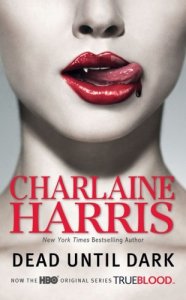
“Dead Until Dark” introduces us to Sookie Stackhouse – a telepathic waitress living in a small town in Louisiana. Apart from being a bit of a loser because of what she calls “her disability”, life for Sookie is pretty normal. The world of the novel is one where vampires and humans live side-by-side. It’s not all peaceful; there’s a lot of prejudice and a fair bit of violence, but it’s like society’s relationship with any minority group.

Sookie gets involved with “Vampire Bill”, who is attempting to “mainstream” – to live among humans in peace, drinking synthetic blood to survive. As their romance gets more involved, Sookie being drawn further into the vampire community, the discord between people and vampire gets to boiling point. Local girls just like Sookie start being murdered, and a pattern starts to emerge… Sookie’s powers and her relationship with Bill come in handy in chasing down the murderer and restoring a little peace in the small town.

Now, there’s so much I can tell you that’s bad about this book… But at the end of the day, I quite enjoyed reading it.

Charlaine Harris seems to have some weird problem with tenses for the first half of the book. It’s narrated mainly in past tense, but then occasionally an “is” will slip in there… It’s so hard to pay attention to what’s happening in a novel when you keep getting snagged on something as dumb as a lack of “is/was” continuity.

The writer also seems to struggle with instilling a bit of character logic into her story. I can suspend my disbelief as far as the book asks me to – OK, there’s vampires. There’s shape-shifters. There’s telepaths… But on a number of occasions in the novel, people hear or see things which they respond to in a totally illogical way. Example: (spoiler here!) – Sookie’s boss Sam is a shapeshifter, which is something he’s been at pains to hide from her for the 5 years they’ve known each other. One day, Sam feels like Sookie’s in danger, so he turns into a dog and goes to her house to protect her, where he falls asleep on her bed. The next morning Sookie wakes up with Sam, naked, in bed next to her. Her reaction?
“Oh, Sam.”

WHAT!? That’s IT!? Just a very calm, “oh, Sam.”   As if.

Harris either has no confidence in her skill as a writer, or grossly underestimates the intelligence of her readers. She feels the need to reiterate simple points over and over…and over, to the point of redundancy. At least three times in the first two chapters, Sookie refers to the fact that her parents died – both of them, when she was seven, in a flash flood, leaving herself and her brother with her Gran. And each time she refers to it in this much detail… We get it, just tell us once

I figure this must be a lack of confidence on Harris’ part, which wouldn’t be entirely unfounded… She seems to have a fondness for adverbs and a strange aversion to the word “said,” forcing her characters to “smile”, say “disgustedly” (what a horrible word!), “notice”, and “observe”. These are just a few of the many horrible modes of speaking that people in the world of Dead Until Dark use when conversing.

…But for all of these faults, Charlaine Harris has written an incredibly fast-paced, no-boredom novel. Right as I was getting pissed off with the B- or C-grade writing, there was SEX! and then BLOOD! and then a CRAZY NEW CHARACTER! Then more sex! More blood! Sexy blood, and bloody sex!

Hence the confusion.

For how terribly written the novel is, for how much it truly insults me as a reader, I enjoyed reading it. And, if someone were to give me the sequels, I’d probably read and enjoy them too.

Six Walks In the Fictional Woods

100+ Books Challenge, #3: “Six Walks in the Fictional Woods” by Umberto Eco.

If you’ve ever read any Umberto Eco, you’ll know that he writes in a way that is both accessible and amusing, and incredibly poignant.

Six Walks in the Fictional Woods is a reflection on the role of the reader, the role of the writer, and the relationship between the two. Eco uses the metaphor of “the woods” to represent exactly what it is that we get ourselves into when reading or writing a book.

As is always true in anything by Umberto Eco, “Six Walks…” is full of intersting little tidbits (the line that divides “blue” and “green” is very different in Latin/Greek cultures to our own), amusing ways of making a point (a particularly hilarious overinterpretation of The Three Musketeers), and some very worthwhile food for thought.

Definately worth a look-in for your next non-fiction craving!

“Everything I Know About Writing” Review

So, number 2 book in my 100+ Book Challenge for 2010 was John Marsden’s “Everything I Know About Writing”…

This is a guide to writing, written by a top-selling and much-loved (particularly by me!) Australian author.

The blurb claims that “Everything I Know About Writing” is “as readable as a novel”…and it really is.

Throughout, Marsden gives tips about what makes good and bad writing, using his deep and wide knowledge of literature and language. He doesn’t just list tips on what’s good or bad – he uses a range of really apt examples to drive these points home. While a lot of what is covered in this book is either common writing sense, or something I’ve learned before, Marsden still presents these points in entertaining and clear ways, and I appreciate having so many useful things written in one place as a handy future reference.

Although this book was first originally published in 1993, the examples used in it are so timeless and sound that the book has aged very little in 17 years. Using a mixture of timeless texts taught in most high schools, and great Australian writing, Marsden’s crossover between teaching and writing is obviously one he’s been making the most of for some time now.

As someone who mainly writes young adult fiction, Marsden’s writing guide is an insightful guide for teenagers, simply and clearly spoken – however, it still stands as a helpful and fun guide for writers of all ages. Even if you know most of the stuff that’s being covered, it’s presented in such an entertaining and simple way that it’s still interesting.

A wide range of conventions and problems are dealt with here – how it’s essential to deal with sex and death in writing, how psychology affects characters as much as writers, the rules of reality and how they must apply to writing… One particularly interesting chapter deals with “banality”, where Marsden challenges the connections we automatically make between certain words, particularly in similes and metaphors (eg, “feather” and “light”).

In the “new and revised edition” (which I believe happened around ’98), a new chapter has been included – “600 Writing Ideas”… these range from ideas for personal stories, starters for short stories, “quickies” (“What is your favorite kitchen appliance, and why?”)… These are perhaps one of the most helpful things about this book. If ever there’s a day where I have nowhere to start, these ideas give me a starting point, which then usually leads on to something else and turns into a story I love… or hate.

The most resounding advice Mr Marsden leaves us with is this; “You’re God when you’re writing: you can do anything. The only unforgivable sin is to be boring”…
“Everything I Know About Writing” is a clear and helpful bundle of tricks to stop your writing from becoming boring.

Lost in Books, much?

I am… entirely, thoroughly, absolutely. And I love it.

Today I came across this blog, “Lost in Books”.

I’ve been on there for about 45 minutes already, and I’ve only just skimmed the surface. I just had to share it – such a huge site, so varied, and offers a lot of inspiration, especially on what to blog about. Very helpful and interesting, also seems to be a great place to connect with like-minded people.

Enjoy, and props to Rebecca from Lost in Books for putting so much work into a fantastic blog!

Farewell to another Great

Yesterday saw the passing of great American writer JD Salinger. The Age have written a nice article outlining Salinger’s life and controversies.

I have fond memories of Salinger’s writing. In when I was about 16, I was busy getting stuck into novels recommended by my literature teacher – Madame Bovary, The Age of Innocence, and many other novels containing statements about feminism which I was a little too young to fully grasp. I’d heard a bit about “The Catcher In The Rye”, so when I came across a $4 used copy, I grabbed it. It opened up a whole world  of writing to me which I didn’t know existed beyond teen fiction  – I thought only books marketed to teens contained anything that spoke to me, while adult fiction was all about interpreting and puzzle-solving. “The Catcher In The Rye”  began my discovery of what I really enjoy reading. It took me through all the Beats, into contemporary writers who challenge the norm – with political and moral consciences (Chuck Palahniuk), pushing “appropriate” boundaries (Bret Easton Ellis), writing in unconventional forms (Irvine Welsh), and all the postmodern trickery that was more widely conducted around the time Salinger was writing (Jorge Luis Borges, through to Dave Eggers and Mark Z Danielewski). So, JD Salinger was the gateway to a whole world of enjoyable literature (which now includes a nice balance of pomo trickery and afforementioned feminist classics).

I was talking to my partner recently about how authors with one particularly famous book or style take on so much of their characters and their characters’ attitudes. I think to some extent this is in the role of “author”… So while JD Salinger was so reclusive for most of his life, and we haven’t heard from him in many many years, his death feels like I’ve lost an old and distant friend.

RIP, Jerome David Salinger.

The Book Thief

For the last two weeks, Markus Zusak’s The Book Thief has stolen my undivided attention.


This novel captured my imagination and my empathy, being written in a way that is both imaginative and ruthlessly real – surprising, given that the author’s inspiration comes from stories, and not any personal experience of war or persecution.

The book’s author, Markus Zusak is a 34 year-old Sydney man (bless the occurrance of Aussie bestsellers that don’t belong to Bryce Courtney!), whose parents grew up in WWII Germany. Having heard their horrific stories of what went on during that time, Zusak set out to write an original novel on a much written-about topic, which showed “the other side of Nazi Germany” – that side which was very human, and very heartbreaking.

We all know about Nazi Germany, we’ve all read a book, or seen a film, or been in a history class or two. What The Book Thief does is take us to this place but look at it from a completely different angle – this book is narrated by Death. Death, in Zusak’s imagining, views humanity in a curious way, trying to prove to himself that we’re not so bad.

The novel explores the power of words in that turbulent time in history – both the words of Hitler, and the words that the story’s main character builds a relationship with. This character, Liesel, comes to live with a foster family on a poor street in Munich. She is a generally kind-heated girl, but feels a strong pull toward a life of crime – more specifically, the stealing of books. Her relationship with words grows to be a strong one, and an astounding image in juxtaposition to the power of Hitler’s words at that time.

As the war continues and German citizens feel the pinch, believing they are in the worst state of hardship, Liesel words and her ability to keep secrets help her understand that the hardship felt by German citizens is nothing compared to the Jewish plight.

Throughout the book, Zusak’s language struck me as incredibly tight, with fantastic attention to the narrator’s point-of-view. Zusak’s Death has an  interest in colours, and uses them as a distraction from the horror that humans can create:
“…The town that afternoon was covered in a yellow mist, which stroked the rooftops as if they were pets, and filled up the streets like a bath”

Tiny simple moments and actions are created fully and beautifully through Zusak’s language:
“…Rudy’s voice reached over and handed Liesel the truth. For a while, it sat on her shoulder, but a few thoughts later in made its way to her ear”

While plenty of people have written about Nazi Germany in many a novel, play, and screenplay, Markus Zusak brings something truly original and touching to the subject. He treads a fine line between the magical suspension of reality and the crushing realities of the time.

With the exception of the cliche’d use of dictionary definitions to punctuate one chapter of the novel, Zusak handles mood and tone wonderfully, remembering to pace the depressing episodes nicely so that the book doesn’t ever become tiring. Characters are full and convincing, and all strands in this novel come together in a very satisfying way.

This is the only novel of Zusak’s that I have read, but his artful use of words leaves me keen to read more of his work.

As a book on a tired topic, The Book Thief hits all the right notes – convincing, poignant, consistent and tightly written. One of the best novels I’ve read in a while.

time away, time inside, time to think.

The reason I’ve been so quiet for the last week (plus…) is because I’ve been away.

For Christmas, Mum paid for my partner and I to go on a family trip with her and her fiancé… We went to see my brother and sister-in-law in Echuca, spent a few days there, then moved on to Daylesford where we stayed in a little cottage. Despite the usual tension that happens when you spend too much time with family, it was a good week.

Echuca had a great used book store, as did Daylesford.

I left with 3 books. I came back with 7… I exercised a great deal of self-restraint to only come home with four extra books.

The books I acquired:
1. Minimum of Two, by Tim Winton.
2. Love in the Time of Cholera, by Gabriel Garcia Marquez.
3. Tales of the Unexpected, by Roald Dahl.
4. Everything I Know About Writing, by John Marsden.

So this is added to my pile of Christmas books.

Other than the new additions to my bookshelf, the time away also gave me some time to read – I got a start on and am now quite a chunk through The Book Thief, and thoroughly enjoying it… Zusack has an amazing way with images.  (My favourite so far – “she had a breath that smelled like Heil Hitler”)… I also got up early and wrote as the sun came up over Echuca…

So what creative liberties has your holiday period given you? Have you acquired books? Pens? Notebooks? Time to yourself?

The Reader

TheReaderCover-Small

Two days ago, I recieved my copy of The Reader. This is a collection of fiction and non-fiction pieces by people involved in the Emerging Writers’ Festival.

I have to say, I was so excited to get my hands on this, and though it’s quite a diminutive publication, it packs quite a punch. I’ve so far only read about five articles, but it’s got me laughing, thinking, and wanting to lock these little tidbits of writing wisdom away in some part of my mind. I know they’ll come in handy.

So over the next few blogs, I want to share with you the places I’ve been taken by The Reader, what it’s prompted me to think about and research, and what I’ve come away from it with.

Until then…

Blog at WordPress.com.

Up ↑