Search

Sam van Zweden

Writer

Tag

reading

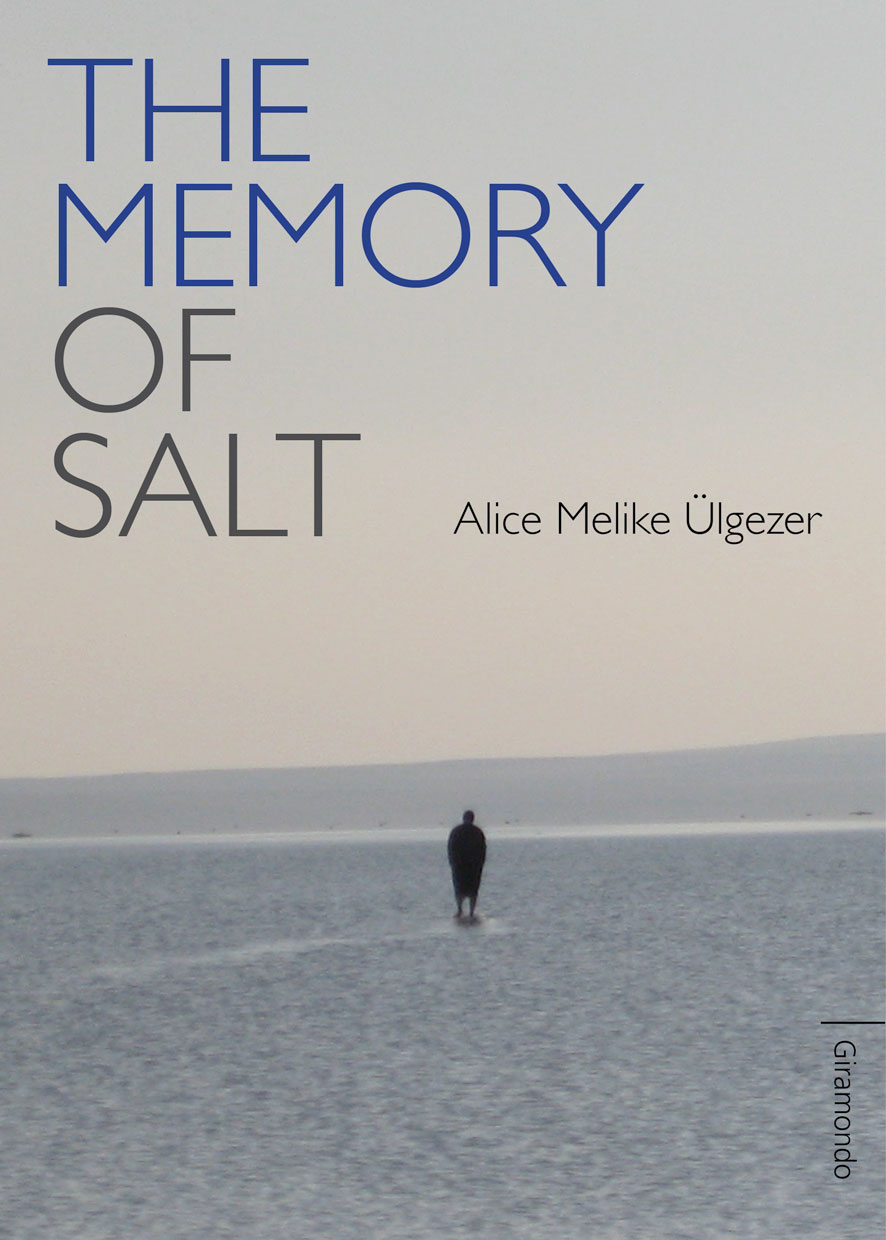
The Memory of Salt Review

Alice Melike Ulgezer’s debut novel, The Memory of Salt, is organic, human, and above all, authentic.

The story is about Ali and her Turkish father (Baba/Ahmet) and Australian mother (Mac). Baba’s life is ruled by mental illness and religion. Mac’s life is ruled by Baba. The narrative isn’t chronological, as we follow Ali’s process from confusion and anger, to understanding and forgiveness. As the narrative shifts about in time, so do those emotions. Life isn’t chronological or one-way like a book, and the structure of The Memory of Salt highlights this beautifully.

When I say that the book is authentic, I say this from a place of knowing practically nothing of Istanbul. Ulgezer really beautifully paints the Middle East as a place of mysticism and tradition, and she has done it so well that whenever I think of that part of the world, I will now think of Ulgezer’s version. (I had a similar reaction to the Bali in Ruby J. Murray’s Running Dogs. Melbourne’s got some damn talented women!)

While I knew next to nothing of the Middle East before this book, I know a fair bit about mental illnesses and the strange (not all bad) things it can do to a family. The relationships that exist between Ali, Baba and Mac are spot-on. They’re truthful and they contain all the anger and unlikely generosity that’s required in that kind of situation. Baba is an infuriating character, but as we shift about in time, learning about the beginning of Baba and Mac’s relationship, its demise, Ali’s childhood and eventual return to Istanbul, we come to love him despite his worse qualities. We aren’t just told that Baba is charming – we are actively charmed.

Ulgezer’s prose is a very particular kind of writing. To be honest, it took me a while to get into it – at first it seemed flowery, and intentionally alienating in the way it’s peppered with foreign words, often without translations. However, once I’d gotten into the rhythm of the writing, it became part of what makes the work so distinctive. And by the end of the text, I’d pick up a few words of Turkish. It’s similar to the kind of gear-shift your brain does to read Jane Austen. At first all the clauses are confusing and seem verbose, but when you’re in gear you get entirely sucked into that world, and it’s great fun.

The book’s layout is organic, with no chapters and only page breaks indicating a shift in time or place. For the story, this works well, totally immersing the reader in the world of the novel. However, for the reader who reads fitfully like me, this can be disruptive. There’s no clean place to put the book down, and it really requires a few long sittings to be read properly. Don’t let this stop you, because it’s a rewarding read (in terms of ripping your freakin’ heart out, in the best way possible), but it does do best when you’ve got the time and space to dedicate to it.

Just a side-note on the physical book: it’s beautiful. As with all books from Giramondo (publishing company), the production values are really high. It’s a little wider than a regular format, the type is well-spaced on the page, and there are perfect margins to stop you from cracking the spine. The fact that it feels so good to hold means it’s easy to not put it down.

As a reader, you need to invest a lot in The Memory of Salt, getting into the rhythm of the prose, spending long periods of time with the text. This pays off though – Ulgezer’s knack with both place and human relationships is well worth the effort.

**A note added later: I just read a Q&A on Readings’ website with Alice Melike Ulgezer, and she talks about how Ali’s gender is never revealed. Isn’t that strange, how I took Ali to be female? Is this because I am female? How did I not notice this? Gosh.

A Month of Reading

It’s been a big month, though not so much for reading.

I’ve started my final semester of uni (completing my Bachelor of Arts – Creative Writing), and gotten my teeth sunk into my major project, which is a memoir. I’ve been contacted by the wonderful people at Giramondo, who very kindly sent me a book to review. And I’ve been accepted as an Emerging Blogger for the Melbourne Writers’ Festival, later in August.

So the reading has been a bit slower than usual. Also, all my books are all packed up in green bags, in preparation for moving house on Saturday. Tip to book-lovers: green bags are perfect to move books. They’re strong, they’re re-usable (unlike boxes, which you spend months trying to get rid of afterwards) and they fit most paperback books two-across.

The two books I did read this month were fantastic.

Ruth Fields’ Run, Fat B!tch, Run is a no-nonsense guide for people who want to start running, which is what I’ve recently done. Fields’ secret weapon is The Grit Doctor, who (with a heavy pinch of salt, this isn’t a sexist or self-hating book!) whips your arse until you’re hot. This guide is great for those who need a bit of extra motivation, and it’s genuinely hilarious. I laughed all the way through it, and when I finished, I got up and went for a run.

Charlotte Wood’s Love and Hunger blew me away. As a writer, and someone who has a really strong connection with food (both my brother and father are chefs), this book really moved me. Love and Hunger is a strange memoir/recipe book – Wood tells stories about food, about what food does and can do. She tells stories about food’s potential to heal and strengthen relationships, food’s emotional meaning and its connection to our self-identity. At the end of each chapter, Wood shares recipes that are relevant to that chapter. Strangely, the pairing of these stories and recipes made me far more hungry and motivated to cook than any photo-heavy gastro-porn that’s available at the moment. There are no pictures in this book, just the stories and Wood’s ability to write a recipe well work better than any fancy photography ever could. Food is not just sustenance, and in this beautiful book, Charlotte Wood well and truly teases out all this idea has to offer.

What did you read this month?

Books Bought:
A Hologram for the King, by Dave Eggers
Wildwood, by Colin Meloy and Carson Ellis
Land of Stories: The Wishing Spell, by Chris Colfer

Reading Copies:
My Hundred Lovers, by Susan Johnson
The Memory of Salt, by Alice Melike Ulgezer (thanks, Giramondo!)

Gifted:
Whores for Gloria, by William T Volmann

Books Read:
Run, Fat B!tch, Run, by Ruth Field
Love and Hunger, by Charlotte Wood

Currently Reading:
Our Father Who Wasn’t There, by David Carlin

It’s Not Romance, It’s Erotica. Awful Erotica.

I’ve recently been struck by the realization that Fifty Shades of Grey might actually be the thing that saves book-stores – for the time being, anyhow. I know this is a pretty big thing to say, but I actually kind of mean it. Looking at the figures just for Dymocks book stores, approximately 12,000 more units have been sold while Fifty Shades tops the charts than when anything else topped the charts in a comparable week last year. I’m baffled by the sudden frenzy of non-readers seeking out these books, and I’ve been meaning to post about my thoughts on this for some time… After reading Helen Razer’s immensely enjoyable “Product Review”, I decided I’d better sit down and write my thoughts.

It’s really weird to watch this all happening. For the last two or three weeks, just about every second item I sell has been a Fifty Shades book. It’s now officially the fastest-selling paperback book in history, surpassing Harry Potter and Twilight, even this year’s earlier boom of The Hunger Games. It’s most weird because of the kinds of customers buying the book, its genre, and the feedback I’ve been getting from those customers.

Case in point #1:
Have you read it? Is it any good?”
I started to – but I had to stop. I got up to page three, before I started thinking that if I continued reading I’d have to try even harder not to be scornful of customers who enjoy these books. I can go with bad writing – I gobbled up the first two Twilight books and quite enjoyed them, despite all the “topaz eyes” and the way that everyone in Forks “lopes” everywhere. The pages kept turning, the action kept me going, the pacing was good. What I did read of Fifty Shades felt so mechanical that I just had to stop.

So no, Customer. I have not read Fifty Shades. “It’s just not for me, but it’s incredibly popular!” Aaaand smile, don’t frown, don’t judge, just sell the thing. It’s what’s keeping you in a job.

Case in point #2:
“What’s it about? I don’t even know, I just know everyone’s reading it!”
This is said at the check-out, when they’re buying the book. I don’t think I’ve ever, in my life, bought a book that I know nothing about.

Case in point #3:
Customer: “Do you have that… Hundred something… Everyone’s talking about it?”
Me: “Fifty Shades of Grey? The erotica?”
At the word ‘erotica’, customer gets flustered and embarrassed.
Yeah, it’s erotica. On the back of the book, the spot that we put price stickers over, it says “erotica/romance”. The general readership that buys the book seems far more comfortable with the word “romance”. But flicking through the book (as I’ve done many times), you’ll find a lot of passages about penetration, and the “rules” of BDSM. I have no problem with erotica. In fact, I quite enjoy reading erotica. The Bride Stripped Bare was really enjoyable, because it was well-written, plus it was brave: a second-person narrative based around the parallel stories of an old women’s guide to being a good wife, and a woman negotiating her own married life. I like the secrecy and indulgence of erotica – it’s fun.

What baffles me the most about the Fifty Shades phenomenon is that “erotica” a’la some Mills & Boon etc is generally frowned-upon by the same people who are so enthusiastic about Fifty Shades. The flustered ladies who can’t stomach the word “erotica” and who ask for a bag before leaving the store are pretty representative of the readership of this wildly popular trilogy. It appears to me that the key to the books’ success lies in the fact that someone (WHO?!) said that this particular erotica is acceptable. Or that this particular erotica is not erotica at all. Women en masse are indulging the secret fun that I love about erotica, because someone made it acceptable in this case.

There’s a lot of questions about what happens going forward.

Question 1 – Is this self-contained? Will the customers who came into the store to buy Fifty Shades re-discover the enjoyment of reading and keep coming back for other books? Many of these books are being bought by themselves, but some customers buy other things. Last weekend there were many couples – she with Fifty Shades and he with Fev. More than a few told me that they’re not generally readers. Can booksellers hold any real hope that these people will realise the enriching experience that reading can be, and return when they finish these books? While Fifty Shades has boosted sales a lot during its time at the top of the charts, can we look forward to higher sales after the series loses its top-10 status?

Question 2 – Will there be many more books like these? If this smartly-marketed erotica is permissible, is there perhaps a whole genre of permissible erotica on its way? A co-worker and I discussed this question recently. I worried that if there is a whole genre of this kind coming, then would the quality of the writing improve at all? She laughed, asking if I would read these books if they were high literature.

And Yes, I probably would.

I’m not a total literature snob. I enjoyed Hunger Games, I’m okay with the fact that there is often a reason that things become as successful as these books have been. I’m curious to find out what that thing is. In the case of Fifty Shades though, whatever it is doesn’t lay in the first few pages, and I couldn’t bring myself to read further. The rabid need that people have to read this book is beyond me. I don’t understand.

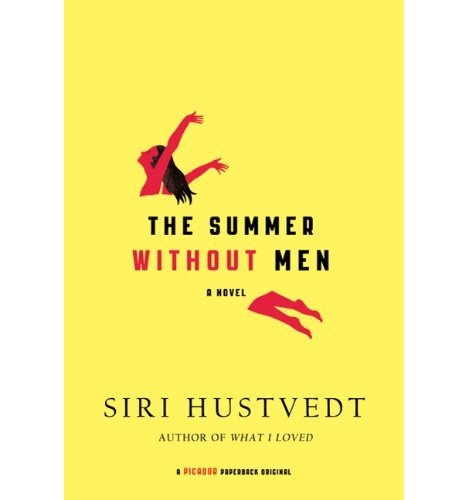
Review: The Summer Without Men, by Siri Hustvedt

Having been cheated on, poet Mia retreats first to “temporary psychosis”, and then to the small town of Bonden. This is where her mother lives in a retirement home, and where Mia comes to know and love the small community’s members.

The characters we meet in Bonden are fully-formed, convincing people who live lives outside the pages of the novel. The doubled-over Abigail, whose “secret amusements” buoy Mia’s spirit. The group of seven young poetesses that Mia teaches to express themselves, and eventually to understand one other. Lola and Flora, mother and daughter under the tyrannous rule of husband/father (and Mia’s next-door neighbour) Pete. The connections that Mia makes with these people during her stay in Bonden are what holds this book together, but they’re not all the book is.

Siri Hustvedt is clearly a well-educated woman with a very active and working brain. She casts a wide net with her protagonist’s musings, from Neitzsche and Husserl, to the male/female divide and the nature of memory. Mia’s ponderings are of a specific sort, and it’s clear that Hustvedt has given thought to her protagonist’s concerns, thinking about Mia’s life experiences and where she is currently in her life, and how this would affect the things she particularly relates to. Indeed, Mia’s thoughts aren’t just from the point of view of a poet, but from a poet who is married to a neuroscientist and mother to a now-grown young woman.

Quite intellectually challenging ideas are presented accessibly, but also appropriately. At no stage do the characters become mouthpieces for Siri Hustvedt to show off her smarts, nor do said smarts stick out from the narrative as inappropriate – the characters and the theory stuff always work hand-in-hand, commenting on one another, strengthening each other’s credibility and aliveness.

The emotional content of the book sings just as much as the intellectual – the two are not mutually exclusive and they wind together in the prettiest way. In particular, Mia’s thoughts on her time in a psychiatric ward are considered and insightful.

Siri Hustvedt’s prose is beautiful. When I read passages I particularly enjoy in a book, I tend to write them down. I started doing this in The Summer Without Men, but a few pages in I realized that if I kept this up, I would just end up transcribing the entire novel into my notebook, so I might as well just sit down and enjoy the damn thing for what it is. It is beautiful.

A Month of Reading

It’s freakin’ crazy right now, and that’s about all I have time to say about it.

I didn’t get a chance to post my Month of Reading yesterday, as a new nephew was welcomed to the world and I was out swooning over his cuteness. So here it is. What have you been reading this month?


Books Bought:
Affection, by Krissy Kneen
Poppy, by Drusila Modjeska
This Too Shall Pass, by SJ Finn
Iris, by John Bailey
Rosie Little’s Cautionary Tales for Girls, by Danielle Wood
Wabi Sabi Love, by Arielle Ford
All of Me, by Kim Noble.

Gifted:
Obernewtyn, by Isobelle Carmody*
Our Father Who Wasn’t There, by David Carlin

Borrowed:
The Lover, by Margeurite Duras

Books Read:
Juno: The Shooting Script, by Diablo Cody
The Hunger Games: Mockingjay, by Suzanne Collins
Phaedrus, by Plato
Running Dogs, by Ruby J. Murray
The Trojan Women, by Euripides
The Turn of the Screw, by Henry James

Currently Reading:
The Confidence Gap, by Russ Harris
Why We Broke Up, by Daniel Handler and Maira Kalman


*Thanks to Tully Hansen for giving me another signed copy of Obernewtyn. Turns out they’re not uncommon. 

A Month of Reading

With the extra day in February this year (a leap year), I’d convinced myself I’d have the upper hand and be able to read an extra book this year… Perhaps a whole book is a bit ambitious, but I am about a hundred pages ahead of where I’d be without the 29th of February. So thanks, Leap Year.

It’s been hard, but I have managed to stop myself from buying new books constantly. I’ve still “bought” a lot of books, but my book-buying budget’s reasonable now. I bought a book I want to review for the uni magazine (the new Daniel Handler – aka Lemony Snickett), as well as a weight-loss book. I bought books I need for school, and was quite impressed that the total cost of this semester’s texts came to a grand $39. Anything else that came in was a reading copy, a gift, or a used book.

The lovely director of the Emerging Writers’ Festival, Lisa Dempster, is leaving Melbourne at the end of the year. In preparation, she’s selling all her books. They’re cheap, in good nick, and there’s still quite a list up there. I picked up five books from Lisa for $20; three books I’ve been looking for cheap copies of for a while, plus two random grabs. Not only will you be buying good cheap books, you’ll be helping Lisa downscale and get some cash together for whatever adventure she takes on next. (If you’re not familiar with Lisa’s adventures, try here or here).

One last note on what’s come in: I started a book-sharing group, and it’s been pretty well-received. I made a Facebook group of my friends that I know like reading and have a lot of books like I do. Whenever we come across a book we don’t feel the need to hang onto any more, we post it to the group for another book-lover to adopt. The books in the “gifted” section this month came from that group. If you’re in a similar position to me and my friends (toooooo many books! But we all still want more…), I’d recommend giving something like this a try.

What have you read this month?

Books Bought:
Why We Broke Up, by Daniel Handler
Lose Weight Fast, by Susie Burrell
The Amazing Adventures of Diet Girl, by Shauna Reid
Shantaram, by Gregory David Roberts
A Bend in the River, by V.S. Naipul
Never Let Me Go, by Kazuo Ishiguro
Marching Powder, by Rusty Young
Trojan Women and Hippolytus, by Euripedes
The Psychology of Love, by Sigmund Freud
The Turn of the Screw, by Henry James
Symposium and Phaedrus, by Plato

Reading Copies:
The New Republic, by Lionel Shriver
Mateship With Birds, by Carrie Tiffany
Running Dogs, by Ruby J Murray

Gifted:
The Hunger Games: Catching Fire, by Suzanne Collins
Middlesex, by Jeffrey Eugenides
Look At Me, by Jennifer Egan

Borrowed:
The Hunger Games, by Suzanne Collins
All Of Us: The Collected Poems, Raymond Carver
The Hunger Games: Mockingjay, by Suzanne Collins

Books Read:
Flying With Paper Wings, by Sandy Jeffs
Bright Lights, Big City, by Jay McInerney
The Invention of Hugo Cabret, by Brian Selznick
A Visit From The Goon Squad, by Jennifer Egan
The Hunger Games, by Suzanne Collins
The Hunger Games: Catching Fire, by Suzanne Collins

Currently Reading:
Killing, by Jeff Sparrow
The Confidence Gap, by Russ Harris

Review: Flying With Paper Wings, by Sandy Jeffs

Sandy Jeffs’ autobiography, Flying With Paper Wings: Reflections on living with madness is an enlightening memoir and exploration of the experience of schizophrenia. Sandy Jeffs takes readers through her diagnosis and early experiences, through hospitalizations, and her later life negotiations with her identity as schizophrenic.

There are many misery memoirs out there on the subject of mental illness, and I can’t say they interest me too much. There’s dangerous territory there, where the writer can wallow in their own interior mess, and with a subject like mental illness that’s not constructive at all when it comes to communicating exactly what the experience is.

Sandy Jeffs’ account of her illness makes no attempts at speaking for everyone with the same or similar diagnoses, but her representations of what goes on in her head during an episode are fascinating. This includes whole pages of her interior monologue. These don’t take over the book though, and more interesting are Jeffs’ meditations on the very real political issues she faced, as well as philosophical considerations of the mind/body divide and the ways in which trauma and obsession manifest themselves in psychosis.

While Jeffs underlines the individuality of her experience, she also raises some larger issues which are in need of some serious attention. The end of the book looks at the ways that care for psychiatric patients has changed over the years, and the gaping holes that still exist in the mental health system.

A family member of mine suffers from a mental illness which has much in common with schizophrenia, and in reading this book it’s a bit impossible for me to make a judgement separate from that experience. But that’s probably the best endorsement I could possibly give it – I felt like this book helped me understand a bit more. In this book, Sandy Jeffs gives a strong voice to people who are misunderstood and often ignored. She makes some meaningful steps toward bridging a very big gap.

The To-Be-Read Grab-Bag

I have a teeny tiny moleskine I use to write down all the book recommendations I receive and mean to follow up. I usually just write down the name and the author, very very rarely the reason it’s been recommended. With the amount of recommendations I receive, it’s pretty hard sometimes to remember why I’m chasing up a certain book.

Today I dipped into the To-Be-Read list for my next read, and picked up the copy of Jay McInerney’s Bright Lights, Big City that I’ve had sitting here for a few weeks, intending to start.

I opened the book, and to my delight it’s written in second person! (Rare, and even more rarely well-done.)

The opening line:

“You are not the kind of guy who would be at a place like this at this time of the morning.”

Are you hooked already? I am. And I’m so delighted that I’d forgotten why it was recommended – such a fantastic surprise to start reading and discover such brilliant prose and an original focalization. Thanks, whoever recommended this one.

A Month of Reading

The first month of the new year, and I feel like I’m off to a good start. I’m just about on track to beat my personal best of 53 books in a year. I’m sure that extra day in February this year will make all the difference, too.

A major perk of my new job is reading copies – pre-release ones. A review of After the Snow is on its way, folks…

I’ve been thinking about my reading habits again, in terms of how what I read breaks down. So far it’s all been fiction – though I’m reading some non-fiction currently. Two new releases. Two Australian books. Two women, two men. Out of four books read thus far, I think I’m pretty comfortable with that being representative of my reading habits… As the year goes on I would like to keep the fiction:non-fiction ratio roughly equal though…

What did you read this month?
Books Bought:
The Confidence Gap, by Russ Harris
Household Wisdom, by Shannon Lush & Jennifer Fleming
Bright Lights, Big City, by Jay McInerney
The Invention of Hugo Cabret, by Brian Selznick
Women’s Stuff, by Kaz Cooke
No Excuses Cookbook, by Michelle Bridges

Reading Copies:

After the Snow, by S.D Crockett

Books Read:
Rocks in the Belly, by Jon Bauer
What The Family Needed, by Steven Amsterdam
Obernewtyn, by Isobelle Carmody
After the Snow, by S.D Crockett

Currently Reading:
Killing, by Jeff Sparrow
The Confidence Gap, by Russ Harris
Flying With Paper Wings, by Sandy Jeffs

Blog at WordPress.com.

Up ↑