Search

Sam van Zweden

Writer

Is “Late To the Party” A Personality Trait?

Can I put “band-wagon-jumper” on my CV? Is “slow on the uptake” a favourable quality in a person?

I’ve been hearing about Ira Glass’ amazing podcast, This American Life for some time now, but I just decided to start using it as a soundtrack while I work out (which is a surprisingly successful tactic). And ohmigod. WHY DIDN’T I DO THIS SOONER?!

(Just a side note – I feel like this realization is akin to the one where I realised that public transport time is really reading time. Working out or walking is really listening time. My brain’s not doing anything anyway, so USE IT!)

No matter what the subject matter is, this is some really moving stuff. Ira Glass has his finger bang on the pulse of life and what it is in all its minutiae, and knows just how to make the minutiae count in terms of a wider context. What a dude.

It’s also really exciting in terms of thinking about different ways of telling a story. It doesn’t just have to be on a page to be powerful. I’ve known this for a while, sure, but Ira Glass’ podcast really brings it home and reminds me to think more laterally about narratives.

A Bit Slow On The Uptake, But…

I’ve just been catching up on podcasts, and listening to the Jomad episode where Lefa Singleton Norton guests. In it, they talk about reading goals for 2012, and Lefa mentioned the Australian Women Writer’s challenge. I’ve only just become aware of this, but more research shows that it seems to be Quite A Thing.

So, I’m in. I promise to make an effort to read more Australian women writers this year. So far, two our of my seven books read this year are Australian women, so a pretty favourable ratio.

I’m not deciding now which books I plan to read, but I do plan to make a more concentrated effort to read Australian women. Cuz I am one, and I think it’s important.

My pledge, pledged.

Un-follow-up-able

I finished reading Jay McInerney’s Bright Lights, Big City.

It’s so… Just so. I was grabbed from the very first sentence. I like a good opening line, but I don’t remember ever being struck as hard as I was by this one:

You are not the kind of guy who would be at a place like this at this time of the morning.

I’m not? Oh.

The second-person point of view is pulled off with great success in this novel, and there are so many moments of genuine poetry. The prose is beautiful, and the resonance McInerney has created by moments that in any other novel would threaten to be disparate…

I can’t write a genuine review of this, there’s too much already floating around out there and I’m not sure I have much to add. Just to say that I loved it, and heartily recommend it to you.

Run! Don’t Walk!

The lovely Phuong-Nghi from Run! Don’t Walk! interviewed me for their new column, “Fresh Meat”, where they talk to Melbourne’s “maddening young talent”. There’s a sample of my writing as an eight year-old, a Douglas Adams/Philip K. Dick face-off, and a discussion of whether writers need to engage in all the digital stuff.

Run! Don’t Walk! is a brand-new website run by young creative people from Melbourne. They write, draw, view, and absorb all that the world has to offer, and I admire their work for its considered approach to things – it’s young people showing that they have brains and know how to work ’em.

My interview here. Thanks to Phuong-Nghi for having me.

Review: Flying With Paper Wings, by Sandy Jeffs

Sandy Jeffs’ autobiography, Flying With Paper Wings: Reflections on living with madness is an enlightening memoir and exploration of the experience of schizophrenia. Sandy Jeffs takes readers through her diagnosis and early experiences, through hospitalizations, and her later life negotiations with her identity as schizophrenic.

There are many misery memoirs out there on the subject of mental illness, and I can’t say they interest me too much. There’s dangerous territory there, where the writer can wallow in their own interior mess, and with a subject like mental illness that’s not constructive at all when it comes to communicating exactly what the experience is.

Sandy Jeffs’ account of her illness makes no attempts at speaking for everyone with the same or similar diagnoses, but her representations of what goes on in her head during an episode are fascinating. This includes whole pages of her interior monologue. These don’t take over the book though, and more interesting are Jeffs’ meditations on the very real political issues she faced, as well as philosophical considerations of the mind/body divide and the ways in which trauma and obsession manifest themselves in psychosis.

While Jeffs underlines the individuality of her experience, she also raises some larger issues which are in need of some serious attention. The end of the book looks at the ways that care for psychiatric patients has changed over the years, and the gaping holes that still exist in the mental health system.

A family member of mine suffers from a mental illness which has much in common with schizophrenia, and in reading this book it’s a bit impossible for me to make a judgement separate from that experience. But that’s probably the best endorsement I could possibly give it – I felt like this book helped me understand a bit more. In this book, Sandy Jeffs gives a strong voice to people who are misunderstood and often ignored. She makes some meaningful steps toward bridging a very big gap.

The To-Be-Read Grab-Bag

I have a teeny tiny moleskine I use to write down all the book recommendations I receive and mean to follow up. I usually just write down the name and the author, very very rarely the reason it’s been recommended. With the amount of recommendations I receive, it’s pretty hard sometimes to remember why I’m chasing up a certain book.

Today I dipped into the To-Be-Read list for my next read, and picked up the copy of Jay McInerney’s Bright Lights, Big City that I’ve had sitting here for a few weeks, intending to start.

I opened the book, and to my delight it’s written in second person! (Rare, and even more rarely well-done.)

The opening line:

“You are not the kind of guy who would be at a place like this at this time of the morning.”

Are you hooked already? I am. And I’m so delighted that I’d forgotten why it was recommended – such a fantastic surprise to start reading and discover such brilliant prose and an original focalization. Thanks, whoever recommended this one.

Swoon…

This morning I woke up to an email from my Step-mum containing a link to Flavourwire’s post about “The World’s Most Beautiful Bookstores”. And I’m now wondering if it’s reasonable to go on a round-the-world tour just to visit all these stores. They’re so damn lovely!

The Chinese kids’ store looks so magical – how could a child not get excited about reading in such a place?! And the Livraria Da Vila front doors! I didn’t even realise I was looking at doors until I read the description…

My usual writing breaks involve making toast or doing dishes… Today, though, you might find me suspending books from my ceiling or installing a revolving hinge and sticking books to my front door.

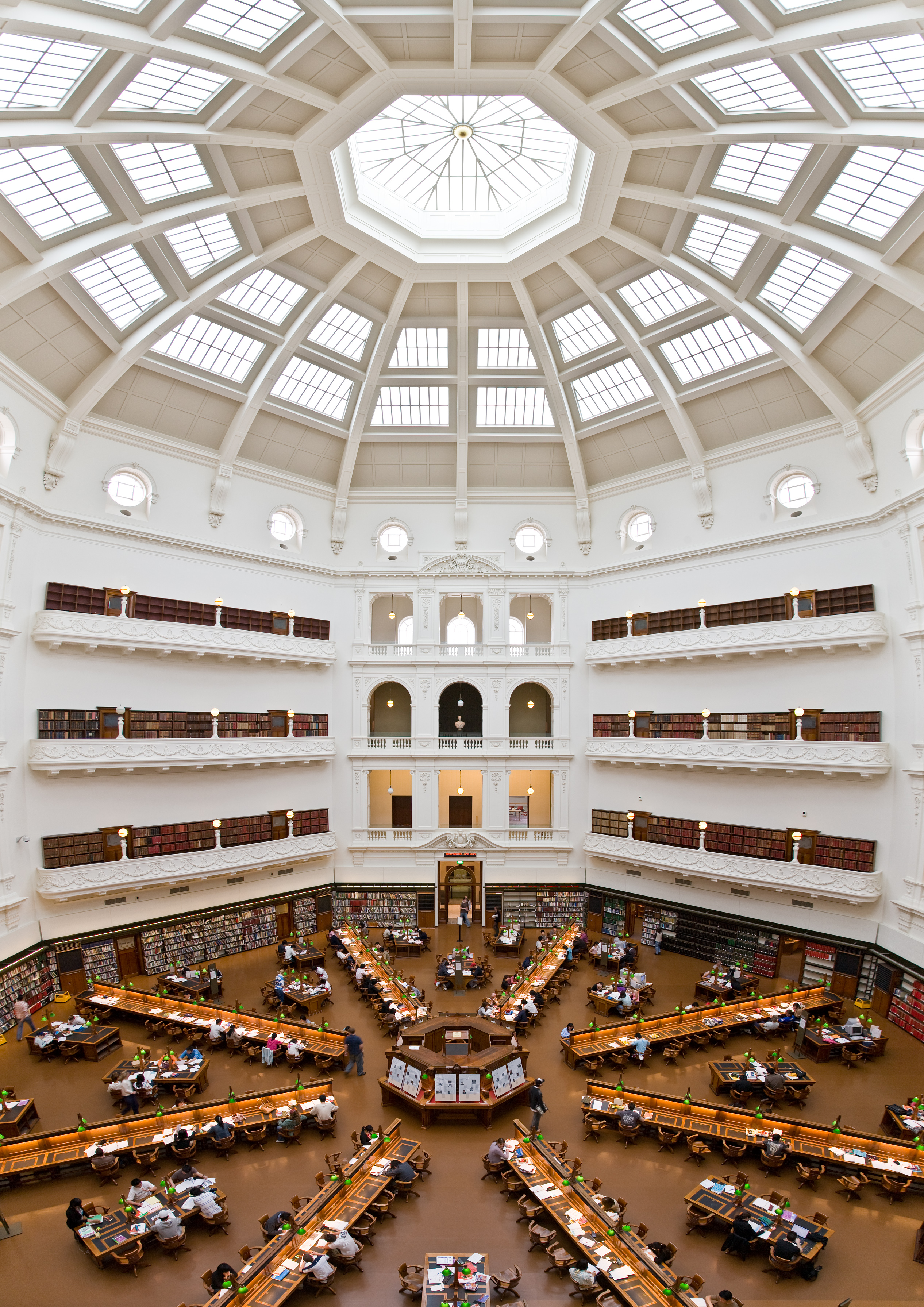
I was sad to notice that there are no entires for Australian book stores… What are your favourite book stores in Australia? I know there’s a great place in Sassafras, outdoors in a little alleyway with a courtyard, though I can’t seem to find it anywhere online… Floor-to-ceiling books are a pretty prominent feature of the stores that I love (like this or this), as well as a great selection of course, but I can’t bring to mind any Australian (specifically, Victorian) stores that are really exciting in terms of design: I’m specifically talking bookstores here, so LaTrobe Reading Room notwithstanding.  Have I not been searching far and wide enough for my books? Let me in on your secrets, blogosphere! Where da sexy bookz at?

Review: After the Snow, by S.D Crockett

Check out that cover artwork. It’s pretty nice, huh? Unfortunately I’ve been seeing an alternative cover floating around that’s nowhere near as pretty, but here’s hoping that we get this pretty thing in Australia.

After the Snow by S.D Crockett is a work of young adult fiction, set in an ice-age some time in the not too distant future. The main character, Willo, is left alone in the mountains when his parents are forced out of their family home, and the book follows Willo’s search for his parents and his growth from a boy to an insightful young man.

The story is told in first person from Willo’s point of view. Willo’s voice is really distinctive – his vocabulary is limited (think Jack from Room), and his worldview is very particular to his rural life as a “straggler”. He’s a skilled hunter and craftsman, and a brave young man. Willo has a lot of peculiarities that make him utterly endearing and relatable character. For example, Willo has saved a dog’s skull and fashioned it into a hat. When he wears this hat he is influenced by “the spirit of the dog”, and this spirit guides him throughout the book.

This kind of imagination on Crockett’s part is really refreshing. While I’m not an expert on YA fiction by any stretch of the imagination, I think my lack of general enthusiasm for the genre comes from the tendency for YA authors to sell their audience short: having a young audience does not mean you need to dumb down your narrative or emotional content. Crockett shows faith in her readers by presenting them with Willo’s difficult voice, and his complex emotional journey. This respect for the audience’s maturity and insight is the crux of what’s so exciting about this novel for me. It also makes the novel really enjoyable not only for young adults, but for readers of all ages.

The other lovely thing about this book is the language. It’s a strange and brilliant feat to make less language seem more. Despite Willo’s limited and peculiar voice, Crockett makes it fresh with language that jumps off the page with its poetry. There was a lot of stopping to write lovely bits in my notebook as I read.

I’m looking forward to the release of this one so I can spruik it to everyone. Starting here. The book’s due out mid-February, which is almost upon us, so keep an eye out.

A Month of Reading

The first month of the new year, and I feel like I’m off to a good start. I’m just about on track to beat my personal best of 53 books in a year. I’m sure that extra day in February this year will make all the difference, too.

A major perk of my new job is reading copies – pre-release ones. A review of After the Snow is on its way, folks…

I’ve been thinking about my reading habits again, in terms of how what I read breaks down. So far it’s all been fiction – though I’m reading some non-fiction currently. Two new releases. Two Australian books. Two women, two men. Out of four books read thus far, I think I’m pretty comfortable with that being representative of my reading habits… As the year goes on I would like to keep the fiction:non-fiction ratio roughly equal though…

What did you read this month?
Books Bought:
The Confidence Gap, by Russ Harris
Household Wisdom, by Shannon Lush & Jennifer Fleming
Bright Lights, Big City, by Jay McInerney
The Invention of Hugo Cabret, by Brian Selznick
Women’s Stuff, by Kaz Cooke
No Excuses Cookbook, by Michelle Bridges

Reading Copies:

After the Snow, by S.D Crockett

Books Read:
Rocks in the Belly, by Jon Bauer
What The Family Needed, by Steven Amsterdam
Obernewtyn, by Isobelle Carmody
After the Snow, by S.D Crockett

Currently Reading:
Killing, by Jeff Sparrow
The Confidence Gap, by Russ Harris
Flying With Paper Wings, by Sandy Jeffs

Blog at WordPress.com.

Up ↑