Search

Sam van Zweden

Writer

This Blog Is A Toddler

If this blog were a child, it would be starting to develop some proper focus skills, able to block out distractions and play more attentively. Its language would be starting to really develop, and things like narratives would be starting to make proper sense. It wouldn’t be so rad with numbers, but because this blog is about books that’s not so important.

This blog is three years old today – I’m celebrating with cider and cake, and I expect you to also! While it’s a bit tongue-in-cheek to draw this comparison between a blog and a toddler, it’s also a kind of nice thought. Three years old is when humans start to really be able to play with language, understand and share stories. For a blog about books, writing and words in general, that’s a pretty significant place to be.

Thanks to all the people who always show up to read my words. I appreciate your time, your chats at events and festivals, your generosity in telling me when I’m doing well, and you engagement with the things I do on here. Here’s to the many years to come!

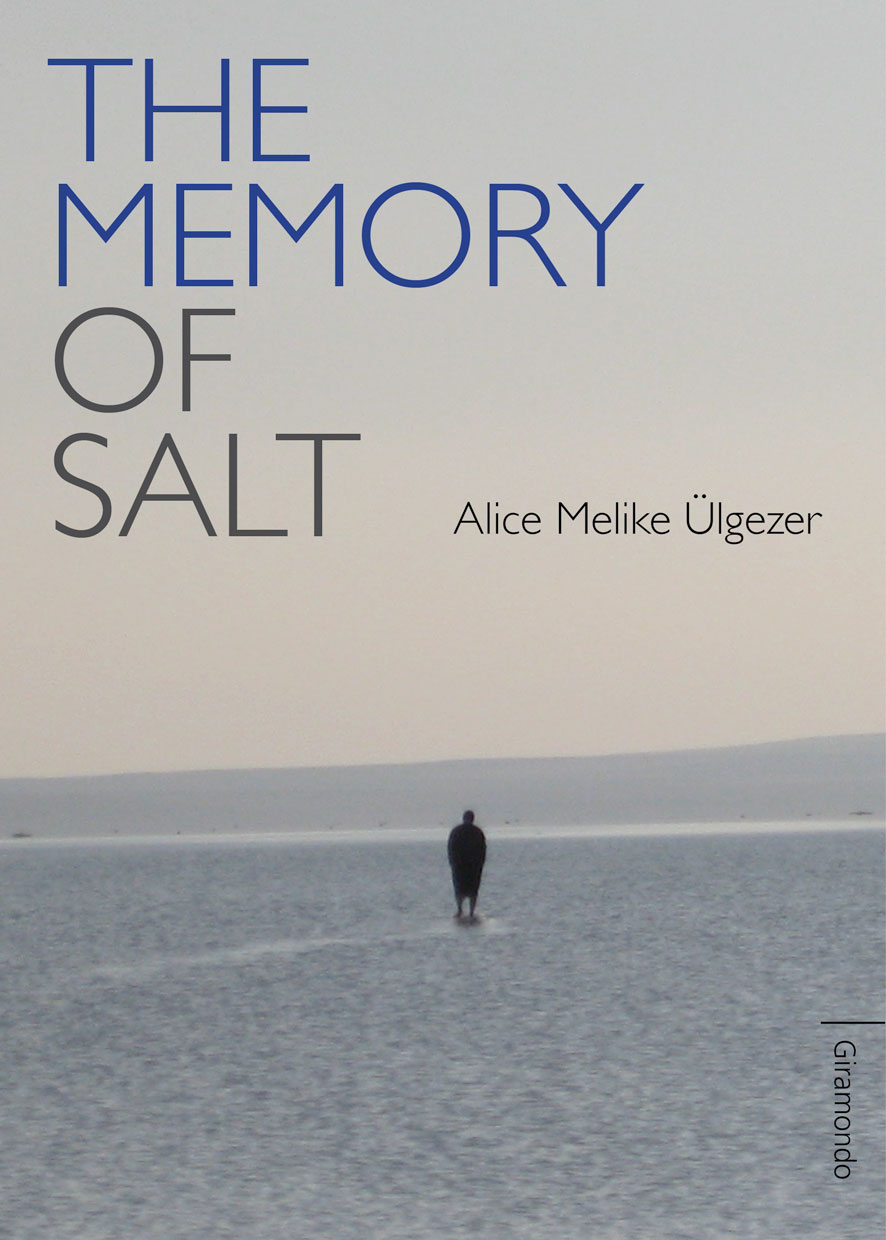
The Memory of Salt Review

Alice Melike Ulgezer’s debut novel, The Memory of Salt, is organic, human, and above all, authentic.

The story is about Ali and her Turkish father (Baba/Ahmet) and Australian mother (Mac). Baba’s life is ruled by mental illness and religion. Mac’s life is ruled by Baba. The narrative isn’t chronological, as we follow Ali’s process from confusion and anger, to understanding and forgiveness. As the narrative shifts about in time, so do those emotions. Life isn’t chronological or one-way like a book, and the structure of The Memory of Salt highlights this beautifully.

When I say that the book is authentic, I say this from a place of knowing practically nothing of Istanbul. Ulgezer really beautifully paints the Middle East as a place of mysticism and tradition, and she has done it so well that whenever I think of that part of the world, I will now think of Ulgezer’s version. (I had a similar reaction to the Bali in Ruby J. Murray’s Running Dogs. Melbourne’s got some damn talented women!)

While I knew next to nothing of the Middle East before this book, I know a fair bit about mental illnesses and the strange (not all bad) things it can do to a family. The relationships that exist between Ali, Baba and Mac are spot-on. They’re truthful and they contain all the anger and unlikely generosity that’s required in that kind of situation. Baba is an infuriating character, but as we shift about in time, learning about the beginning of Baba and Mac’s relationship, its demise, Ali’s childhood and eventual return to Istanbul, we come to love him despite his worse qualities. We aren’t just told that Baba is charming – we are actively charmed.

Ulgezer’s prose is a very particular kind of writing. To be honest, it took me a while to get into it – at first it seemed flowery, and intentionally alienating in the way it’s peppered with foreign words, often without translations. However, once I’d gotten into the rhythm of the writing, it became part of what makes the work so distinctive. And by the end of the text, I’d pick up a few words of Turkish. It’s similar to the kind of gear-shift your brain does to read Jane Austen. At first all the clauses are confusing and seem verbose, but when you’re in gear you get entirely sucked into that world, and it’s great fun.

The book’s layout is organic, with no chapters and only page breaks indicating a shift in time or place. For the story, this works well, totally immersing the reader in the world of the novel. However, for the reader who reads fitfully like me, this can be disruptive. There’s no clean place to put the book down, and it really requires a few long sittings to be read properly. Don’t let this stop you, because it’s a rewarding read (in terms of ripping your freakin’ heart out, in the best way possible), but it does do best when you’ve got the time and space to dedicate to it.

Just a side-note on the physical book: it’s beautiful. As with all books from Giramondo (publishing company), the production values are really high. It’s a little wider than a regular format, the type is well-spaced on the page, and there are perfect margins to stop you from cracking the spine. The fact that it feels so good to hold means it’s easy to not put it down.

As a reader, you need to invest a lot in The Memory of Salt, getting into the rhythm of the prose, spending long periods of time with the text. This pays off though – Ulgezer’s knack with both place and human relationships is well worth the effort.

**A note added later: I just read a Q&A on Readings’ website with Alice Melike Ulgezer, and she talks about how Ali’s gender is never revealed. Isn’t that strange, how I took Ali to be female? Is this because I am female? How did I not notice this? Gosh.

A Month of Reading

It’s finally spring! I finally have my reading chair in the sun, and the Melbourne Writers Festival has just finished, so I have time to read again! Which is great, because while I didn’t plan it, I ended up buying LOTS of books at the MWF Dymocks book store.

Reading isn’t really the problem. I’ve read most of lots of things, but I’ve only actually finished one book in August. That means that September’s Month of Reading will have lots of finished books, as I cross the finish line of all the things I almost-finished in August. The final pages of two books are waiting for me today.

What did you read in August?

Books Bought:
Tarcutta Wake, by Josephine Rowe
Gaysia, by Benjamin Law
I Was Told There’d Be Cake, by Sloane Crosley
How Did You Get This Number, by Sloane Crosley
Money Shot, by Jeff Sparrow
Creative Nonfiction, Issue #46, ed. Lee Gutkind
You Can’t Make This Stuff Up, by Lee Gutkind
The Big Issue Fiction Edition, ed. Chris Flynn & Melissa Cranenburgh

Reading Copies:
The Memory of Salt, by Alice Melike Ulgezer
The Engagement, by Chloe Hooper
N-W, by Zadie Smith

Borrowed:
On Photography, by Susan Sontag

Books Read:
Our Father Who Wasn’t There, by David Carlin

Currently Reading:
The Memory of Salt, by Alice Melike Ulgezer
Camera Lucida, by Roland Barthes
Gaysia, by Benjamin Law
The Big Issue Fiction Edition, ed. Chris Flynn & Melissa Cranenburgh

The Luminous Quality that Memory Bestows

Saturday’s MWF program was all about non-fiction for me. First I went to the session Memoir: Fact or Fiction?, followed by one called Fact, Fiction, Truth. Both sessions were concerned with the line between fact and fiction in memoir and creative non-fiction. The day finished with the launch of the Australian-themed issue #46 of Creative Nonfiction magazine.

In Memoir: Fact or Fiction, panelists discussed their motivations for writing memoir. Sydney Smith’s memoirs help her “put … life in perspective”, with the process of writing uncovering deeper feelings that she wasn’t even aware she had. Barry Dickins expressed an enviable kind of euphoria that he gets from writing his story – “It’s too delicious not to write,” he said. All panelists agreed that therapy precedes writing, with memoir successfully happening after the cathartic process, not as an instrument of it.

Both the Memoir: Fact or Fiction panel and Fact, Fiction, Truth discussed the unreliability of memory. Claire Bidwell Smith recalled being told that her memories differed from those around her, while Sydney Smith talked about “the luminous quality that memory bestows.” I love that idea – and I’m sure you know what Smith meant. That strange glowing realm where everything in the past exists in a memory-haze.

The disjuncture between memory and reality was a concern for both panels. In Fact, Fiction, Truth, Robin Hemley talked about an exercise he does with creative writing students, where he gets them to close their eyes and describe the room to him. Often, he said, students would miss things that were very obvious, or recall things that were never there. One student swore there was a flag-pole and flag in the room, when there was no such thing present. Research is a proposed way around this unreliability of memory – go back and check facts from your life, corroborate your story with other people. In the Memoir session, however, Claire Bidwell Smith rejected this method, prioritizing the authenticity of her own lived experience and rememberances. “I didn’t want the ‘facts’,” she said, “I only wanted memory.”

This idea of ‘authenticity’ was raised in Fact, Fiction, Truth also. Kate Holden used this notion of ‘authenticity’ when talking about the fact that memoirs can’t really be fact-checked. While characters and situations might be conflated, what really matters is that the story is authentic. Because memoir is a construction, and because it focuses on an individual’s experience, the space between ‘fact’ and ‘fiction’ is inherently blurry. As long as the story does itself justice, as long as it’s “the emotional truth”, as long as it’s authentic – that’s what a memoirist owes to their readers.

This line between fact and fiction is something that really interests me. It’s frustrating that the only answer to it all seems to be, “It’s complex”. Yeah, it is complex. What’s most exciting is writing that’s willing to splash around in the grey area. Hopefully readers can suspend their expectations about “The Truth” for long enough to really enjoy that kind of writing.

Women In Culture at MWF

MWF badge property of MWF

Susan Hawthorne, publisher at Spinifex Press, opened Women in Culture by asking for a show of hands on names of women writers dating back to 5,000 years BCE. Possibly the first known writer was female – yet not one person in this session knew her name. Out of the maybe fifteen names that Hawthorne called out, only two were recognized. If the same test were conducted with the names of male writers from similar periods (Homer, Cervantes, etc), we can assume that many more hands would have gone up. Hawthorne’s point (which was later echoed by Sophie Cunningham) was that women’s writing slips quickly from history.

Sophie Cunningham (one of the brilliant women behind the Stella Prize) is all over the statistics about women in publishing. According to statistics that she shared in this session, the best that women can currently hope to represent in publishing is 30% of the whole. Even with that nowhere-near-even figure, women’s writing fades quickly in the public mind. One of the concerns of the Stella Prize is to slow that fade. Prize-winning writing often sets VCE reading lists, according mainstream interest to worthy writing by women, and encouraging younger people to pay attention to more than just the dead white men who make up the literary canon. Writers who win prizes are also far more likely to follow writing as a career path. The Stella Prize (like what was until recently the Orange Prize in the UK) affords women part of the “room” that Virginia Woolf pleaded for in “A Room Of One’s Own.”

Sophie Cunningham gets better every time I hear her speak. After attending an addled Germaine Greer’s session earlier in the day, it was fantastic to see a feminist as articulate as Sophie speaking.

Tamil writer C.S Lakshmi (who writes under the name ‘Ambai’) shared an extract from a story of hers which poetically, beautifully, argued for the importance of women’s ability to tell and share stories with other women, rather than having their lives dictated by the stories that men tell to and about women.

Emily Maguire argued that “women’s writing” (a label that nobody felt comfortable with), is different from writing by men, in the way that every individual’s writing is different. “Not better, not worse, not more of less true, but different,” said Maguire.

The thread of conversation (unfortunately, only briefly touched upon) that set my cogs spinning was raised by Emily Maguire. She raised a similar point earlier in the year at the Emerging Writers’ Festival. Maguire teaches creative writing to young children. While young girls will write 50/50 male and female protagonists, young boys almost exclusively write male protagonists. Where does this come from? Well, boys read boys’ books with male heroes. Books with female heroes aren’t as common, and when they do appear, they’re marketed as “girls’ books” (complete with sparkly pink cover). Butt-kicking feminine and female protagonists just aren’t represented the same way as butt-kicking male protagonists are. And heaven forbid little boys look up to a strong woman hero character!

This is a really interesting question for me as a reader and a bookseller. It made me think about what books are selling now with strong, feminine heroines. The EJ12 books series is great. I’m not all over kids books as a genre, but what I can think of is mainly about girls chasing boys, or being chased by boys. Trying to think of the strong female characters I admired when I was younger I came up with Ellie from Tomorrow When The War Began, Rosie from Guitar Highway Rose (who, though she’s eccentric, is still really just chasing a boy)… Apart from that, I don’t really know.

What strong women do you remember in books you admired as a child? Who do you hope your children could use as a strong female role model in a book?

The Double Obsession

“There’s a double obsession,” says Gutkind. “The obsession of the people you write about, and the obsession of the writer.”

The obsession of Lee Gutkind of clearly visible in the way he can’t help but go off on tangents, the way he feels the need to stand up and demonstrate his stories using his whole body, and the way he introduces robots like he would an old friend. (“Oh, my God! [delighted…] This is Grace!”)

To write the way he does, Gutkind spends large amounts of time with people and projects to really understand what’s going on, on a human level. The focus of today’s panel is Gutkind’s book, “Almost Human: Making Robots Think”. In it, Gutkind writes about the things he learnt during his time “immersed” in the lives of various robotics experts.

Flicking through a series of slides, Gutkind does verbally what he is so admired for doing in his writing – he acts as a go-between, translating incredibly difficult ideas into stories for the lay man. Just like the audience today understand Gutkind’s words more easily aided by his slide show, Gutkind sees his job as a writer as “creating word-pictures” for his readers, bringing dry facts to life. By spending so much time in the world that he’s writing about, Gutkind manages to “figure out what’s really going on.”

He shows us a picture of one roboticist from the 1970s, and talks about the capabilities of robots he built. The story is humanized, though, by the kind of detail that only a writer might glean: the fact that, for 8 months, this guy slept in the ceiling vents of his lab and survived on Cheerios, bananas and chocolate milk that his friend brought him. It’s this kind of detail, these humanizing stories, the bring Gutkind’s material to life.

For those looking to write in this “immersive” style, like Gutkind, his advice is this – “Think globally, act locally.” While Gutkind’s concerns stretch as far as Curiosity on Mars, he accessed the stories he needed by talking to people involved in the robotics operations close to his home, approaching them and saying, simply, “I’d like to spend a lot of time with you, because I believe that what you’re doing is important.” This attempt at human connection is often enough. I’m sure the fact that he’s Lee Gutkind doesn’t hurt when he’s trying to get a foot in the door.

However, the double obsession is really what makes his articles and books hit home. Gutkind’s obsession, which reaches equal proportions to that of his subjects, is what makes his stories worth reading.

Lee Gutkind is still quite the Man About Town at the MWF this weekend, with plenty of opportunities to be caught before he jets back home. Saturday morning sees a seminar, “Creative NonFiction: A Movement, Not a Moment,” at the Wheeler Centre, “Fact, Fiction, Truth” on Saturday afternoon, the launch of Creative NonFiction, and a workshop on Creative NonFiction on Sunday. 

Welcome To Gaysia! In Conversation with Benjamin Law

Benjamin Law is featuring on both sides of a slew of Melbourne Writers Festival events, both as a panelist and interviewer. His first book, The Family Law, is a hilarious memoir about his very forthright family. His latest book, Gaysia, explores questions Benjamin had about whether life would have been different if he’d grown up gay in Asia. The answer: almost definitely. Reaching this answer is a funny, sometimes shocking, always gripping journey around a handful of Asian countries, looking at how anything that isn’t mainstream heterosexuality is treated.

Benjamin Law. Picture from MWF website.

I enjoy Benjamin’s writing because it’s not just funny. I mean, it certainly is funny. Knee-slappingly so. But behind what he pokes fun at is always an almost childish curiosity, and he has the perspective to pull back from the particular humour to see the wider picture. He’s clever, and this makes reading his work a lot of fun.

In between his crazy MWF schedule, Benjamin was kind enough to answer some questions,  and tell us about how other people’s families are strange, how his and David Sedaris’ sex lives are similar, and a possible time frame on his next project.

SvZ- Hi Ben! Thanks for taking the time to answer some questions. Firstly, congratulations on the release of your new book Gaysia, it’s a hilarious, fun and compelling read. Your first book, The Family Law, was immensely popular. That book was quite different to Gaysia. How has the experience of writing your latest book compared? And what made you decide to move away from writing about your family and into more immersive journalistic territory?
BL– It’s funny: in my day-to-day work life, I tend to write in two different modes. Sometimes I’ll write columns about personal experiences for magazines like frankie or Qweekend, and other times I’ll be writing longform non-fiction for magazines like The Monthly or Good WeekendThe Family Law was this demented, black comedy memoir about my family, so that was an extension of all that comedic column writing. Whereas Gaysia is gonzo-ish adventure journalism, looking at seven different LGBT/queer issues in seven different countries: Indonesia, Thailand, China, Japan, Malaysia, Myanmar and India.

SvZ- Your new book, Gaysia, looks at sexuality in Asia. Do you think Australians have misconceptions about sexuality in Asia? How much of our understanding is shaped by mainstream travel?
BL- I think everyone has preconceptions about countries they’ve never travelled to. When we think of Thailand for instance, we always make jokes about ladyboys. We might even travel to Thailand and spot a few. But will we talk to them and have a proper conversation about what their lives are like? Probably not.

SvZ- Your writing is highly personal – a lot of its humour comes from the fact that the things you share would be closely guarded secrets for most people. Bodily functions, sex, awkward things that come out of your mouth. In the Melbourne Writers Festival panel Friendly Fire, you mentioned that this intimate style often means that readers feel like they know you. How much of that is something you willingly signed up for in writing memoir, and how much is kind of creepy?
BL- Meh, my family’s always been pretty comfortable talking about bodily functions, and I’ve always been amused by how easily people are shocked when I bring that stuff up. It’s like, “Dude, if you’re healthy, you’ve done a poo roughly once a day for every day of your life. Surely it doesn’t shock you any more.” So of course, people think you’re revealing these huge secrets about your life, but the story you’re reading represents such a tiny fraction of my life. But if you feel like you know me really well, that’s fantastic, because that’s what all personal essayists or memoirists try to do: create a sense of intimacy. It’s cute: when people come up and tell me they’ve read The Family Law, we often talk heaps about how it reminds them of their own family. That’s what I’ve really dug, how the book makes people realise their own families aren’t that strange either.

SvZ- There seems to be almost nowhere you won’t go for a laugh in your writing. Is there anything you won’t write about?
BL- Oh sure, I won’t describe what I do in bed with my boyfriend. It’s one of David Sedaris’s rules too. I’m not sure anyone wants to be subjected to that.

SvZ- Congratulations, also, on having Gaysia included on the Get Reading “50 Books You Can’t Put Down” list. This list is in bookstores nation-wide, and caters for pretty much every reader on the planet. How does it feel to have your writing placed among that of very mainstream writers like Kathy Lette and Michael Robotham?
BL – I’m not going to lie. My publishers and I have somehow managed to convince people that a non-fiction book about LGBT issues in Asia is super-readable and not at all niche. Pretty stoked about that.

SvZ- Where to from here for Benjamin Law?
BL- Every time I finish a book, I promise myself not to dive into a new one for at least a year or so. And yet, here I am again, drafting out the foundations of another one … Give it a year or two, and you’ll hear all about it.

Coming up this weekend, you can see Benjamin Law at the Melbourne Writers Festival events ‘In Conversation: Germaine Greer’, The Stella Prize Trivia Night, and ‘Inside Asia‘. 

My Picks for Week 2 of MWF

It’s officially day 7 of the Melbourne Writers Festival. Last week I brought you “my picks” for the first week, so today I’m giving you my picks for the second half of the festival.

My reading chair arrived this morning, so assuming that I can pry myself from its soft leathery caress, I’ll be attending the following sessions:

Friday 31st will kick of with Angela Meyer’s The Morning Readsampling the work of Claire Bidwell Smith, Asa Larsson, Eowyn Ivey and CS Lakshmi. Not only is this event free, but it’s a great tasting plate of writing you otherwise might miss out on. Plus, in researching the writers she’d be hosting, Angela mentioned that Eowyn Ivey was particularly enjoyable.

At 11.30am, I’ll be at Making Robots Thinkwhere Lee Gutkind (the godfather of creative non-fiction) will be talking about why we need great long-form non-fiction, and his latest work. I wouldn’t miss it for the world.

At 1pmThoughts on Thoughts will be discussing cognitive neuroscience. This is a field that’s been moving forward in leaps and bounds lately, and the amount of new books on neuroscience is crazy. I don’t have time to read them all, but I do find it interesting, so hopefully this panel’s got something rad to offer.

At 2.30pm, Benjamin Law will be talking to Germaine Greer. To be totally honest, I’ll be there more for Benjamin Law than Germaine Greer, but it promises to be an interesting session. Germaine Greer’s been so influential for such a long time, and she’s still at it. That’s pretty damn respectable.

I’m a big fan of Spinifex Press, The Stella Prize, and women in cultural production, so at 4pm I’ll be at Women in Culture.

And along those lines, at 7.30pm in the Yarra Building, The Stella Prize are having a trivia night! I’m currently assembling the Dream Team.

Saturday is another big day – and a day where it’s really hard to choose between events that are on simultaneously. But I’ll be there, kicking off again with The Morning Read.

At 1pm I’m catching the Memoir: Fact or Fiction? panel, because it’s a topic I’m incredibly interested in. The conversation on that topic was touched on already at panels last week, particularly the Friendly Fire one, where panelists talked about the fact that memoir is a construction. So where does the line go?

At 2.30pm that conversation continues on another panel in Fact, Fiction, Truth. More Lee Gutkind. And Robin Hemley. Life’s good.

In the afternoon I’ll be catching Robert Dessaix. He spoke to a class I was in a few years ago, and he’s one of the most respectable, gripping speakers I’ve ever seen. Don’t miss it.

Wrapping up my Lee Gutkind filled weekend will be the launch of the next issue of Creative Non-Fiction. You’ll kick yourself if you miss it.

And finally, the last day of the festival is Sunday, September 2nd. It’ll be a little sad maybe. Us and the festival having gotten to know one another over the last few weeks. It’ll hurt a little to say goodbye.

And again, the day will kick of with Angela Meyer at The Morning Read.

At 11.30am, Alicia Sometimes talks to Pico Iyer and Benjamin Law about what draws them to Asia.

At 2.30pm, Chloe Hooper will be talking about her turn to fiction in her new book The Engagement, which has just been included in the Get Reading list of 50 Books You Can’t Put Down.

At 4pm, Michael Williams hosts a panel talking about that age-old issue: what really makes a classic, and what should be included in an Australian canon? This should be great – Williams always asks really spot-on questions and gets good conversation flowing.

The festival wraps up on Sunday night with the launch of the latest Going Down Swinging at the Toff in Town. $25 gets you entry, entertainment, and a copy of the journal.

I’m looking forward to another PACKED weekend. Come schmooze if you see me. As always, I’ll be blogging and tweeting my thoughts throughout.
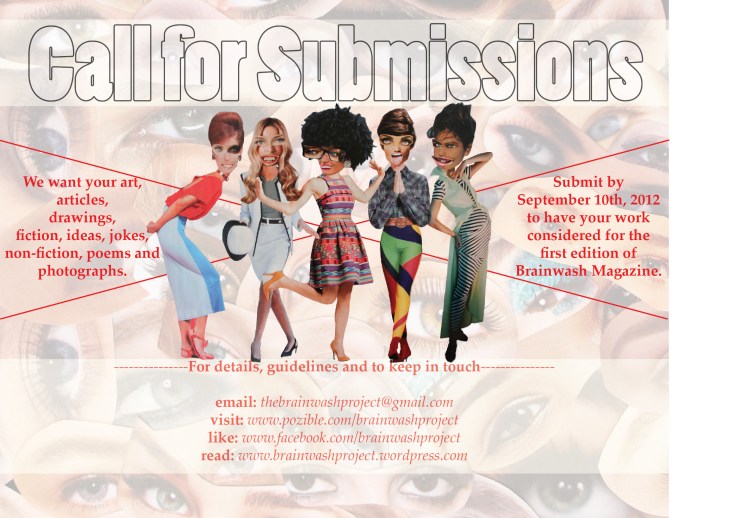
Brainwash Want YOU!

I’ve recently been talking to Jess Barlow, the creator of The Brainwash Project. Disgusted by the state of the media that young girls often inhale in their adolescence, Jess is on a crusade to create something realistic, helping to encourage strong and confident young women. As part of The Brainwash Project, Barlow recently launched a boycott of Cleo magazine for their unrealistic depictions of women through the use of photoshopped images. The response was huge.

I asked Jess about her reasons behind creating The Brainwash Project. Here’s what she said:

My high school years were negatively affected by the beauty ideals perpetuated by magazines like Cleo and I want to try to ensure that it doesn’t keep happening.

I’ve never been interested in reading about boys, sex, and makeup but in popular magazines like Cleo and Cosmo that’s essentially all there is. Just because I’m female, it doesn’t mean I like those things. 

I want to work with women and girls to create a magazine that truly reflects what we want. I want to help young people have their voices heard and I want to show the mag to the editors of Cosmo and Cleo.

Creating a media outlet that encourages intelligent women, talks about real women’s issues, and addresses the huge amount of negative body-talk there is in mainstream magazines – that sounds brilliant to me!

Click the picture for more details on submitting to Brainwash Magazine

Blog at WordPress.com.

Up ↑