Search

Sam van Zweden

Writer

Category

Rant

Goals: Making Them, Kicking Them, Putting Them Out in Public

In the spirit of oversharing, which I’m very fond of (and fond of the internet for), I’m posting some of my latest writing goals here so that you can all keep me accountable if I try to let them slide away into the abyss.

Having (just five minutes ago) finished timetabling my next uni semester, I’ve realised I’m committing to some big things here:

– I plan on reading at least one essay a week. This is pretty easy to do during the semester, but outside of it I tend to let this slide. I really want to expand my short non-fiction knowledge base, as it’s something I’m interested in writing a fair bit of myself. So. That.
– This second point is bigger: I’m committing to doing at least one writing exercise every day. Furious Horses style, only without the public sharing. Perhaps at the end of each week I’ll post on here the exercises I’ve done, and whether they’ve been helpful or not, because I know a lot of this site’s readers are writers, and you never can have enough ideas for writing exercises.
– Competitions! I want to start entering competitions. There’s money to be made, folks. And recognition to be given. Might as well give it a crack. If I don’t, crap people might win. And we can’t have that.
– Every quarter, I plan on sending off a piece to a publication which I don’t really honestly believe will accept me. This is how we make impossible things real. This is what happened with The Big Issue, and it’s inspired me.

I’m hoping that making these plans public will create some extra accountability. If I try to pretend this post never happened, give me hell.


The Waiting Game

I get jumpy after I’ve submitted things. Between the hours of 9am and 5pm, I check my email at least every half hour, just to make sure an editor hasn’t replied to my submission. I’m not waiting for an acceptance letter – I mean, it’d be nice. But I’m just waiting for contact, of any sort. Rejection? That’s okay. At least I can push forward after a rejection.

Weekends are the worst. I was silly enough to submit a piece I had particularly high hopes for the weekend of Queen’s Birthday… So I submitted on the Friday and subjected myself to waiting through Saturday and Sunday, and Monday too. The worst bit? Somehow, the writer’s brain convinces them that editors might take time out from sunning themselves in the park or playing soccer with their kids, in order to work. So weekends become frought too – I fight against the reasonable part of myself and check my email much too often anyway.

This morning I received some contact from the Australian Poetry Journal, where I’d submitted two poems for consideration… My heart jumped, I clicked on the email and discovered it was a notice to let me know they’d received my submission. The sad thing is that this happens so seldom (most of my submissions are met with the internet equivalent of a blank stare) that I was actually a little disappointed.

All of this, however, I can deal with. It’s a necessary part of the process – and it’s all made worthwhile by those rare acceptance letters, those moments when your heart leaps out of your chest because you’ve managed to make a dream come true…

My dream? Getting published in The Big Issue. Coming true? Most certainly. On the 19th of July, the new edition of The Big Issue is being released with my story, “My Brother the Chef” in it. I had to wait for that letter for a few weeks, including that torturous long weekend. I checked my email compulsively. But eventually it happened, and that made all the waiting worth it.

Picking The Pockets of a Dying Business

Yesterday I received an email from Borders, finally admitting that they’re closing. Up until now it’s all been very carefully-worded “We’re in administration, which means nothing!” emails. Yesterday’s email said I’d better hurry, because they’re selling everything for 40-50% off RRP. This seems the right point for me to hit the sales – the prices are significantly reduced, but it’s new enough that there’ll probably still be some decent stuff left.

A dying store is a weird place to be. As I wandered through the Carlton Borders, I noticed stickers on everything. It was like being in Ikea, but a really sad, distorted Ikea with a different mood to the frenzy. In Ikea, there’s stickers on everything – “Look at this bathroom sink! You want it? Look up at the thing that’s lighting it – THAT is for sale TOO!” Likewise in Borders today – I was looking through the hundred or so biographies left in the store (displayed cover-forward, making them look even lonelier), and I realised that if I had the inclination and the money, I could buy the shelf. I could also buy the chair next the shelf. I could buy the stand-up racks they fold wrapping paper over, or I could buy a card stand – all I had to do was “Talk to the shop fitting mgr.”

And the frenzy! In Ikea, there’s a frenzy. It’s students hauling around flat-packs and mothers discovering that you can freeze ice in the shape of space invaders. It’s a weird over-consuming hum in Ikea – in Borders today it was that, but melancholy. You could hear the reverberation getting deeper as things flew off the shelves. One poor sales assistant kept getting requests for books that she just couldn’t fill. All that’s left in that store is the obscure, the non-fiction and the pulpable.

The non-fiction thing’s a bit weird – by no means a revelation, but the fact that the average readers doesn’t seem to read non-fiction in anywhere near the quantities of fiction is sad. There’s so much great stuff out there! I do though, and the four books I bought myself from this Borders’ closing-down sale are:

  • The Ticking Is The Bomb, by Nick Flynn
  • Zeitoun, by Dave Eggers
  • A Dull Roar, by Henry Rollins
  • From Hipsters to Gonzo: How New Journalism Rewrote the World, by Marc Weingarten


The sadness in Borders today was really weird and empty. People were there to buy up big, to CONSUME! …but only because time was running out. Only because of the death of one of the book stores who really encourage people to read, who otherwise wouldn’t. I’m not particularly sad that Borders is going or gone – I never really shopped there anyway, I’m just glad I got some cheap books out of their demise. I am sad, however, that those people who were in such a panic today to get their books before time ran out, may not bother to track down their local independent book-seller to seek out what was easy to get at Borders. They might just give up.

…But enough of that. As far as I know the sale’s going until they run out of books. So go pick the pockets of this dying business while you can.

It’s a Process

The word “process” implies some sort of replicable ritual, something which can be followed to the end to get results. The sad truth, alas, is that usually it doesn’t all go down in the right order, it’s usually heavily punctuated with coffee, washing, or walks to the library, and it often lacks really satisfying results. Creating a ritual around my writing is important, but perhaps the most helpful part of that ritual is when it doesn’t go to plan.

While walking through the cemetery early this week, I discovered the Springthorpe Memorial. It really moved me, but I had no idea how I could use that. I came home and executed some boring pages about nothing much.

Next evening, I was playing with the magnetic poetry-makers on my fridge and came up with the following, which I somehow feel was inspired by the character of Sonmi-451 in David Mitchell’s Cloud Atlas. The poem read:
“How the monkey did wander
science-like
but sad.”

I wrote that down, because it made me sad.

The next morning I started working on a poem about the Springthorpe Memorial, using the idea of sad wandering, and talking about the fierce angels which guard the doctor’s “O Sweetheart Mine”. I’ve been researching all the sculptors who created the many statues around Melbourne, and I have no idea where that’s going to go but it seems useful.

And that’s the trajectory of just one piece. Just one piece which is still unfinished, so the “process” which guides me to the end of it may take a bunch of twists and turns along the way. The point is that I planned time to write about the Springthorpe Memorial, and it was balls. This doesn’t mean that I think getting up and making myself write is balls – far from, I find it very important. But in this case, the unplanned stuff was my way in – it was helpful.

Writing What You Know

“Write what you know!”, that’s the advice. That’s how we end up with a lot of the same characters, and they’re much like ourselves or people we know. “Write what you know” is scary – why would anyone want to read about my life? Disaffected youth – unless you’re an amazing writer or have an amazing twist, surely that’s just same/same, yeah? No, what I know is boring!

Henry James (in “The Art of Fiction“) wrote that “writing what you know” can be almost anything, as long as you’re “one of the people on whom nothing is lost!”. Even so, it feels like I’m writing something pretty imagined or untrue if my experience of a thing only extends as far as having seen it from a distance. For James, this is okay. But he, too, says that writing what you know is the way to go.

For a long time I did this – I wrote the same poem over and over, I wrote characters who were my age and in my relationships. Nothing differed very much – I spent a long time producing similar work. When I broke from this, I swung the other way – writing characters very unlike me, in situations which required a lot of research. Sometimes this worked; some of this stuff I’m proud of. Some of it is also just plain rubbish.

This semester, I have to pitch and submit an extract of “My Novel” (such an optimistic thing to call this nebulous being) for a university subject. I started to plan out a novel about a character I’ve had on the back-burner for some time. He’s a structural engineer who’s obsessed with the possibility that if his buildings aren’t sound, people could die. He’s a solid character, I do like him. He’s based loosely on someone I know (so this would count in James’ definition of “what I know”), and I am interested in writing him, eventually. However, in trying to start planning a novel about this guy, I realised it didn’t ring true. I was writing yet another story I wasn’t sure about, that was trying too hard to be NEW! I realised that by avoiding “What I know” in the strictest sense, of characters like myself or my immediate family, I’ve been denying some amazing material from my own life.

My family history is mostly a mystery to me. It’s a light that shines (dimly) only as far back as my grandparents on Mum’s side, and to my father on his side. Even within that limited space, I have the makings of a novel. It’s a matter of being comfortable with the fact that it warrants writing, and it will make a good story. Deep down I know it will, but I’ve been so afraid of being the stuck, clichéd writer who can only write what they know, that I’ve avoided it and gotten stuck in the other extreme.

I’ve talked to both my parents about writing our story, or some fictionalised semblance of it, and they’re both fine with that. What comes next, I suppose, is about the ethics of writing what you know. This question, I suspect, is much harder to answer.

On a panel called “Mining The Personal” at last year’s EWF, Benjamin Law talked about how he handed everyone in his family a red pen and a copy of his manuscript before it went anywhere. I think this is the most honest approach, and one I’ll certainly be following myself. But how do I wrangle the material in the first place?

What do you think about the ethics of writing (fictional or non-fictional) personal stories?
Bowen Street Blues

I have trouble stilling my mind in order to take in what’s around me, but after a few minutes I manage to push myself back and just be in this space.

I am tucked into the stairwell of building 9, which leads onto Bowen Street and looks onto the basketball courts. Of those boys and men I have joked that they are “majoring in basketball”, but I haven’t ever watched them properly. It seems like a strange kind of suspension out there where nobody is anybody; everyone just plays ball. They aren’t black kids or white kids, or engineering students or sound engineers, or guys in branded clothing or those who aren’t. One guy falls down and another offers a hand to help him up before laughing and lunging for the ball. The basketball courts might be in RMIT, but in a way they aren’t here at all.

These courts and the basketball majors are the only constant in this part of Bowen Street, and I feel a bit connected to them when I force myself still and silent for this exercise.

Everything else moves – people on the way to classes with half-read photocopies in hand, a girl stands next to me and her pocket explodes in sound – she yells something into her phone and hands up without waiting for an answer. A parade of AV students wheel carts of expensive gear across cobbled stones.

Every third person is on their phone. all trying desperately to connect in this hurried place, ignoring those around them. Only the basketball players seem to have got it.

Salve

This morning I couldn’t World. I couldn’t Brain. I couldn’t force my mind into any one thing, I couldn’t be.

I wish this black dog weren’t chasing me,
I wish my life sung with symmetry,
But I’m ragged, I’m jagged, I’m hollow and haggard
And I fear it’s how I’ll always be.

After losing myself in tears for too long, I pushed myself into the world. I had a cupcake. And I took myself down to my local book shop. I had a good chat with the lady behind the counter. And I purchased two books with money I certainly don’t have.

The Best Australian Stories – A Ten Year Collection.
I’ve been eagerly waiting for this one since I heard it was happening, and just flicking through the contents pages I feel like the Black Inc crew have made some fantastic decisions of what to include. (My favourite Nam Le story is in there! Just can’t get enough.)

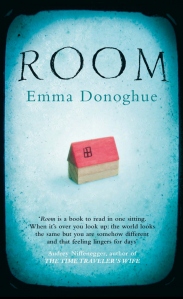
Room, by Emma Donoghue. I read an extract from this somewhere, though I can’t remember where… It really grabbed me. I’ve been looking for something exciting for my next Catalyst review, and I think this is it.

While I’m not quite Person yet, I feel like at least I have something I can put myself into as a distraction for the afternoon.

Writing Research Brought Me This:

I’ve been writing a lot this morning, making headway on a piece I’ve been pottering around with for weeks. A deadline is looming, so I’ve knuckled down.

I’ve done a shuffle of the story to give it a snappy opening line, because they’re so important. New opening line:
“Hugh stares in horror at seven shopping bags full of soup and beans.”

This is subject to subsequent edits, but it’s much more engaging than previous beginnings.

HOWEVER, I’m posting today to show you this messed up thing that my research brought to me. I’ve been researching agoraphobia today, and that’s been fine. Then later I started researching canned foods, and a friend sent me this link. I think the silk worm pupae and the fish mouths get me the worst… Though the whole canned chicken is pretty vomitous.

Enjoy!

Lazy Sunday Reading

It’s not a lazy Sunday for me; it’s a sped-up Sunday. I’m doing everything I’d do on a lazy Sunday, but I got up earlier and am doing it all a bit faster because I have to work later.

Part of this is reading. I’m reading Martin Amis’ Yellow Dog, and am very very very close to finished, but I’ve also been catching up on my Google Reader feed.

Some highlights, to make your Sunday more enjoyable:

– Jo Case has written an insightful review of Battle Hymn of the Tiger Mother.
– Alec Patric at Verity La talks to Nathan Curnow about transferrable skill sets, whether these skill sets exist at all, and the ways in which novel writing resembles The Wizard of Oz.
– On the anniversary of the Black Saturday fires, Claire Zorn at Overland writes about bearing witness for the 173 lives lost that day.
– An interesting post on Virgule about their 2010 submission statistics. It makes me feel amazing for getting in there.
– Some big news for page seventeen, as editor Tiggy Johnson moves on. I owe a huge amount of thanks to page seventeen for accepting my first published short story, and Tiggy has been amazing, wonderful, supportive, and welcoming. I wish her the best of luck in whatever she moves onto next, and look forward to the reveal of the next page seventeen editor!

Enjoy!

Blog at WordPress.com.

Up ↑