Search

Sam van Zweden

Writer

Category

musings

Back to Exercising

I’ve let the ball drop on my one-exercise-per-day goal that I set a few months ago. I’d decided I was going to do a different writing exercise every day, and when I hit on something worth keeping, I’d work that up to something presentable, but keep doing the exercises. The point though, was to keep the brain active and challenged. It’s easy to get stuck on one project, or to find yourself writing the same story over and over again. And I know so many people that produce so much work. I’d love to be one of those people. But it takes a lot of dedication and hard work.

So today I got back into it, and mean to stick with it. It’s about routine, I think. When I get up early and write, I do well. When I push it to the end of the day, what I produce is a half-arsed nothing.

Today’s exercise was one I’d done before, but hadn’t known where it came from. I did the exercise originally in a creative non-fiction unit at school, but it was well worth repeating. The exercise was from Now Write! Non-Fiction. It involved writing down every detail I knew (without looking) about my writing space, and then boiling that down to the salient details. I was amazed by how many tiny details I knew about the space without looking, but when I did look I was surprised by the size of some of the things I’d missed: the heater. The light hanging from the ceiling, and the water damage in one corner. The fact that the mantle is coming away from the wall some. I missed these things, but I remembered some tiny tiny details, like what notes were on my pinboard, and what was in my box of stationery.

The salient, tangible and telling details I kept about my writing space:
– The heater’s missing a caster, and is propped up by a thick book so that the heat doesn’t direct at the floor and set all my words on fire.
– There’s a Chinese charm hanging above the door (which we call Narnia) between our house and the shop we share the building with. This door is part of my study. My partner hung the charm there when we moved in, but won’t tell me what it means.
–  Notebooks spanning about eleven years have their own pigeon-hole in my bookshelf, and another for writing books and dictionaries. The rest is fiction, A-Mo, and on the mantle is Mo-Z. There are still books which don’t have a space. Non-fiction is on a steel shelf, $17 from Ikea, the kind you’d find in a garage. I love my books the way chumps love their cars.
– Unused notebooks, waiting.
– WRITERS ARE MADE, NOT BORN is hanging above my desk.

I worked these details up into a scene, and put some action in there.

I’m sharing this exercise because I found it useful. I realised that I sometimes miss some really, really prominent details, and that some details can say a lot about someone.

What does your writing space say about you?
in this light, at this moment – Rafael S.W

Today’s is a guest-post from a good friend, Rafael S.W. When I talk about those people that support me with my writing, Raf’s one of those I’m referring to.
He’s weighed in on what I wrote about last week – about the conditions under which we need or prefer to write. 

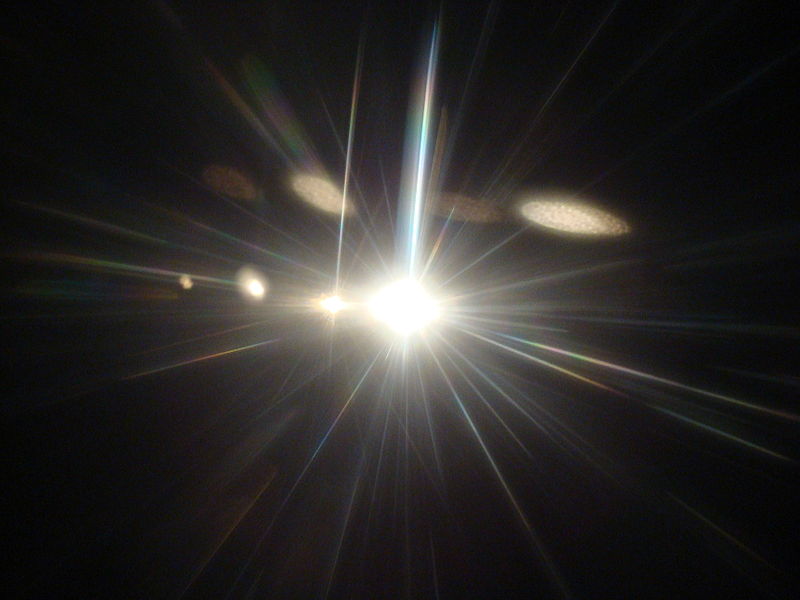
picture by Zouavman Le Zouave

I have started to be very aware of light levels in my writing. As I type this, I am in my grandmother’s kitchen because that is the only place I can be in her apartment that means I can have some lights on but none that are in my face. I spent a fair few minutes flicking different lights on and off before deciding on how I wanted it. This might sound weird, but I have become somewhat of a light connoisseur. I used to have one of those touch-lamps that could change the level depending on how I felt and what I wanted to write (the brightest setting for seriousness, essays / a completely dark room except for the lowest setting when I wanted to write poetry). Then I broke it. And now at home I write while my new lamp (which doesn’t dim) is covered in paper, with one of the two bulbs taken out, and it sits behind my door.

Where did this come from? Was it in the single moment where a girl first took me to her room and it was lit by nothing by Christmas lights? Was it when I walked home from 4 am parties and spoke poetry into my phone while the streetlights dimmed the road ahead of me? Was it when I first noticed how beautiful skin looked in the blue wash of a laptop screen? I don’t know, but ever since I’ve been writing with a light level that reflects my mood, my writing has felt smoother, less forced.

I have heard that the converse is true too. I have a friend who is completely impacted by the halogen brightness of trains at night. If he sits on a seat underneath one of the ones that flickers, however minutely, he might not even notice, but after a few stations his mood will sour, he sometimes even gets headaches. And only when he sees the spasmodic winking of the light overhead will he have an explanation for while he suddenly feels terrible.

I’m a strong believer in writing in a way that works for you, however weird. If it’s upside-down to candlelight, then so be it.

“That’s bad light there.” Says my grandmother, coming out from her room, squinting a little in the gloom. “Can you see alright there?”
Enough, yes, I can see enough.

I’m Listening

I just finished reading a piece by Margaret Atwood, in which she says that by “listening to the stories of others, we learn to tell our own.”

I suspect this idea is what’s at the heart of the music I listen to while I’m writing, planning, jotting, or blogging. In this music is always some really pure sort of story-telling; something linear and narrative; and something which gets to the reasons that I write.

There’s study music, but that’s muted. It’s Howard Shore, it’s Michael Nyman – it’s anything with uplifting violins and some fast-fingered key work. There’s never, ever any lyrics – my academic essay-writing brain needs near silence. Sometimes total silence. Study music exists, but I don’t know that it has any real impact on what I write. Unless my philosophy essay starts raising questions about women having their fingers chopped off with axes, and then I turn Michael Nyman off.

The actual soundtrack for my writing is a different matter. It has words, and this somehow helps my own words come. At certain times, usually when I make the move from planning to writing, I need silence. But after I’ve got that really hard bit down and the cursor’s done some work munching up the page, then I can introduce music.

They say that smell is our most powerful memory motivator. I think that sound – in the form of music – is a close second. Certain songs or albums (yes, albums – don’t you dare accuse me of belonging to a generation for whom albums are dead!) can bring back whole seasons or time periods for me. Summer 2003, Good Charlotte. Summer 2006, Johnny Cash and The Hives. And it’s not just that I can pinpoint the time, it can actually bring back feelings from the time that I listened to it. I can no longer listen to a lot of the music that I really clung to during periods of depression, because I find myself feeling it all over again.

Likewise, songs and albums attach to short stories and poems. Pieces of work acquire their own soundtracks. And those soundtracks always have something in common – they’re lyrical (for want of a better word – no pun intended), and they’re narrative. By listening to these stories, I’m learning how to tell my own.

Right now I’m listening to a lot of Wil Wagner. His lyrics focus on the heady feeling of rushing through life, and the tiny details we hold onto. He’s a natural story-teller. I’ve also just started listening to Bright Eyes again, particularly the “Cassadaga” album – it still holds the memory of some summer in its sound, but it’s bringing a really important lightness into my work. Josh Pyke is another favourite for story-telling abilities. His song are artful, tiny stories. Narratives that can be consumed in around three minutes. If I could write such full, rounded stories which could be consumed in that time frame, I’d be happy.

Listening to this kind of music keeps my prose lyrical, and it also reminds me that while I can string together a pretty sentence or two, they need to go somewhere. They’re part of a story.

Even beneath this is the fact that these song-writers, through their stories, are doing something important, and it’s what I’m doing too. They’re trying to communicate something right at the centre of themselves. In Bright Eyes’ “Bowl of Oranges”, he meets a doctor “who appeared in quite poor health / I said there’s nothing I can do for you / you can’t do for yourself / he said yes you can, just hold my hand / I think that that would help” – it’s not just the doctor, it’s not just Bright Eyes, it’s all of us. In creating things, we’re trying to connect. As David Foster Wallace said, “Fiction’s about what it is to be a fucking human being,” and part of that is to be a bit stuck inside yourself. By creating things, we’re bridging the gap. By listening to other people’s stories while I write, I’m reminded that this gap-bridging exercise is not for nothing.

JOMAD – I Heard You Like Books?

This morning I’ve started the day really, really well. By listening to Jojo Jakob’s and Maddie Crofts’ new podcast, JOMAD – I Heard You Like Books.

They’re funny, they’re thoughtful, they’re having the conversations you like the have with your friends. They out their own trashy reading, discuss their guilty pleasures, and the ways it’s hard to keep track of what you’d like to read, and what you thought of what you have read. They’ve inspired me to get back on the reviewing on here, and, more simply, to get more reading done today.

And hey publishers who are reading this, Jodie Kinnersley needs a job. Hire her.

Flexing the Writing Muscles

It’s been a week since I made my recent writing goals, and that means I’ve done a week’s worth of writing exercises. A lot of people have shown interest in what I’ve been doing… So here’s a list of the last week’s work. I’ve included where the exercises come from, if you notice a heap coming form good sources in future, you might find it worthwhile chasing these books down.

1. Write something you’ve been putting off – imagine you’re telling someone about this article/letter/essay you’ve been meaning to write, but can’t start. Write down what you’d tell them. (from Mark Tredinnick’s “The Little Red Writing Book”)
2. Write a list of 10 things you know to be true. (from Sarah Kay’s TED talk)
3. What are three things that could never be photographed? (From John Marsden’s “Everything I Know About Writing”)
4. Write a letter to yourself to be read in five years. (From John Marsden’s “Everything I Know About Writing”)
5. Write a character sketch of someone you’ve seen on public transport (suggested by Tiggy Johnson)
6. Observe someone’s hands (this can be in memory or imagination. Describe them as fully as possible. Notice shape, skin texture, any jewelry or disfiguration. What clues do these hands give you about the person’s life? (from Meredith Sue Willis’ blog)
7. Today was a mash-up, to create new exercises out of something else. In doing this, I found some really interesting connections. More of this tomorrow. Or Tuesday. One day soon, I promise.

A Perfect Day

Yeah, the sky’s blessedly blue outside for the first time in forever, but that’s not what I’m talking about.

It’s the end of the holidays for me – I’ve found them to be long, but productive. It’s only taken me about 7 weeks, but I’ve finally figured out how I would (try to) spend each and every working day if I were a full-time professional writer, in order to get shit done. For the last week or so, on days when I haven’t worked, this is what I’ve done.

I’d wake up early. Well, early for me: 8am, maybe 8.30. This still gives me two hours of quiet writing time before my boyfriend even thinks about consciousness. I check my email and Facebook, but only out of the neurological need – I don’t spend a long time on there. If there’s stuff to reply to, I do that later in the day. I update my GoodReads account with what I’d read the night before.

I read a short story. This week I’ve been chewing through the contents of Tiny Epics, which has been sitting on my shelf for over a year now. I regret not reading it earlier. Likewise with Bel Woods’ Get Smart which I read last week in page seventeen #8. That girl can write! What do your days look like to produce such brilliance, Bel?

After my short story, as per my writing goals, I read an essay. It’s not always pertinent to what I’m writing, but I’ve been learning an awful lot. Did you know that stabbing a lobster in the head doesn’t actually kill it? And that lobster deaths are a big point of concern for the RSPCA? And I never knew anything about Peter Porter, but now I do, thanks to Clive James – weird to read a dying great write about a dying great.

I write morning pages. These are at least three pages (so, for those of you who can’t convert longhand ideas into tech-speak, that’s about 750w) of whatever. They’re the pages where I supposedly get my brain warmed up to write my way into brilliance. Usually it’s just me pondering story ideas, brainstorming or bitching about how I can’t be arsed doing the dishes.

I do a writing exercise. Also, as per my writing goals, I’ve done one every day so far. It’s been fun. Out of six days, I’ve only had one day turn into something I feel I could follow up. But that’s still a higher hit-rate than when I wasn’t doing an exercise every day.

I work on a WIP.

I work on something that potentially can make me some money. I know that writing for money isn’t the point; I’m not trying to turn all my writing into a money-making scheme – that’s dumb, and would take the enjoyment out of it. I’m trying to find places that I can make money for doing something I enjoy more than my current job. I’ve been writing some copy for Weekendnotes, a guide to things you can do on weekends in Melbourne. It’s fun – it’s not exactly lucrative, but I’m enjoying the experience, and it’s really good exercise for banging things out on demand.

I do any business stuff I need to do. These last few weeks that’s involved getting an ABN, making an invoice template, posting submissions. Looking for comps and new publications I’d like to submit to happens during this time too.

Lastly, I catch up on my Google Reader feed (which is looking comparatively clean at the moment), and I blog, if I’ve got something worth saying or sharing.

Usually this whole routine takes up most of a day. Some days I don’t get around to all of it. As you can imagine, I sometimes get stuck in one piece or another – if it’s a good exercise, or a long story or essay, or if I find myself venting something worthwhile in Morning Pages…

But I feel like finally, after faffing about for six weeks, I’ve figured out how to execute a truly productive day. Now I go back to uni and that’ll jumble everything up a bit, but I’ll be trying to keep at least a few days a week like this.

What do your writing days look like?

Intersecting Lists (Inspired by Sarah Kay)

I’ve just watched Sarah Kay’s TED talk, and it was wonderful and inspiring. She’s so full of life, so eager. And such a confident woman.

She introduced an idea that I’d like to test, and to see whether anything comes out of it. I need your participation for this, so get ready to engage. Please.

She says that when she’s teaching kids how to write spoken word, the first thing she does is get them to write a list of ten things they know to be true. These can be anything – something about entertainment, technology, science, art, what you had for breakfast, someone you know – anything.

What happens from this list, she says, is that in a group when they’re shared, you find someone who has something the same as or very similar to something on yours. Someone else has the exact opposite. Someone else has a new take on something you thought you knew everything about. And someone else has something you’ve never even heard of. And this, she says, this intersection of these four points, is where great stories begin.

So I want to try this. STOP READING HERE! Go write your list of ten things. I’m posting mine below, but I don’t want yours to be influenced by mine. Post yours in the comments, and let’s see if we can find some great stories where our lists intersect. GO!

My List:
1. I had coffee for breakfast.
2. Ugg boots, though awfully ugly, are very warm, and acceptable around the home.
3. I am most of the way finished “New Moon” and it’s awful, but enjoyable. And it’s shameful.
4. Negativity breeds negativity.
5. There are too many books in the world for anyone to ever truly be “well read”.
6. I am 24.
7. It is easier for me to write with good equipment: fountain pen, laptop, comfy chairs. These make the job easier.
8. Tonight for dinner, left-overs.
9. Laptops are getting cheaper and better: a happy combination.
10. It has been raining all day.

I have high hopes for this, don’t disappoint me, Dear Reader! Post your list below.

Goals: Making Them, Kicking Them, Putting Them Out in Public

In the spirit of oversharing, which I’m very fond of (and fond of the internet for), I’m posting some of my latest writing goals here so that you can all keep me accountable if I try to let them slide away into the abyss.

Having (just five minutes ago) finished timetabling my next uni semester, I’ve realised I’m committing to some big things here:

– I plan on reading at least one essay a week. This is pretty easy to do during the semester, but outside of it I tend to let this slide. I really want to expand my short non-fiction knowledge base, as it’s something I’m interested in writing a fair bit of myself. So. That.
– This second point is bigger: I’m committing to doing at least one writing exercise every day. Furious Horses style, only without the public sharing. Perhaps at the end of each week I’ll post on here the exercises I’ve done, and whether they’ve been helpful or not, because I know a lot of this site’s readers are writers, and you never can have enough ideas for writing exercises.
– Competitions! I want to start entering competitions. There’s money to be made, folks. And recognition to be given. Might as well give it a crack. If I don’t, crap people might win. And we can’t have that.
– Every quarter, I plan on sending off a piece to a publication which I don’t really honestly believe will accept me. This is how we make impossible things real. This is what happened with The Big Issue, and it’s inspired me.

I’m hoping that making these plans public will create some extra accountability. If I try to pretend this post never happened, give me hell.


The Waiting Game

I get jumpy after I’ve submitted things. Between the hours of 9am and 5pm, I check my email at least every half hour, just to make sure an editor hasn’t replied to my submission. I’m not waiting for an acceptance letter – I mean, it’d be nice. But I’m just waiting for contact, of any sort. Rejection? That’s okay. At least I can push forward after a rejection.

Weekends are the worst. I was silly enough to submit a piece I had particularly high hopes for the weekend of Queen’s Birthday… So I submitted on the Friday and subjected myself to waiting through Saturday and Sunday, and Monday too. The worst bit? Somehow, the writer’s brain convinces them that editors might take time out from sunning themselves in the park or playing soccer with their kids, in order to work. So weekends become frought too – I fight against the reasonable part of myself and check my email much too often anyway.

This morning I received some contact from the Australian Poetry Journal, where I’d submitted two poems for consideration… My heart jumped, I clicked on the email and discovered it was a notice to let me know they’d received my submission. The sad thing is that this happens so seldom (most of my submissions are met with the internet equivalent of a blank stare) that I was actually a little disappointed.

All of this, however, I can deal with. It’s a necessary part of the process – and it’s all made worthwhile by those rare acceptance letters, those moments when your heart leaps out of your chest because you’ve managed to make a dream come true…

My dream? Getting published in The Big Issue. Coming true? Most certainly. On the 19th of July, the new edition of The Big Issue is being released with my story, “My Brother the Chef” in it. I had to wait for that letter for a few weeks, including that torturous long weekend. I checked my email compulsively. But eventually it happened, and that made all the waiting worth it.

Blog at WordPress.com.

Up ↑