Search

Sam van Zweden

Writer

Category

Book Reviews

Review: Every Love Story is a Ghost Story

Any biography of David Foster Wallace is inevitably going to be a bit uncomfortable and problematic. From all reports, DFW was not someone who revelled in being in the limelight. He disliked the spectacle of The Writer as separate to the person who actually exists, and writes. The Writer as commodity.

In his 2004 essay Borges on the Couch, Wallace talks about the “unhappy paradox” of literary biographies:

“The majority of readers who will be interested in a writer’s bio … will be admirers of the writer’s work. They will therefore usually be idealizers of that writer and perpetrators (consciously or not) of the intentional fallacy. Part of the appeal of the writer’s work for these fans will be the distinctive stamp of that writer’s personality, predilections, style, particular tics and obsessions – the sense that these stories were written by this author and could have been done by no other. And yet it often seems that the person we encounter in the literary biography could not possibly have written the works we admire. And the more intimate and thorough the bio, the stronger this feeling usually is.”
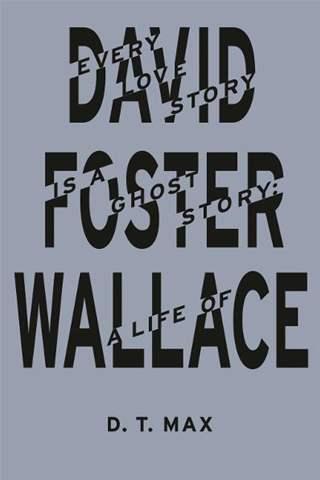
every-love-story-is-a-ghost-storyAccording to Wallace, in literary biographies the spectacle and the actual writer clash, and this is confronting for readers. I’d like to know what Wallace would have said about DT Max’s Every Love Story is a Ghost Story: A Life of David Foster Wallace.

The book seems thoroughly researched – lots of single-line quotes from important figures in DFW’s life, and extracts from letters and journals. Lots of anecdotes from publishers and students. There’s a lot of ‘behind the book’ type reveals, matching up what was happening in DFW’s life when a certain piece of work was taking shape or being published.

Some of the material Max uncovered in his research is truly gorgeous and insightful – my favourite little grab was a note Wallace made about what perfect balance would look like in his life:

What Balance Would Look Like:
2-3 hours a days in writing
Up at 8-9
Only a couple late nights a week
Daily exercise
Minimum time spent teaching
2 nights/week spent with other friends
5 [recovery meetings a] week
Church”

It gave me insight to what DFW wanted, and it made me think a lot about my own priorities.

The majority of Max’s focus, however, is on Wallace’s mental health. We follow his hospital visits, his time in rehab, his unstable relationships, his time on and off medications. While this kind of information is interesting to a certain point, and not something that can be left out of DFW’s biography, it’s also only part of Wallace’s life.

In the preface of his biography of David Foster Wallace, DT Max talks about the way that DFW fans “read their own lives in Wallace’s. They identify with his genius, his depression, his anxiety, his loneliness, his frustrations, his early success, his amazement that the world isn’t gentler, and his upset at how hard it is to say what you mean. They know or intuit his struggles. They talk about how hard he worked to stay sane and happy in a difficult world.”

While perhaps some people do feel an affinity with Wallace’s struggle (there was lots of “Mmm, what would I do in that situation?”), it is reductive and beside-the-point to be raising him up as the poster boy for mental illness and tortured artists. For me, it’s the parts of DFW’s life that I can’t relate to that make him such an admirable figure. He overcame his struggles and turned them into useful things. He was prolific and so.fucking.clever.

The hype around David Foster Wallace chucks his amazing work to the side and is overly preoccupied with that “staying sane and happy in a difficult world” hero. I don’t want to diminish his struggle, but I also want to say that we all have our stuff, and none of us are as clever or useful about it as DFW was.

Good Old Neon was the first DFW story I read, and I was struck by how wonderfully he could communicate human isolation (paradox alert). In it, the narrator speaks at length about how impossible it is to truly understand anyone because we can’t get inside anyone else’s head. This is a part of being human that just cannot be overcome. We’re doomed to aloneness and an inability to ever connect in a real way. Wallace did his best to write about this difficulty, and while the problem is ultimately a bind with no way out, he still wrote something beautiful about it, and publishing that work was the best he could do towards bridging the divide. Instead of sitting on his hands and bemoaning this fact (as most of us more inclined to do), Wallace used it.

By writing a biography whose major focus is on how tortured the artist was, DT Max’s Every Love Story … seems to function mainly to feed the spectacle. It lacks heart.

The subtitle may be telling – A Life of David Foster Wallace. A life. Just one possible life of the many lives – perhaps this is Max’s way of saying that he’s aware that this biography is narrow-minded. In reading the book though, it seems to imply that DFW’s work was the mental illness, and that the mental illness was the work.

In reading Every Love Story…, I can’t say that I felt confronted by the dissonance that DFW talks about in literary biographies. So much of the DFW mythos is about the tortured artist stuff anyway – for a writer who committed suicide, perhaps it’s inescapable. I mainly felt sad that DT Max hadn’t tried to do anything new with the material. Instead, he bought into the spectacle and reduced all David Foster Wallace’s work to his mental health or illness.

God forbid that should happen to any of us.

Review: The Perks of Being a Wallflower

SPOILERS: In this review, I discuss things that aren’t revealed until almost the end of the book. Consider yourself warned.

I’ve been thinking a lot lately about young people’s fiction, and whether we have a responsibility to police what’s being read. And if we do, who does that responsibility fall to? I know I get a lot of hits from people searching for reviews of The Hunger Games, and I suspect they’re coming from parents who want to be engaging with what their kids are reading. So I guess part of the responsibility is with parents, and part is with book bloggers and media, who are looked to as authorities on these kind of things. This might not be the case, but I felt the need to blog as soon as I’d finished Stephen Chbosky’s The Perks of Being a Wallflower.

Having recently been adapted for filmThe Perks of Being a Wallflower occupies two places in the Dymock’s Top 10 for this week. One place for the original edition, and one for the film-tie-in cover with Emma Watson and whatshisname and whatshisname.

wallflowerThe novel’s main character is Charlie – a misfit freshman, whose quiet demeanour and uncommon attentiveness to the world makes it difficult for him to find friends. Charlie thinks he’s settling in for a miserable, lonely high school experience until he meets Patrick and Sam. They help Charlie “participate”, bringing him out of his shell. Charlie has the doubts and fears and shocks and surprises that all teenagers do, with sex and drugs and family and literature. He’s a smart kid, and his outlook is switched on – hence, the “Wallflower”. He “sees things and understands”.

The novel is told through letters to an unknown recipient (“Dear Friend,” writes Charlie). Charlie likes a good digression, and this works well to help us learn about his life. Throughout his letters, he talks about his Aunt Helen, who died in a car crash. Up until almost the very end of the novel, we see Aunt Helen as tragic figure; a fallen comrade, a lost confidant much like Charlie’s best friend Michael who committed suicide the year before. At the end of the novel, however, we learn that Charlie was sexually abused by his Aunt Helen. Through a hospital stay and eventual recovery, we are told that this trauma is what has held Charlie back, and caused his awkwardness and pain.

I was perfectly happy with Aunt Helen as a sad, absent, friendly figure. By introducing the element of abuse (and in such a seemingly sudden way), I feel like Chbosky severely undermines Charlie’s natural teenage struggle.

Adolescence is a tough time for everyone. If you’re a regular reader of this blog, then you’re probably also a person who looked to fictional characters for comfort during your teenage years. I know I did. Looking for AlibrandiThe Catcher in the RyeGuitar Highway Rose. Those characters had a shit time of it, and they got me. They reassured me that a difficult time in your teens is pretty universal.

I still look to fiction for comfort at times now. Often, people with mundane stories are those I find the most comforting. (See Girls character Hannah Horvath as current mundane-story-comfort-crush). Instead of feeling less than worthy of my feelings, people like Holden Caulfield and Josie Alibrandi made me feel like there was some hope. The disappointment of Stephen Chbosky’s book is that it seems to do the compulsory teenage discomfort so well, but then puts it down to something dysfunctional.

In The Perks of Being a Wallflower, Chbosky seems to glorify and prioritise serious trauma as a worthy source for that universal pain, and no amount of pithy (and thoroughly wonderful) lines about bad times and feeling infinite can undo this overriding message for me. The Perks of Being a Wallflower lost me when it detracted from my struggle, and the struggle of every young person I’ve ever known.

In opposition to Charlie are the friends he finds through Patrick and Sam. While Patrick battles with the world’s reaction to his homosexuality, his troubles seem to be explained away by a cafeteria fight and a little too much booze – these are presented less as problems for Patrick than they are problems for Charlie. Nobody in Charlie’s world seems to have the right to be thoroughly messed up, unless they’ve got some terrible traumatic experience to back it up. If they don’t, then their troubles are fleeting and absolutely surmountable.

We all have the right to being a hideous mess at times. We all have the right to a painful and shitty adolescence. Maybe it is, or maybe it isn’t my place to weigh in on what I think young people should be reading. But being a teenager is hard for everyone, and I would rather see stories that validate that  for young people.

Review: Mr Penumbra’s 24-Hour Bookstore

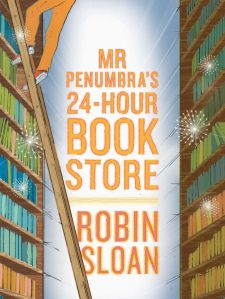
mr penumbraMr Penumbra’s 24-Hour Bookstore lives up to its name: it is run by Mr Penumbra, it is open 24-hours, and it does sell some books… But Mr Penumbra’s 24-Hour Bookstore is also much more than the name on its front window, in unassuming yellow Gerritszoon font, suggests. New employee Clay Jannon quickly discovers that there is much more to this bookstore than first meets the eye.

Penumbra himself is a kindly old gent, if somewhat eccentric and puzzling, but his bookstore is almost everything but an ordinary bookstore. At the front of the store is a minimal selection of books for sale. The real business of this bookstore, however, lies in the ‘Wayback List’ – shelves which stretch all the way to a very high ceiling, and right to the back of the store. Rolling stack ladders (you know, the ones that appear in Libraries that Dreams Are Made Of) help clerks climb to fetch weird and wonderful books for Penumbra’s strange patrons. These books operate on a library system, and their readers never say much about what they’re reading. Clay – despite being warned to never open these books – has his curiosity roused when he takes a peek. Cracking into one of these books starts his journey to solve the puzzle which starts in Penumbra’s shelves filled with encoded books, and stretches right around the world, and as far back as the Fifteenth Century.

Mr Penumbra’s 24-Hour Bookstore was published earlier this year, and is the first work of novel-length from digital jack-of-all-trades, Robin Sloan. Starting as a 6000-word digital-only short story, Penumbra might be seen as one of the more imaginative works lately to have started life in a digital form.

The premise of the book is quite literary – in the opening chapters all I could think of was Jorge Luis Borges’ Library of Babel, with Penumbra’s seemingly infinite shelves of infinite books. The encoded books at first struck me as perhaps a take on Borges’ books, which contain every permutation possible from our own alphabet, and every other existing alphabet, and alphabets that don’t event exist in our world. The chance of finding sense in these books is what keeps men reading… Sloan’s bookstore in Penumbra at first led me along thinking that perhaps he’d used the same premise as the basis for his own story. As I started reading, I took note after note of how I was reminded of Borges’ Babel. “p.37 – “many have devoted their lives to it -> Borges again”. “p.29 – description of what’s inside books sounds just like Borges’ infinite library books”.

From this unshakable similarity (in my mind, at least) came my main issue with Mr Penumbra’s 24-Hour Bookstore. I came into the book unsure of what kind of basis I was judging this work on: so much of the opening of the book reminded me so heavily of Borges that I was ready to judge on these terms – highly literary, postmodern and tricksy. I soon realized, though, that this wasn’t what Sloan was doing, and found myself shifting my expectations. The premise of this book is literary insofar as it’s based in a bookshop, and it considers the interplay of on-the-page text and digitization… That’s about it. The premise is literary, but the writing is not. Once I’d found this stable ground, I was in for quite a ride. Of course, this qualm isn’t anything to do with Sloan – it’s my own baggage that I bring into the text, and it was something quickly overcome when I figured out where I was with the book.

What ensued then was some strange cross between the glorious pacing of The Da Vinci Code (Brown’s is an awful book, but has very moreish pacing) and the bookish revelry of Jasper Fforde or Richard Braughtigan. The pacing is rewarding, and makes you want to keep reading. Short chapters cause that “just one more…” problem, meaning you tear through the book in two or three days, sleepless and hungry. Things fit together in the way of detective fiction, where happy coincidences flagged at the beginning of the novel line up cleanly by the end, and around every corner is an answer.

Overall, this book is funny, fast, and a great fun romp. It’s not exactly challenging, but does contain a huge amount of commentary on the interplay between hard-copy and digital texts, a part of the book which has had plenty of discussion in other reviews. Sloan’s conjecture seems to be that both hard-copy and digital hold their areas of expertise and charm, and that neither necessarily needs to put the other out of business in order to be successful or appreciated fully.

Lighter than I expected, but no less awesome for it. Do give it a go!

Review: Street To Street, by Brian Castro

Brian Castro’s latest work, Street to Street, is based on the life of Australian poet, Christopher Brennan. No, not quite – it’s more about the life of Brennan’s biographer, Brendan Costa, and the ways that this man’s life paralleled with Brennan’s.

At the start of the book, Brennan and Costa don’t have heaps in common – they’re Australian men with academic flair. Throughout the story, however, Costa’s obsession with Brennan’s life pulls the two men’s stories together. Or is it the similarities between their stories that fuel Costa’s obsession?

Through Costa’s failures and increasing frustration with the institutional rigidity of academia, Costa and Brennan come to play out quite similar lives. While Brennan’s life is separated from Costa’s by some eighty years, Costa feels such an affinity with the older man that he sets his mind (consciously or unconsciously, or perhaps by chance) to immitating Brennan’s life. His eventual mirroring of the man’s life – his failures and dysfunctions, an intentional nose-dive – is something of a homage to a fiercely creative man. Is immitation the best way to honour people we admire? For Costa, yes.

There’s some lovely Borgesian stuff in Street to Street, where Costa’s single-minded immitation of Brennan reminded me of Borges’ Don Quixote story. In it, an author tries to recreate Don Quixote by living his life exactly as Cervantes had lived. Both this and Brian Castro here are asking: is greatness conditional? If we can recreate the right conditions, then is greatness a given, or is it more individual than that?

Street to Street seems to carry some judgement within it, reflecting pretty harshly on academia and creativity in general. Brian Castro does a beautiful job of considering the self-destructive impulses of creative people, but seems to take these as a given. Perhaps they are. The book also heavily criticizes institutions such as universities, and notions like “Australian literature”. Brennan and Costa seem representative of all creative types, where any ambition within their field really translates to an ambition to fail.

There’s so much happening in this slender volume, that it seems to prove impossible to write a very coherent review, or do the enormity of Castro’s mission with this work justice – but I have done my best. To really get your head around it, you’ll need to give it a look-in yourself. Just keep in mind, this one really requires an open and receptive reader. If that’s you, then this book will pay off.

As mentioned, Street to Street is a small book, and one that’s not afraid to call itself a novella. While it’s being suggested that digital reading primes the market for renewed interest in novellas, it’s really nice to see Giramondo doing their bit to continue the form in print. In true Giramondo style, the physical thing is a joy to hold, and a rewarding challenge to read.

The Memory of Salt Review

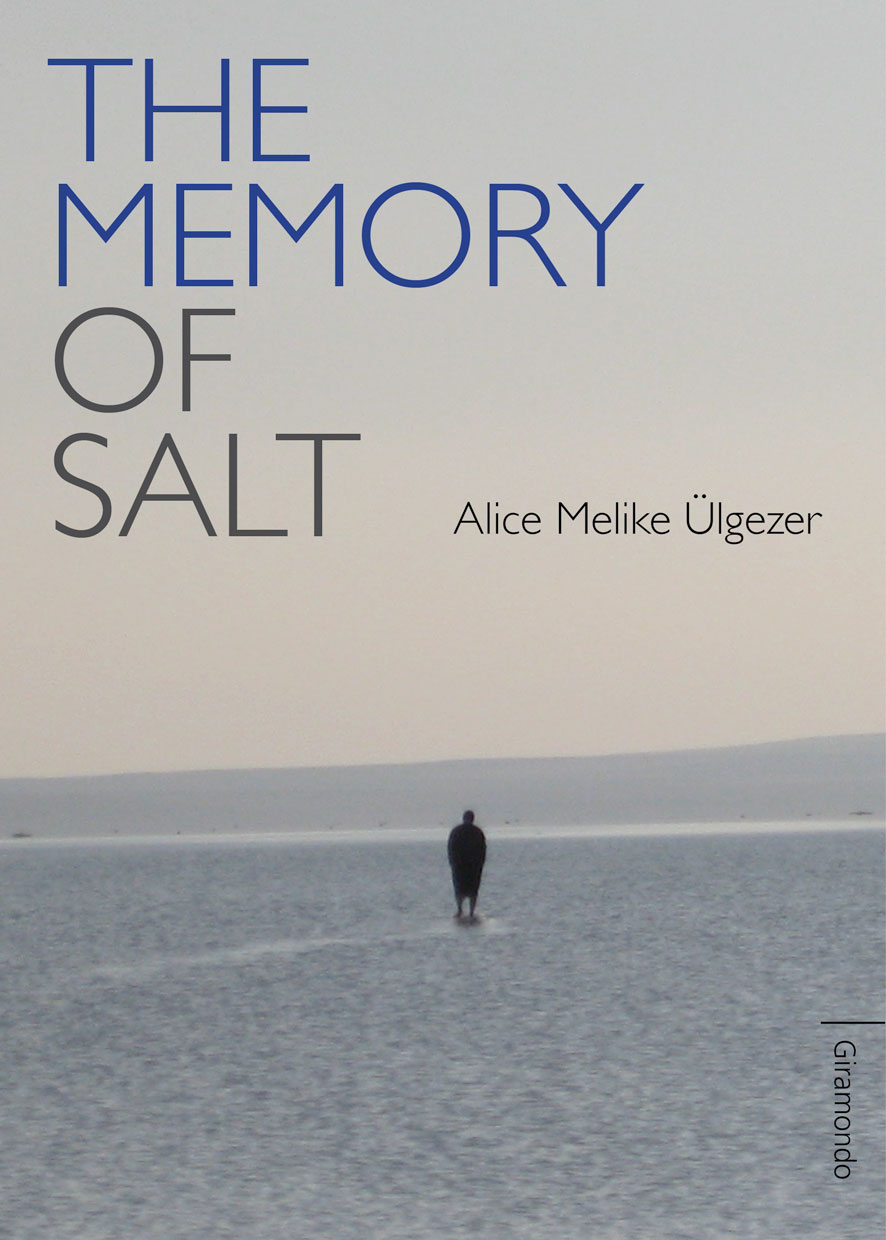
Alice Melike Ulgezer’s debut novel, The Memory of Salt, is organic, human, and above all, authentic.

The story is about Ali and her Turkish father (Baba/Ahmet) and Australian mother (Mac). Baba’s life is ruled by mental illness and religion. Mac’s life is ruled by Baba. The narrative isn’t chronological, as we follow Ali’s process from confusion and anger, to understanding and forgiveness. As the narrative shifts about in time, so do those emotions. Life isn’t chronological or one-way like a book, and the structure of The Memory of Salt highlights this beautifully.

When I say that the book is authentic, I say this from a place of knowing practically nothing of Istanbul. Ulgezer really beautifully paints the Middle East as a place of mysticism and tradition, and she has done it so well that whenever I think of that part of the world, I will now think of Ulgezer’s version. (I had a similar reaction to the Bali in Ruby J. Murray’s Running Dogs. Melbourne’s got some damn talented women!)

While I knew next to nothing of the Middle East before this book, I know a fair bit about mental illnesses and the strange (not all bad) things it can do to a family. The relationships that exist between Ali, Baba and Mac are spot-on. They’re truthful and they contain all the anger and unlikely generosity that’s required in that kind of situation. Baba is an infuriating character, but as we shift about in time, learning about the beginning of Baba and Mac’s relationship, its demise, Ali’s childhood and eventual return to Istanbul, we come to love him despite his worse qualities. We aren’t just told that Baba is charming – we are actively charmed.

Ulgezer’s prose is a very particular kind of writing. To be honest, it took me a while to get into it – at first it seemed flowery, and intentionally alienating in the way it’s peppered with foreign words, often without translations. However, once I’d gotten into the rhythm of the writing, it became part of what makes the work so distinctive. And by the end of the text, I’d pick up a few words of Turkish. It’s similar to the kind of gear-shift your brain does to read Jane Austen. At first all the clauses are confusing and seem verbose, but when you’re in gear you get entirely sucked into that world, and it’s great fun.

The book’s layout is organic, with no chapters and only page breaks indicating a shift in time or place. For the story, this works well, totally immersing the reader in the world of the novel. However, for the reader who reads fitfully like me, this can be disruptive. There’s no clean place to put the book down, and it really requires a few long sittings to be read properly. Don’t let this stop you, because it’s a rewarding read (in terms of ripping your freakin’ heart out, in the best way possible), but it does do best when you’ve got the time and space to dedicate to it.

Just a side-note on the physical book: it’s beautiful. As with all books from Giramondo (publishing company), the production values are really high. It’s a little wider than a regular format, the type is well-spaced on the page, and there are perfect margins to stop you from cracking the spine. The fact that it feels so good to hold means it’s easy to not put it down.

As a reader, you need to invest a lot in The Memory of Salt, getting into the rhythm of the prose, spending long periods of time with the text. This pays off though – Ulgezer’s knack with both place and human relationships is well worth the effort.

**A note added later: I just read a Q&A on Readings’ website with Alice Melike Ulgezer, and she talks about how Ali’s gender is never revealed. Isn’t that strange, how I took Ali to be female? Is this because I am female? How did I not notice this? Gosh.

Review: The Summer Without Men, by Siri Hustvedt

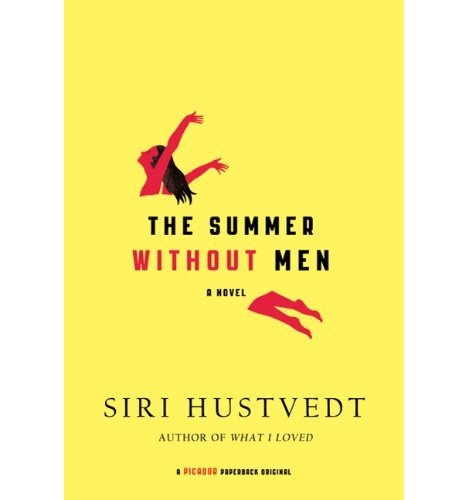
Having been cheated on, poet Mia retreats first to “temporary psychosis”, and then to the small town of Bonden. This is where her mother lives in a retirement home, and where Mia comes to know and love the small community’s members.

The characters we meet in Bonden are fully-formed, convincing people who live lives outside the pages of the novel. The doubled-over Abigail, whose “secret amusements” buoy Mia’s spirit. The group of seven young poetesses that Mia teaches to express themselves, and eventually to understand one other. Lola and Flora, mother and daughter under the tyrannous rule of husband/father (and Mia’s next-door neighbour) Pete. The connections that Mia makes with these people during her stay in Bonden are what holds this book together, but they’re not all the book is.

Siri Hustvedt is clearly a well-educated woman with a very active and working brain. She casts a wide net with her protagonist’s musings, from Neitzsche and Husserl, to the male/female divide and the nature of memory. Mia’s ponderings are of a specific sort, and it’s clear that Hustvedt has given thought to her protagonist’s concerns, thinking about Mia’s life experiences and where she is currently in her life, and how this would affect the things she particularly relates to. Indeed, Mia’s thoughts aren’t just from the point of view of a poet, but from a poet who is married to a neuroscientist and mother to a now-grown young woman.

Quite intellectually challenging ideas are presented accessibly, but also appropriately. At no stage do the characters become mouthpieces for Siri Hustvedt to show off her smarts, nor do said smarts stick out from the narrative as inappropriate – the characters and the theory stuff always work hand-in-hand, commenting on one another, strengthening each other’s credibility and aliveness.

The emotional content of the book sings just as much as the intellectual – the two are not mutually exclusive and they wind together in the prettiest way. In particular, Mia’s thoughts on her time in a psychiatric ward are considered and insightful.

Siri Hustvedt’s prose is beautiful. When I read passages I particularly enjoy in a book, I tend to write them down. I started doing this in The Summer Without Men, but a few pages in I realized that if I kept this up, I would just end up transcribing the entire novel into my notebook, so I might as well just sit down and enjoy the damn thing for what it is. It is beautiful.

Review: The Amazing Adventures of Diet Girl, by Shauna Reid

The Amazing Adventures of Diet Girl is exactly what it sounds like. Shauna Reid finds herself standing under a pair of size 26 cottontails and thinks, “Shit. They don’t get any bigger than 26.” This is where her adventures begin.

This is Shauna’s wake-up call, and this is when she decides to hit Weight Watchers. The day she starts to make changes, she also starts a blog, and The Amazing Adventures… is an edited collection of her blog posts.

Shauna’s writing is hilarious. This book works so well because while weight loss stories aren’t exactly thin on the ground, Shauna Reid gives a very familiar subject a very, very funny angle. She recalls her weight loss ups and downs with huge lashings of hyperbole and self-deprecating humour. The self-deprecating humour gets a little stale in the book’s final chapters – Shauna learns to love herself, but cannot seem to stop undermining herself in the name of a laugh. However, Shauna’s relationship with perspective provides both the hilarity and the gravity that the book needs to stay on the rails. For example, “The Vampire Method”. Shauna can see herself through an outsider’s eyes, but doesn’t let that stop her from achieving her goals. And so she starts exercising in the dark (either very early or very late) so that nobody can ever see her doing it. On the flip-side of this insight is her absolute blindness to how her beloved feels in return to her feelings, or her belief that revealing her former weight to new acquaintances will change their relationship.

Shauna’s weight-loss journey is inspirational, because it’s so realistic. She has hiccups along the way. She quits Weight Watchers, she gets a membership at a Fancy Gym and stops going for a while. She tucks into a giant jar of Nutella that she finds in her boyfriend’s pantry – and gets through all of it. It takes Shauna six years to lose enough weight to feel happy and comfortable in herself. Life’s not linear (or very rarely) in that “forward-march!” way, and the honesty of Shauna’s story is what makes this book enjoyable.

In fact, if you head to Shauna’s blog and read a more recent entry, you’ll find that her story’s still going, and still in a not-entirely-“forward-march!” way. She’s put some weight back on, and she’s now really trying to figure out how to live a well-balanced life, whether that means her “goal weight”, or a bit higher than what the BMI would have her believe. (Before anyone comments – yes, the BMI is crap.)

Honesty in memoir can end in one of two things – an overly gushy confessional, or a strong piece of work. Shauna’s book belongs in the latter category.

Un-follow-up-able

I finished reading Jay McInerney’s Bright Lights, Big City.

It’s so… Just so. I was grabbed from the very first sentence. I like a good opening line, but I don’t remember ever being struck as hard as I was by this one:

You are not the kind of guy who would be at a place like this at this time of the morning.

I’m not? Oh.

The second-person point of view is pulled off with great success in this novel, and there are so many moments of genuine poetry. The prose is beautiful, and the resonance McInerney has created by moments that in any other novel would threaten to be disparate…

I can’t write a genuine review of this, there’s too much already floating around out there and I’m not sure I have much to add. Just to say that I loved it, and heartily recommend it to you.

Review: Flying With Paper Wings, by Sandy Jeffs

Sandy Jeffs’ autobiography, Flying With Paper Wings: Reflections on living with madness is an enlightening memoir and exploration of the experience of schizophrenia. Sandy Jeffs takes readers through her diagnosis and early experiences, through hospitalizations, and her later life negotiations with her identity as schizophrenic.

There are many misery memoirs out there on the subject of mental illness, and I can’t say they interest me too much. There’s dangerous territory there, where the writer can wallow in their own interior mess, and with a subject like mental illness that’s not constructive at all when it comes to communicating exactly what the experience is.

Sandy Jeffs’ account of her illness makes no attempts at speaking for everyone with the same or similar diagnoses, but her representations of what goes on in her head during an episode are fascinating. This includes whole pages of her interior monologue. These don’t take over the book though, and more interesting are Jeffs’ meditations on the very real political issues she faced, as well as philosophical considerations of the mind/body divide and the ways in which trauma and obsession manifest themselves in psychosis.

While Jeffs underlines the individuality of her experience, she also raises some larger issues which are in need of some serious attention. The end of the book looks at the ways that care for psychiatric patients has changed over the years, and the gaping holes that still exist in the mental health system.

A family member of mine suffers from a mental illness which has much in common with schizophrenia, and in reading this book it’s a bit impossible for me to make a judgement separate from that experience. But that’s probably the best endorsement I could possibly give it – I felt like this book helped me understand a bit more. In this book, Sandy Jeffs gives a strong voice to people who are misunderstood and often ignored. She makes some meaningful steps toward bridging a very big gap.

Blog at WordPress.com.

Up ↑