Search

Sam van Zweden

Writer

Author

Sam van Zweden

The Night That Was White

This is a re-cap of my White Night, spent primarily at the Wheeler Centre as part of an event run by the Emerging Writers Festival.

Bivouacking at the Wheeler Centre – it feels like a school camp somehow. On the bus on the way in, I feel like a kid again. I carry a pillow and cupcakes, and a backpack full of laptop, pens and notebook. There’s a novel in there for the wee hours. 

The night begins without any great fanfare. A small crowd gathers for Eric Yoshiyaki Dando’s performance at 8pm. Eric is a bit short, a bit hairy; he wears no shoes and rolled-up fisherman’s pants. He reads from his iPhone (“from the Sleepers’ app, which is very handy!”) about his time spent as a shopping centre Santa. I presume it is non-fiction, but on later reflection I will wonder. Either way, he’s utterly charming. The AUSLAN lady’s hands dance, and Eric makes her say “snail” again because he loves the sign for it.

After Eric’s performance people splinter. There’s an awful lot of talking. More than one person here seems to be participating in White Night in order to write about it – I’m not the only person whose impulse is to document. There are people with cameras, and a few people approach to ask what we’re working on, or why we’re here. 

I leave for dinner. Sitting outside the State Library, I watch patterns drive themselves up the exterior walls. There are people with strollers. It’s as busy as New Years Eve, but people are happier and more friendly. This doesn’t last though – after dinner, at about 10.30, people seem a bit more volatile. There’s hostility in their demand for something to be happening always, everywhere. I walk more carefully back to the Wheeler Centre.

Image
Photo credit: Reuben Acciano for the Emerging Writers Festival

The Wheeler Centre packs out for later performances at midnight and 1am. The midnight performance has everyone laughing, Laura Jean McKay and Lawrence Leung lunging about the stage, jazz hands flying around one another in a battle to decide who reads first. The pieces they perform are similarly impressive. 

Performances from 3am onwards start to calm down. Luke Ayres Ryan does the 3am reading, which is of a story he wrote when he was 14. He antagonises his young self as he reads, incredulous that he ever thought that this writing was something to be proud of. I hope that he sees the value in his current writing, and wonder if we all have this mode when we read over ancient pieces. True, the piece he reads is as dismal as anything a 14 year-old would write, but still.

The audience at this reading is mainly those of us who have been writing all night. We lounge in bean bags, lulling, and we begin to feel a bit heavy-lidded. Second winds will come later. For now, sedate is the way to be. Chad Parkhill plays a ridiculous DJ set (“full of funky beats with a fat bass line”) to perk us all up, and it works in a way. We dance like fools for a little bit, before a friend arrives and a few of us head to the Domed Reading Room at the State Library.

This is the only thing that I really want to catch at White Night; the only thing that I absolutely need to see. The Domed Reading Room is expansive and overwhelming at the best of times, but in this ethereal space where the city hums and everybody is dreaming, it’s almost too much. The Exaudi Youth choir send their voices up to the ceiling, where projected lights move like ripples in a slow stream. It feels like sleep. Every person is surrounded by calm. People scatter, sitting on desks and chairs. Many heads take the opportunity for a quick nap.

Returning to the Wheeler Centre feels strange, stepping back into the real world. People come and go, and while people still write, the hours between 5 and 7 feel more like a drop-in centre where people stick their heads in out of curiosity.

The tram ride home hits me in the face, and I struggle not to close my eyes as we trundle up a now-quiet, very rubbishy Collins Street. 

The night was certainly white; brilliant with creative light and a generous crowd hungry for culture. Every piece of the city opened up and poured out all the secrets that are so often hidden.

White Night Game Plan

Last year, I learned to love the Extreme Writing Event.

As part of the Emerging Writers’ Festival, I took part in some of the writing-time at the Rabbit Hole. A few weeks later, I spent a day doing something similar, and wrote 10,000 words in a day at the Future Bookshop. And the last semester of uni was really an Extreme Writing Event in itself.

In about three hours, Melbourne’s White Night event will kick off. This event will see the city running non-stop for a whole night, with performances, projections, exhibitions, and miscellaneous others happening all over the city. As part of White Night, Emerging Writers’ Festival are hosting a writers-friendly space right through from 7pm until 7am tomorrow morning. There will be performances every hour, and cosy (comfortable?) space to chill out and get some serious writing done. 

For me, it starts with a cupcake. I always feel good about things when I can contribute some delicious treats. I have a fridge full of these bad boys, ready to spike our blood sugar levels and get us through the night.

Image
Chocolate with mint icing. Yummm!

If I learned one thing from last year’s Extreme Writing Events, it was the power of planning. I reached that 10,000 words in a day because I’d planned pretty carefully what I wanted to get written. So again, I’ve armed myself with a notebook full of jottings toward articles, and tweakings toward half-written pieces. This event is much easier, in that there’s no word-count goal. Managing to stay awake and somewhat productive is really the aim. This said, I’m still really keen to use the time to get something done.

I have a writing exercise here that I’ve been given by my mentor, and I plan to knock that over. After that, I’ll be getting stuck into a piece I’ve been planning (but not yet writing) for quite a while. If I can get down a decent draft of that piece before leaving, I’ll be a happy girl.

What happens to people when they get delirious and tired is fascinating, so I’m looking forward to scribbling down some notes for a piece about White Night itself. Other than that, I’ve got a good book, and a notebook, and cupcakes, and I’m now going to go take a nap to help me through the night. Working 10-5 tomorrow!

Hope to see you out at White Night.

Tincture Submissions Call-out

It’s always exciting when a new project pops up, and Tincture Journal is no exception.

Under the guidance of Sydney-based editor Daniel Young, Tincture is a digital publication looking to publish quality short fiction, poetry and non-fiction. It promises to be a publication that takes itself, and the business of lit-journal-ing, seriously. Published writers will be paid (a token amount to start with, but this is a generous gesture). The e-book format of the journal presumably makes it both an affordable publication to produce and a friendly one to read on your device of choice. The publication will be sold for a small amount, which I think is yet to be decided.

From their website:
“E-books are not a lower-class of book, and Tincture endeavours to publish high quality writing in high quality electronic formats” – I have a whole lot of respect for Tincture‘s valuing electronic publishing in this way; it’s something I feel is really important.

It’s impossible to tell what a publication will be before its first issue. But the attitude of the people producing Tincture, and the kinds of people I’ve so far seen engaging with it via Facebook and Twitter (lit people, whose work I like, shan’t name-drop), bode well for this new lit journal, whose first issue will be out in the next month or two.

Tincture are currently taking submissions. Poetry submissions have been closed due to a flood of interest, but they’re still taking submissions (through the brilliant Submittable portal) of short stories and non-fiction.

So take a punt. These guys have their head screwed on straight, and if you send them good work, they’ll be publishing good work!

Review: The Perks of Being a Wallflower

SPOILERS: In this review, I discuss things that aren’t revealed until almost the end of the book. Consider yourself warned.

I’ve been thinking a lot lately about young people’s fiction, and whether we have a responsibility to police what’s being read. And if we do, who does that responsibility fall to? I know I get a lot of hits from people searching for reviews of The Hunger Games, and I suspect they’re coming from parents who want to be engaging with what their kids are reading. So I guess part of the responsibility is with parents, and part is with book bloggers and media, who are looked to as authorities on these kind of things. This might not be the case, but I felt the need to blog as soon as I’d finished Stephen Chbosky’s The Perks of Being a Wallflower.

Having recently been adapted for filmThe Perks of Being a Wallflower occupies two places in the Dymock’s Top 10 for this week. One place for the original edition, and one for the film-tie-in cover with Emma Watson and whatshisname and whatshisname.

wallflowerThe novel’s main character is Charlie – a misfit freshman, whose quiet demeanour and uncommon attentiveness to the world makes it difficult for him to find friends. Charlie thinks he’s settling in for a miserable, lonely high school experience until he meets Patrick and Sam. They help Charlie “participate”, bringing him out of his shell. Charlie has the doubts and fears and shocks and surprises that all teenagers do, with sex and drugs and family and literature. He’s a smart kid, and his outlook is switched on – hence, the “Wallflower”. He “sees things and understands”.

The novel is told through letters to an unknown recipient (“Dear Friend,” writes Charlie). Charlie likes a good digression, and this works well to help us learn about his life. Throughout his letters, he talks about his Aunt Helen, who died in a car crash. Up until almost the very end of the novel, we see Aunt Helen as tragic figure; a fallen comrade, a lost confidant much like Charlie’s best friend Michael who committed suicide the year before. At the end of the novel, however, we learn that Charlie was sexually abused by his Aunt Helen. Through a hospital stay and eventual recovery, we are told that this trauma is what has held Charlie back, and caused his awkwardness and pain.

I was perfectly happy with Aunt Helen as a sad, absent, friendly figure. By introducing the element of abuse (and in such a seemingly sudden way), I feel like Chbosky severely undermines Charlie’s natural teenage struggle.

Adolescence is a tough time for everyone. If you’re a regular reader of this blog, then you’re probably also a person who looked to fictional characters for comfort during your teenage years. I know I did. Looking for AlibrandiThe Catcher in the RyeGuitar Highway Rose. Those characters had a shit time of it, and they got me. They reassured me that a difficult time in your teens is pretty universal.

I still look to fiction for comfort at times now. Often, people with mundane stories are those I find the most comforting. (See Girls character Hannah Horvath as current mundane-story-comfort-crush). Instead of feeling less than worthy of my feelings, people like Holden Caulfield and Josie Alibrandi made me feel like there was some hope. The disappointment of Stephen Chbosky’s book is that it seems to do the compulsory teenage discomfort so well, but then puts it down to something dysfunctional.

In The Perks of Being a Wallflower, Chbosky seems to glorify and prioritise serious trauma as a worthy source for that universal pain, and no amount of pithy (and thoroughly wonderful) lines about bad times and feeling infinite can undo this overriding message for me. The Perks of Being a Wallflower lost me when it detracted from my struggle, and the struggle of every young person I’ve ever known.

In opposition to Charlie are the friends he finds through Patrick and Sam. While Patrick battles with the world’s reaction to his homosexuality, his troubles seem to be explained away by a cafeteria fight and a little too much booze – these are presented less as problems for Patrick than they are problems for Charlie. Nobody in Charlie’s world seems to have the right to be thoroughly messed up, unless they’ve got some terrible traumatic experience to back it up. If they don’t, then their troubles are fleeting and absolutely surmountable.

We all have the right to being a hideous mess at times. We all have the right to a painful and shitty adolescence. Maybe it is, or maybe it isn’t my place to weigh in on what I think young people should be reading. But being a teenager is hard for everyone, and I would rather see stories that validate that  for young people.

Review: The Rosie Project, by Graeme Simsion

Graeme Simsion is quite the man of the hour – you’ll have seen him in one or all of the books pages lately. People are excited. Winner of the Premier’s Literary Award for best unpublished fiction manuscript, Simsion’s novel The Rosie Project is a humorous, sharp, and fun story about how “you don’t find love: love finds you.”

rosie projectThe novel’s protagonist, Don Tillman, is a totally endearing cross between Mr Darcy and Christopher from The Curious Incident of the Dog in the Night-Time. Though never directly stated in the book, Don is suggested to be a high-functioning autistic. He lives his life by strict rules, mapping out schedules and standardizing everyday events (meals, exercise, showering, etc) to minimize the chance of unexpected emotional challenges which cause his brain to “overload”. Don is socially awkward, caused mainly by his inability to think in any way but literally – however, his brute honesty, intelligence, and lack of personal insight (causing lots of those “a-ha” moments from readers watching over the protagonist’s shoulder), are exactly what makes Don such a loveable character.

Like the rest of his life, Don approaches the “problem” of finding a wife as scientifically as possible. He creates a questionnaire, ranks preferable answers, and tries to find the perfect woman based on her quiz results.

Enter Rosie Jarman. If this were a film, you might say that Rosie is the “Manic Pixie Dreamgirl” character. She’s unpredictable, emotional, and disorganized. She arrives late, she drinks too much, she doesn’t plan things in advance. She’s everything that Don is not looking for in a wife.

So after the first date, Don rules Rosie out as a potential partner, and keeps their relationship in a strictly platonic compartment in his head. While Rosie’s flightiness can unsettle Don, he knows that all this is separate from The Wife Project.

…or is it?

There’s a lot of nice tie-in stuff happening with The Rosie Project. You can chat to @ProfDonTillman on Twitter, or you can watch the book trailer and take a quiz to find out which character you’re most like on the Text website.

Simsion’s novel is a lot of fun, and is a great light read for curling up in the sun with. It reads much like a rom-com film, and indeed, the work did start life as a screenplay. While it’s not the kind of book I would have picked up without the hype, I am glad that I did.

The Rosie Project was a nice way to spend a few reading days.

Keeping A Promise

I promised myself that this year would be the year of saying “Yes” to opportunities, even if it means (especially if it means) pushing myself. 

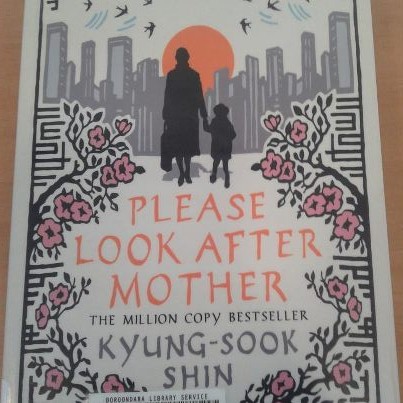
Today’s trip to the library was on a mission. A friend is starting a book club, which will focus on Asian books in translation, starting with Kyung-Sook Shin’s book below.

Image

This is an area I’ve never read in, and I’ve never been part of a book club. Both are things I’d like to do, so even though it’s daunting, and a bit of a stretch out of my comfort zone, I have said, “Yes”. 

A Month of Reading: January 2013

Normally I post a list of titles: books I’ve read, bought, received. However, this month I failed to write everything down, and so I’m just posting what I’ve read this month.

The Rosie Project review was all written up and saved, and then WordPress lost it. So it needs to be re-written. Tomorrow: forthcoming.

And everyone should go and read The Secret History – it’s been added to my favourite books ever list.

Joyful-Strains

Joyful Strains, ed by Kent MacCarter and Ali Lemer

wheat-belly

Wheat Belly, by William Davis, MD.

the-secret-history-popular-penguins

The Secret History, by Donna Tartt

rosie project

The Rosie Project, by Graeme Simsion

What did you read in January?

Thinking With My Hands

Sometimes I work when I look a helluva lot like I’m not working.

Doing the dishes, I consider how to open my essay in the most engaging way. Eating a nectarine, I ponder whether I need to factor as a character in this one, if this is a personal essay, or just an essay (and get the fuck outta there, writer lady!).

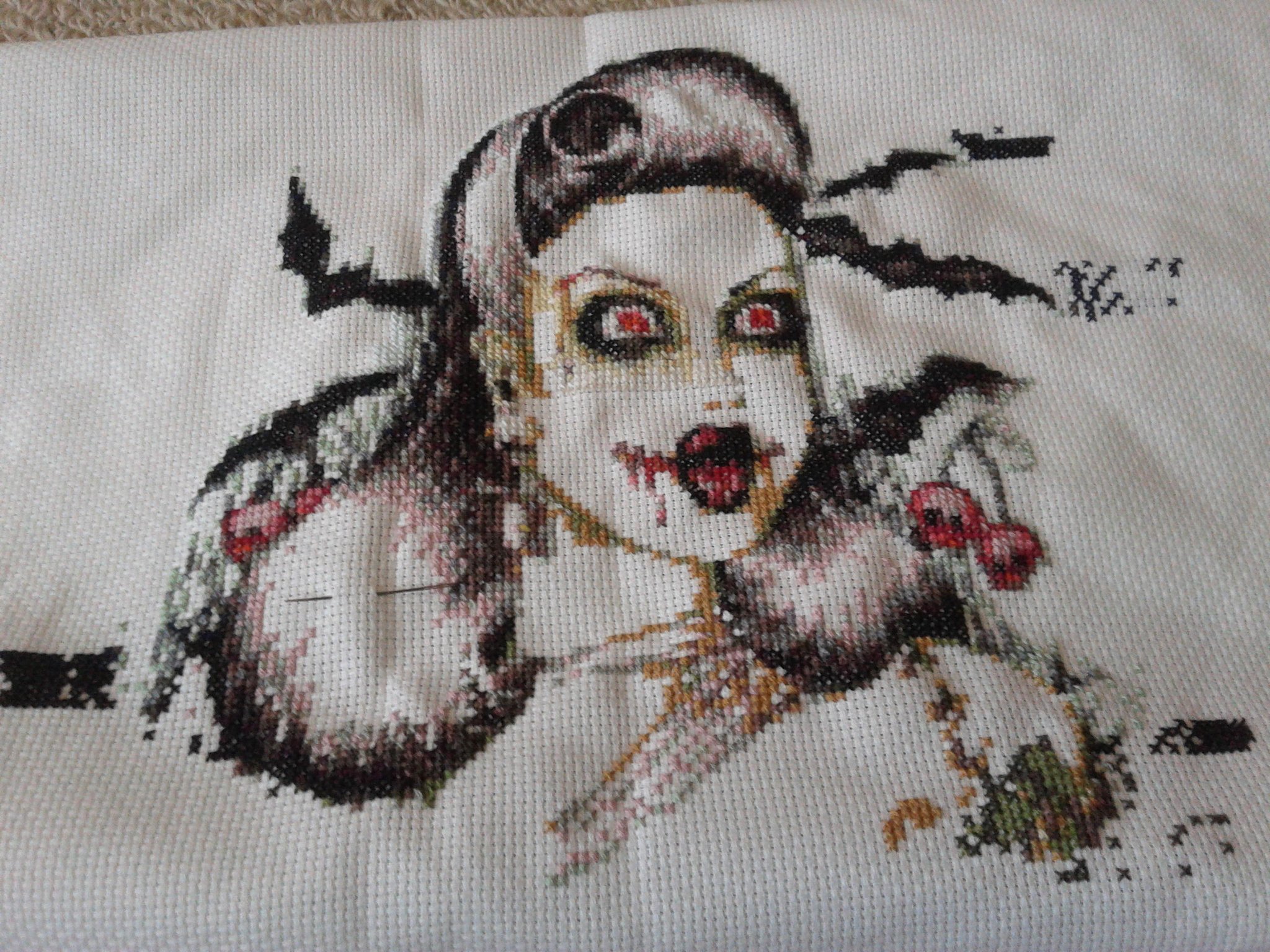
Cross-stitching is my pet lately. It serves two purposes, aside from making something damn awesome. It gives me something to do while my boyfriend watches one of the fifty billion “man” shows on TV at the moment. More usefully, however, it punctuates my day with something both productive and productive. Productive in the creative, making a lovely cross stitch way, but also productive because it gives me space to think.

Sometimes I just need to get in my head, and let my hands do the thinking. There’s something about working with my hands that frees up the mental space for breakthroughs. I’ve heard a theory about physical movement and the way your synapses fire away, but I think perhaps that was in relation to more strenuously physical things, like running or cycling.

Anyway, here’s my project, and it’s helping me think.

Do you have ways of thinking about your work that aren’t writing?

Getting Back Up

I have two particular quotes circling around my head to keep me going this week.

“If failure don’t hurt, then failure don’t work”, and, “Ever try. Ever fail. No matter. Try again. Fail again. Fail better.” The first is from a Boy & Bear song, and the second from Samuel Beckett. While the folk band and the playwright are worlds apart, both of their words have been really important reminders to me.

I got a few rejections, see. I also stopped writing for a few weeks. And I slipped into a depressive slump – rising early, avoiding my study, eating too much and not washing (clothes, self, dishes, everything). I’d sent off the applications before the depressive slump, but by the time the rejections came in I was in this place: “REJECTION + DEPRESSION = DEVASTATION AND DESPAIR”.

This has nothing to do with the rejections themselves, really. I mean, I was sad I didn’t achieve the things I was aiming for, but I was mainly just having some kind of bizarre, unnecessary existential crisis. I let myself sulk for a day after the second rejection, but then I started remembering Beckett and Boy & Bear’s words about failure.

It’s part of being a writer, and I suspect it’s part of being creative in any way. I think you need to get knocked back for things that matter occasionally. For me, these rejections have served as a wake-up call: What am I doing? What am I aiming for? Shut the fuck up, put your head down, and write. I was getting lost in all the extraneous stuff: numbers, other people’s opinions, hits, selling my work. None of this matters. What matters is that I have something to say, and I know that if I commit, I can say what I want quite well. I needed to refocus, or else 2013, “my year off study”, would fly by without me achieving anything.

I ripped everything off my pin board last night. I dedicated space to my ideas, my goals, and deadlines. I put up the names of places I want my writing to take me, and publications I’d love to write for. I put up all the article and story ideas I’ve had and decided to start another day, so that there’s always something for me to be working on. Today I’ve come home from my half-day at work, and (apart from a few episodes of Girls with lunch), I’ve stuck to my reading and writing routine.

I’m taking it one inch at a time, as Anne Lamott advises:

“The first useful concept is the idea of short assignments. Often when you sit down to write, what you have in mind is an autobiographical novel about your childhood, or a play about the immigrant experience, or a history of — oh, say — say women. But this is like trying to scale a glacier. It’s hard to get your footing, and your fingertips get all red and frozen and torn up. Then your mental illnesses arrive at the desk like your sickest, most secretive relatives. And they pull up chairs in a semicircle around the computer, and they try to be quiet but you know they are there with their weird coppery breath, leering at you behind your back.” 

Lamott keeps a one-inch picture frame on her desk, which reminds her to only bite off an inch at a time, as a small assignment. This is the tactic I’m taking. Just small bits.

I fell down, but I’m getting back up. I tried, and I failed. No matter – I’ll try again…

Blog at WordPress.com.

Up ↑