Search

Sam van Zweden

Writer

Author

Sam van Zweden

Books and Writers Q&A Meme

Book Q&A Rules

1. Post these rules

2. Post a photo of your favourite book coverImage
3. Answer the questions below

4. Tag a few people to answer them too

5. Go to their blog/twitter and tell them you’ve tagged them

6. Make sure you tell the person who tagged you that you’ve taken part!

What are you reading right now?

Fuck You, I Was Ducking!  – it’s a manuscript of a work-in-progress by Jo Day, and I’m loving it.

Do you have any idea what you’ll read when you’re done with that?

The Orchard of Lost Souls – I’m reviewing it for The Big Issue.

What five books have you always wanted to read but haven’t got round to?

Great Expectations by Charles Dickens

What is the What by Dave Eggers

The Immortal Life of Henrietta Lacks by Rebecca Skloot

Extremely Loud and Incredibly Close by Jonathan Safran Foer

The Hours by Michael Cunningham

What magazines do you have in your bathroom/ lounge right now?

Lucky PeachCreative NonFiction

What’s the worst book you’ve ever read?

Oh, that’s tough… I read multiple Dan Brown books, I’m not proud of that.

What book seemed really popular but you didn’t like?

Diary of a Bad Year was critically well-received and analysed to death, but I just didn’t like it. Sorry, Coetzee.

What’s the one book you always recommend to just about everyone?

A Heartbreaking Work of Staggering Genius by Dave Eggers.

Where do you usually get your books?

Depends what it is… Work (Dymocks), op-shops, reading copies. 

When you were little, did you have any particular reading habits?

Same books, repeatedly. I loved The Worst Witch and Sweet Valley books. As I got a bit older I went for John Marsden. I loved trips to the Frankston library with Dad. 

What’s the last thing you stayed up half the night reading because it was too good to put down?

The Knife of Never Letting Go by Patrick Ness

Have you ever “faked” reading a book?

I struggled to finish The Man Who Loved Children in time for the week we were studying it, so I kept pretty quiet in the tute but didn’t own up. The discussion was so good that I chose to finish it rather than abandon it, as I probably would have otherwise.

Have you ever bought a book just because you liked the cover?

…No.

What was your favourite book when you were a child?

It depends what age we’re talking about… in order of age: Goodnight SammySilvester and the Magic PebbleThe Worst Witch series, The Magic Faraway Tree, Tomorrow When the War Began series.

What book changed your life?

A Heartbreaking Work of Staggering Genius

What is your favourite passage from a book?

Oh, there’s many, but we’ll go with this one for now:
““In the shop window you have promptly identified the cover with the title you were looking for. Following this visual trail, you have forced your way through the shop past the thick barricade of Books You Haven’t Read, which were frowning at you from the tables and shelves, trying to cow you. But you know you must never allow yourself to be awed, that among them there extend for acres and acres the Books You Needn’t Read, the Books Made For Purposes Other Than Reading, Books Read Even Before You Open Them Since They Belong To The Category Of Books Read Before Being Written. And thus you pass the outer girdle of ramparts, but then you are attacked by the infantry of the Books That If You Had More Than One Life You Would Certainly Also Read But Unfortunately Your Days Are Numbered. With a rapid maneuver you bypass them and move into the phalanxes of the Books You Mean To Read But There Are Others You Must Read First, the Books Too Expensive Now And You’ll Wait Till They’re Remaindered, the Books ditto When They Come Out In Paperback, Books You Can Borrow From Somebody, Books That Everybody’s Read So It’s As If You Had Read Them, Too. Eluding these assaults, you come up beneath the towers of the fortress, where other troops are holding out:

the Books You’ve Been Planning To Read For Ages,

the Books You’ve Been Hunting For Years Without Success,

the Books Dealing With Something You’re Working On At The Moment,

the Books You Want To Own So They’ll Be Handy Just In Case,

the Books You Could Put Aside Maybe To Read This Summer,

the Books You Need To Go With Other Books On Your Shelves,

the Books That Fill You With Sudden, Inexplicable Curiosity, Not Easily Justified,

Now you have been able to reduce the countless embattled troops to an array that is, to be sure, very large but still calculable in a finite number; but this relative relief is then undermined by the ambush of the Books Read Long Ago Which It’s Now Time To Reread and the Books You’ve Always Pretended To Have Read And Now It’s Time To Sit Down And Really Read Them.” 

from Italo Calvino’s If On a Winter’s Night a Traveller

Who are your top five favourite authors?

Dave Eggers
David Foster Wallace
Donna Tartt
Shane Koyczan
Nick Flynn

What book has no one heard about but should read?

Get Jiro by Anthony Bourdain – it’s a hilarious graphic novel about a future where food is the ultimate goal for everyone, and whoever has the food has the power.  

What books are you an ‘evangelist’ for?

If on a Winters Night a Traveller, by Italo Calvino

Rocks in the Belly, by John Bauer

House of Leaves, by Mark Z Danielewski

The Happiness Trap, by Russ Harris

Another Bullshit Night in Suck City, by Nick Flynn

Automatic Teller by Carmel Bird

Non-fiction by Chuck Palahniuk

I’ll stop there.

What are your favourite books by a first time author?

Asymmetry, by Josephine Rowe
Rocks in the Belly, by John Bauer (first novel, anyway)
Neon Pilgrim, by Lisa Dempster

What is your favourite classic book?

Little Women or Jane Eyre

Five other notable mentions?

Gaysia by Ben Law
Madness: A Memoir by Kate Richards
Flying With Paper Wings by Sandy Jeffs
Consider the Lobster by David Foster Wallace
Burial Rites by Hannah Kent

Thanks to Laurie Steed for tagging me in this post. I’m tagging Jo Day, Veronica Sullivan, Tully Hansen, and Ruby Mahoney.

Your thoughts: You don’t have to be tagged to take part in the meme. You can respond in the comments or on your own blog – just share the link in the comments section. (These are Laurie’s thoughts, but I agree!)

A Cure For What Ails Ye!

ImageI’m so excited about this. The Novel Cure landed in my post box last week, care of the good folk at Text Publishing. The concept of the book is good – a bibliotherapy guide of sorts. Reading the promotional material on Text’s website, I wasn’t exactly jumping out of my skin – I pictured something akin to Ramona Koval’s By The Book, or any of the other many many many reading guides. Walk-throughs of the worthy stuff; a memoiresque telling of why we should read what the author deems deserving. I don’t have a problem with these kinds of books – they’re fun.

But that’s not what The Novel Cure is at all. It’s an A-Z reference book, with a listing for every kind of ailment (both physical and emotional) that you could possibly have. From losing your job, to being a parking inspector, to feeling lonely, to having a toothache, The Novel Cure can suggest something to make you feel better. Sometimes it’s something that takes your mind off the problem, while other listings give examples that you’ll be able to relate to. The entry for ‘Depression’ lists books that will make you laugh and feel good, as well as books that talk about depression really well, and will make you feel less alone in the world.

This book is not just a cool gimmicky book about books – it’s a considered attempt to help people through literature.

I can’t review this in its entirety, because it’s not a book I’ll be sitting down to read from cover to cover – though, if I were feeling enthusiastic, I imagine this might be possible and even enjoyable. There are entries throughout that make good dipping-in reading – I’ve found the ‘Cures for Reading Ailments’ fun. There’s entries like “Amnesia, reading-related”, “Overwhelmed by the number of books in the world” (there’s another “overwhelmed” entry for the amount of books in your own house), and “Live instead of read, tendency to”, and each of these have suggested cures too.

It’s also a lot of fun going through the index to find books you love, and see what they’re prescribed for. Some of my favourites – Black Swan Green (David Mitchell) is listed beside ‘Speech impediment’, Beloved (Toni Morrison) beside ‘Haunted, being’, and Little Women is beside ‘Sibling rivalry’.

The Novel Cure has been dipped into a few times already, and has been shelved with the rest of my reference books, to be consulted in times of need. It’s being released on the 21st of August.

A Month of Reading

It’s the end of another month, and we’re officially moving into MWF festival-month. Working festivals is paradoxical – you’re surrounded by writers and books, but have increasingly less time to read the more actual the festival becomes. Never fear though, there’s a massive binge on the other side, and it happens with a renewed passion after seeing many amazing writers speak.

But that’s next month. I got through a few books this month, two of which are by MWF guests.

Image

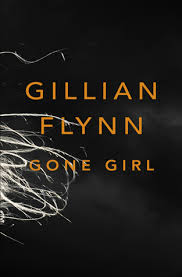
Gone Girl by Gillian Flynn

Gone Girl has been such a popular book in the last few months that I couldn’t just ignore it. Like most best-sellers, it was compelling stuff. A murder mystery, which is something I generally wouldn’t be interested in reading. It’s impossible to review, because of its Fight Club-esque twist – you can only do it once, and after it’s done everything is changed. So I won’t go into the plot, I’ll just say that Gillian Flynn has a good eye for society, and I enjoyed this about her book. Some of the writing is a bit icky, you can almost see Flynn at her desk writing around cliches so much that they’re obvious. But the pages turned themselves, and the twist got me.

Image

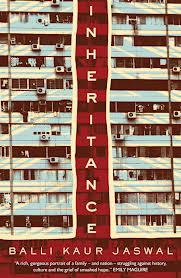
Inheritance by Balli Kaur Jaswal

Anything from Sleepers Publishing is generally a good bet. I found Inheritance to be a really strange book, in a good way. It’s just as much about the passage of time within a family as within a nation, following one Indonesian family through Singapore’s coming of age. It’s a bit of a quiet story. While I was reading I wasn’t particularly struck by the beauty of the prose, or the plot, or anything much at all. But when I finished the book and put it down, I felt like I’d just been through something with some very real characters. And that probably means more than the loud books. 

Image

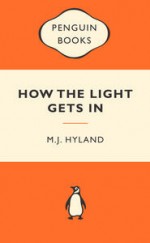
How The Light Gets In by MJ Hyland

I knew nothing about this book, or MJ Hyland, apart from her presence at MWF 2013. Thought I’d better read it, and I’m so glad I did. How The Light Gets In is about a teenage girl, Lou, who goes to the US on exchange. She comes from a low socio-economic background, and is hosted in the US by quite a wealthy family. Despite her fantasies of escaping her life in Sydney to this new trouble-free zone, Lou manages to bring her problems with her. This book made me question a lot though, like whether Lou was dysfunctional, or just had trouble fitting in and had troublesome coping mechanisms. And what it is about teenage thinking that makes everything sparkle, and how MJ Hyland managed to harness that so well in this novel.
How The Light Gets In is intelligent, quirky and funny. So many passages needed to be read-aloud to people around me. A great many others were written in my notebook, squirreled away. 


What did you read in July?

Open House Melbourne

Once a year, Melbourne throws open its doors for Open House Melbourne. The poem below was prompted by my day at Open House today, touring the Harry Brookes Allen Museum of Anatomy and Pathology (Melbourne Uni). We also walked through the tunnels that run under the Royal Melbourne Hospital. Both these areas are usually closed to the public.

The line is long, and we are fierce. 
“We arrived together!” insists the group with bikes
“But we aren’t together,” we correct, and the woman lets us through.
We wait half an hour, more,
anyway.

Moulages masquerade – 
Mermaids are manufactured – all horse-hair and wax,
Topped with a flute for proper exotic flair.
A woman gives her daughter a brilliant explanation of what an umbilical cord is,
and I miss my mum.

Body parts are shattered, separated, strewn across a room
I can’t imagine the function of all these bits
I can’t place them in my own body.
A woman’s tumour has grown its own hair.
What was the purpose of that?

All the million ways
Our bodies will betray us.

An Explosion of Cheryl Strayed

Picture from ed_needs_a_bicycle of Flickr creative commons

Yesterday someone came into work to ask if we stock Tiny Beautiful Things. We don’t, but we ordered it in for her, and in the meantime I exploded in a lovefest for Cheryl Strayed.

Last year at NonFictioNow 2012 (at RMIT in Melbourne), I was lucky enough to see Cheryl Strayed speak, and read her piece “Write Like a Motherfucker“, which originated as a Dear Sugar column. This reading moved me, in a really important and fundamental way. Everything Elissa Bassist writes is something I’ve felt before, and something I suspect that most 26 year-old female writers have felt. Most writers in general, really.

Cheryl (Sugar)’s response is spot on too. Hearing her read it that first time at RMIT made me go home and write, and whenever I feel unable to work because of those self-doubting thoughts, I read it again and then get up and write. I bought a mug from The Rumpus, with WRITE LIKE A MOTHERFUCKER written on it. I drink coffee out of it, and it reminds me, and sometimes that helps. It’s a rare piece of writing that can consistently move me in that way.

In light of all this, when that poor customer asked me if I knew of Cheryl Strayed, I exploded on her about how much I love Strayed, how much her words mean to me, and how real I find her. Proceeded to sell her Wild, and order in Tiny Beautiful Things, and encourage her strongly to go read all the Dear Sugar columns on the Rumpus. Poor customer. She had no idea what she was getting herself into!

I also just found this fantastic follow-up interview between Elissa Bassist and Cheryl Strayed up on the Brevity blog (tied to Creative NonFiction mag). I particularly love what Strayed has to say about drafting and re-writing.

In other nonfictional news, I’ve made a decision. I’ve been dreaming of going overseas to a lit festival, and I’ve decided that NonFictioNow 2014 is it. Iowa, here I come!

What A Week!

It’s been a pretty massive week. Between work at the book store (flat out and feral due to school holidays), interning, playing social medium, and trying to maintain a social and love life, it’s been CRAY. And I’m not even doing that much. Big #loveattack for those who are making it all happen.

Hence, a general post to bring together all the exciting things that have happened/been announced in the last week:

Things are really ramping up at Melbourne Writers Festival HQ. Names are being released left, right and centre ahead of next week’s program launch. It’s been exciting knowing these things before the public, but it gets exponentially more exciting when people start reacting to the news that certain guests are coming to town. I can’t wait to see everyone lose their shit when the full program goes out.

I’ve been busy with various whatnot, and haven’t had a chance to blog these exciting announcements straight away, so I’ll just go ahead and put it all together for you now:

Image
Busy bee! Photo via Saibal~M Fotografy on Flickr

A few weeks ago it was announced that the Edinburgh World Writers Conference is coming to Melbourne, and taking place as part of the MWF on the 23rd August at Deakin Edge (which used to be BMW Edge). This is a really switched-on conference, with guests from (literally) all over the world. What I love is that it punches way above the regular session you’ll see at writers festivals. Usually you’ll see a writer talking about their work, plot points and character development. The hows and whys of their particular book. The EWWC is fantastic because it’s a chance to see big-name authors talking about the wider implications of writing and the state of the industry. The list of delegates for EWWC is great, and what’s been released so far: MJ HylandTony Birch, and Junot Diaz.

Then last Wednesday the Tavi bomb dropped. Style queen, young feminist and all-round admirable young lady Tavi Gevinson is coming to town for MWF too! She started blogging when she was 11, and is now editor-in-chief of the blog Rookie, which publishes young women from all over the world. Tavi will be talking to Estelle Tang at the festival – match made in heaven! Australian Rookie contributor Minna Gilligan will be joining Tavi, along with a bunch of other brilliant girls for Rookie Day, the full details of which will be released on 19th July with the full program. Approved teaser words include ‘under-20’, ‘questions’, ‘panelists’, ‘dancing’. That’s all you get.

And this morning the opening keynote speaker Boris Johnson, the quirky literary mayor of London, was announced. I’ve been Google-imaging pictures of him all morning. It’s great, big-happy-making stuff.

Also, MWF and EWF are teaming up again to get baby bloggers into the festival and on the radar. I was lucky enough to be an Emerging Blogger at last year’s festival, and this year they’re calling them Digital Reporters. You can apply here.

Other than MWF, the latest KYD has just been published, and that’s pretty great.

I’ve also been loving the issue of The Lifted Brow that’s just come out. The more I read of it, the more I want to be in it. The Lifted Brow, consider yourself squarely on my list of targets. I promise I won’t send you any metaphors as bad as the one I just wrote. Square listed targets. Pfffft.

Last night was the first annual fundraiser for SlutWalk (which is happening on August 31st), with the fantastic name SlutFest. There was poetry, comedy, singing, dancing, a dancing vagina, a singing dancing naked lady… I almost cried, it was so full of strong women, and the turn-out of men was really encouraging too. So congratulations to Karen Pickering and all the great people behind SlutWalk, your cause is so accessible and important!

On that note… consider yourself caught-up, dear reader.

Tomely Love, Love, Love

Sing it to this tune. It works. Tomely love! Love, love…

And it must be love! Tomely is a brilliant new eBook project from the mind of technological excitement wizard Connor Tomas O’Brien. I admire Connor’s answers-based approach. Instead of moaning about the demise of bricks-n-mortar or just declaring that it’s all a bit silly and we should just adopt eBooks unquestioningly, Connor suggests that both modes have their strengths, and can live in harmony side by side. While this idea isn’t directly linked to the Tomely  project, it’s a cool aside.

Image from fishbrain.randy@sbcglobal.net on Flickr

Tomely is a way for people to sell and buy eBooks. Everything that’s on there is a bit great  – single books for sale include Neon Pilgrim, Quiet City (which has its own kinda cool project behind it), and Pinetorch. The single-title database is growing rapidly. My favourite part is the eBook bundles.

These bundles are sold on a pay-as-you-feel basis. I’ve just purchased the first bundle offer, which features:
– The Lifted Brow Ebook
– Voiceworks #92 ‘Thing’
– Review of Australian Fiction, Volume 1: Omnibus
– Tincture Journal, Issue Two (Winter 2013)
– Sincere Forms of Flattery
– Kill Your Darlings, Issue 12

Because I paid over $10, I also unlocked bonus titles:
– Review of Australian Fiction, Volume 2: Omnibus
– Tincture Journal, Issue One
– Kill Your Darlings Issue 13

And I showed some love on Twitter, and received loved back from Tomely in the form of Willow Pattern, which is a 24-hour book from if:book.

I can’t get over this bundle. There’s a lot of work from friends (and me, in Tincture 1!), which I couldn’t afford to buy all of at the time, and this is a great way to get to know lit mags. You know how you sometimes can’t afford everything when it’s first published? And also how submission guidelines always want you to know the journal well before submitting? Tomely solves problems like those.

The first eBook bundle is only available for two more days, so now’s your time to get on it!

Tomely recognizes the power of social media, and uses it. Many of the titles available include a discount, or are available free, for the price of a tweet. Tomely also gives the option to donate, at no extra cost, a percentage of your payment to charity. Tomely themselves make money from their 20% revenue share of sales.

Everybody wins.

A Month of Reading: June

June was good for books. I read three books during the month, and I acquired a great many more. 

Image

Relish, by Lucy Knisley.

Lucy’s coming to town for the Melbourne Writers Festival in August, and a copy of this was floating about the office. With a combined love of memoir and food, this book really spoke to me. The daughter of two foodies, Knisley combines recipes, travel stories, and coming-of-age memories in this gorgeously illustrated graphic memoir. Get on it – very fun.

Image

Madness: A Memoir, by Kate Richards

This first caught my eye for the cover design. It looks beautiful, but it also feels beautiful. Those scribbles are actually embossed so that it feels like someone’s picked up each and every book fresh off the printing press and done that design by hand.

Like with Relish, I picked up Madness: A Memoir because it hit close to home. Between my mum’s and my experiences of mental illness, it’s always a topic I’m keen to read about. I guess the intangibility of mental illness means that it’s anything but universal, and every memoir or account that comes out of it will offer something different. 

Unfortunately, it’s also dangerous territory. Many mental illness memoirs only touch on the physical experience, and look no deeper. Madness really hit the mark for me. Kate Richards is medically trained, so she has a different understanding of her illness, and seems to understand that she can play a bridging role (between medical establishments and patients) that many psychiatric patients cannot. Madness managed to explain some things I’ve never understood about Mum’s experience, and prompted me to consider the role of writing as an advocacy tool. 

Image


High Sobriety by Jill Stark

High-selling nonfiction books make a bigger dent on my radar than high-selling fiction books. So all the talk around High Sobriety earned it a place on the reading pile, and I was lucky enough to co-chair the #kydbookclub this month with Jessica Alice, discussing High Sobriety. Unfortunately, Australian politics exploded within ten minutes of the book club starting, but the discussion that did happen over the top of #auspol on Twitter was good fun, and interesting.

High Sobriety follows Jill Stark, a newspaper health reporter, as she takes a year off booze. Like diet, drinking habits are deeply personal, and it’s almost impossible to read this book without weighing in on it somehow. As a not-particularly-heavy-drinker, I still had a lot of eyebrow-raising moments. Stark made me think about the cultural role of alcohol, and the things we take for granted that are actually a bit messed up.


Inspirational Settings

Certain settings really inspire me. I don’t mean settings for myself to write in, but settings for my stories to take place in.

Many of the settings that get my imagination going are foreign to me. Perhaps I can be creative with these settings because I’m doing all the work in my head. If the fundamental element of place is true for me largely because of what my imagination can do with something foreign but interesting, then other elements like character and plot flow on much more smoothly. Putting faith in my imagination for place and setting means that the rest becomes more pliable and willing to follow suit.

Some of the places I find inspirational:

Image
Image credit Moyan Brenn
Image
Image credit: Moyan Brenn
Image
Image credit: aylamillerntor on Flickr

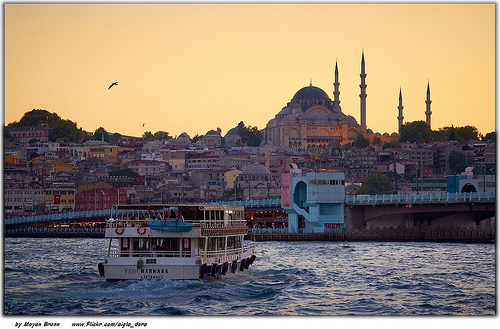
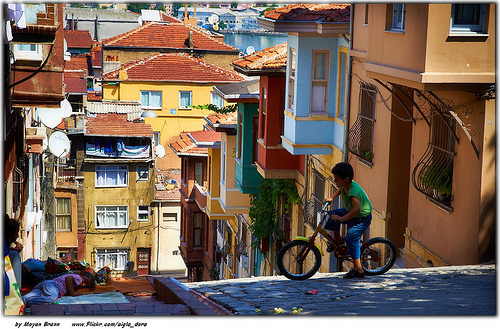
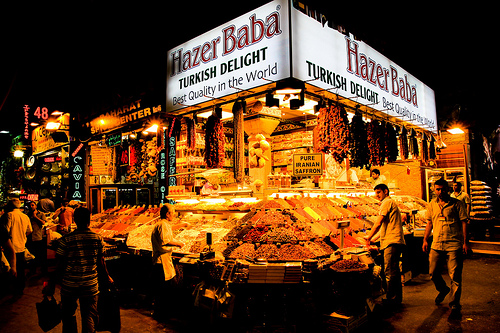
Istanbul:
The food tinted with rosewater and pistachio, the call-to-prayer, djinns and mosques… Istanbul isn’t somewhere I’ve ever been, but I’ve read it evoked so beautifully by other writers that it holds a special place for me. My favourite evocation of Istanbul is Alice Melike Ulgezer’s The Memory of Salt. Istanbul exists in my mind as a place where a certain kind of story happens. The version of Istanbul that I have in my head, is tinted with some magic.

Image
Image credit: Ollie T on Flickr
Image
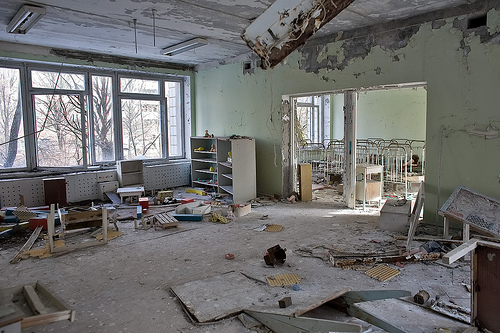
A building in Chernobyl from Pedro Moura Pinheiro on Flickr

Abandoned anything:
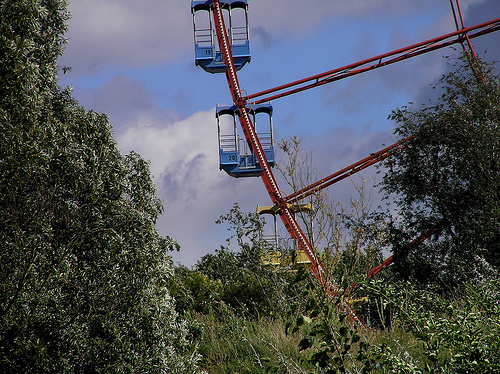
I guess this one’s kind of foreign to everyone. We live in a world where we have conquered just about every space that can be conquered, and we seem to want to develop everything.  Once we’re in a place, we don’t leave. So it’s rare and very creepy when for some reason, a place is abandoned. Chernobyl fascinates me, because it’s one of the very rare instances that even squatters won’t brave – we can see what happens when the land takes back. 

Over the weekend, Scott Westerfeld posted a link on Twitter, to this amazing collection of pictures of abandoned theme parks. For a place that once created so much joy and happiness to be abandoned – well, I don’t think there’s anything much more melancholy than that. 

Image
Image credit: Patrick Donovan on Flickr

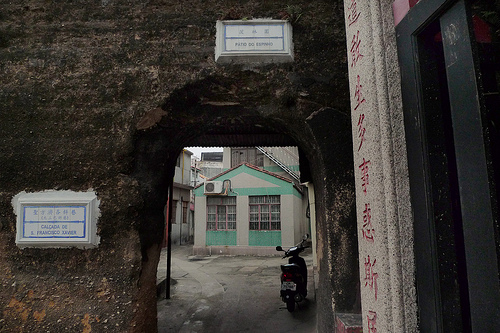
Macau:
I only heard about Macau yesterday, during an episode of Anthony Bourdain’s No Reservations. He’s interested in Macau because the cuisine is a melting pot of Chinese, Portuguese, and the stuff that happens organically over time. I’m interested in Macau because it seems like a place that operates entirely outside of any worlds that I know. It’s not quite an Asian country, because its Portuguese heritage still has such a heavy influence on it. It’s not a Western culture, because it’s still very Asian in many ways. I like that a whole culture can sit in that ‘neither/nor’ space.


What settings do you find yourself drawn to in your writing?

Blog at WordPress.com.

Up ↑