Search

Sam van Zweden

Writer

Tag

review

Sue Miller, Limited?

I’ve recently finished reading Sue Miller’s “The Lake Shore Limited“.
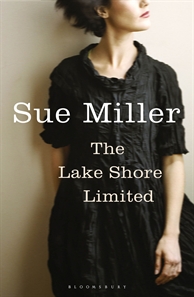
The Lake Shore Limited” looks at the relationship dynamics between a group of people, all more or less connected by the death of a man named Gus in the events of September 11. His lover, his sister, his brother-in-law and two men that his lover gets involved with. These characters are all linked not only by Gus but by the incredibly complex emotion of guilt over secretly wishing a lover was gone, even though they’re a good thing.

For starters, I have some mysterious aversion to the use of September 11 as a plot device. Particularly in a poorly-written novel. I’m not even sure what this is about, really – I don’t feel this way about the use of world war 2, or even using more recent stuff from Afghanistan and Iraq. But somehow, the use of September 11 in this novel left a really sour taste in my mouth. It may be the way it was executed… I’ve also recently read Melina Marchetta’s “The Piper’s Son“, which used the following year’s bus bombing in London as part of its story. But somehow Melina Marchetta’s use of such a sensitive subject didn’t seem disrespectful – Sue Miller’s writing feels somehow like she’s laying claim to the emotions of the September 11 victims in a way I really don’t feel comfortable with.

A lot of this book was internal dialogue. The feeling I get is that Sue Miller wrote it as entirely internal dialogue, and then an editor told her that she’d written a bath story. Sue Miller gasps in shock, and promptly plugs in many “as he opened the window, he thought…” and “scooping dog food out of the tin, Billy recalled…” -type things to force her characters to do things rather than just be pensive all day long. With all these obviously forced actions, the writing process Sue Miller’s gone through becomes absolutely plainly visible. When I realised what had happened about three-quarters of the way through the book, I found it so distracting I had trouble reading past my frustration.

When action occasionally genuinely happens, it doesn’t feel strained – the book really might have benefited from a lot more of it.

I have no big problem with books that look at complex emotions. “Lolita” looked at pedophilia in an amazingly empathetic way.  “A Heartbreaking Work of Staggering Genius” looked at guilt and family dynamics beautifully. “Notes From Underground” features a torn-up and incredibly changeable narrator. I’m totally down with all these books, and many others that tackle really big and difficult feelings: it’s one of the most interesting and important things that literature can do. “The Lake Shore Limited” however, made a really difficult emotion one-dimensional by over-using it.

I like linking characteristics in characters, and maybe Sue Miller had a good idea in doing this. It’s a nice way of creating some continuity in a story, and as far as people go I belive there are those parts that all of us have in common. What’s happened though, is that all the characters have exactly the same feelings. The same reactions, the same guilt, the same struggle. And while I’m sure it’s a somewhat universal emotion, I don’t think that people could possibly all feel it in the same way like the characters of “The Lake Shore Limited” do.

Sue Miller has tried to tackle some really tough things with this book – September 11, universal emotions, the complexity of human relationships. There’s some really strong ideas, but Sue Miller’s limited writing of them means the story falls on its face. Hard.
Pygmy by Palahniuk, Review

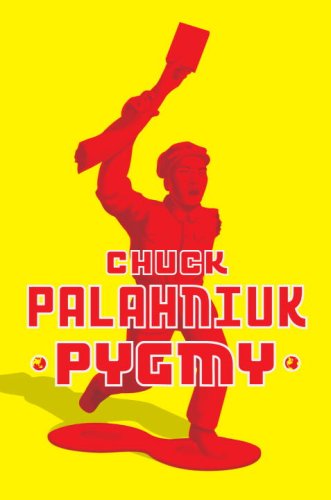
I’ve recently finished “Pygmy” by Chuck Palahniuk.

We have a good relationship, Palahniuk and I. We go way back. We’ve waded through many an existential crisis together…

…all this good work was threatened by “Pygmy”, which was released late last year. I’d picked it up and turned it over, had a quick flick, and put it back on the shelf awaiting richer days.

Last week, however, this red-and-gold clad number fell into my hands for reviewing for Yartz.

I have to say, I really came out of this one confused.

“Pygmy” reads in a much less coherent way than Palahniuk’s other novels. The narrator is from an unnamed totalitarian country, and goes to America in the guise of an “exchange student” in order to infiltrate and put into action “Operation Havoc”. He tells the story in thoroughly broken English, absolutely free of any kinds of grammar or syntactical rules. It took a while to get into, but like any incredibly stylized voice, eventually I got there. This is not what made “Pygmy” such a disappointment. The lack of coherence here came from the fact that none of the chapters in the book really fit together comfortably.

It’s reads less like the tumbling-down-stairs-at-an-alarming-rate stories that I’ve come to expect from Palahniuk, and more like an assorted collection of the most horrible episodes he could think to put in a novel.

Granted, this book is uproariously funny. Hilarious. It’s just a pity that’s the most I got out of it.

All the horribleness does have a function though. This is an amusing but incredibly biting satire of American life and the terrible potential of the wrong people having power.

Usually with Palahniuk’s novels, I dive in and get comfy, and leave feeling like I’ve gotten away with something a little bit cheeky. Not so with Pygmy.

I enjoyed reading it, found it characteristically hilarious, but Palahniuk has written much better novels and has missed the mark a bit with this one.

Review: Smoke and Mirrors by Kel Robertson

For a novel called “Smoke and Mirrors”, I must say, I was a tad disappointed by the lack of smoke and mirrors in Kel Robertson’s novel.

Now, I’ve never really read any crime fiction. When I was handed this novel, I thought “Why not? Give it a go!”

I did – maybe crime fiction just isn’t my thing. Or maybe Kel Robertson’s written a lacklustre book.

The majority of “Smoke and Mirrors” felt like preamble. There’s a bunch of sub-plots which contribute nothing to the story, and which have no conclusions. There’s some humour, which on its own merit is somewhat amusing, but in the context of the story just feels strained. There’s a kidnapping – which is the most action there is until the last ten pages. The most active thing the narrator does is have himself kidnapped.

I’ll give it this – it was a quick read. In between a busy week this thing only took me a few hours to knock over. The only problem was that I didn’t really care what happened. All that preamble put me into a lull, so that when the action finally came (which the “hero” had very little to do with, other than the fact that he showed up), I didn’t actually care what happened to anyone.

The best thing I can say about it is that it finished.

Dead Until Dark

I’ve just finished reading Charlaine Harris’ “Dead Until Dark” – the first novel in the series that the brilliant HBO series “TRUE BLOOD” is based on. Being such a fan of the show, I was excited to read the book… However, I came out a little traumatized, and very very confused.

“Dead Until Dark” introduces us to Sookie Stackhouse – a telepathic waitress living in a small town in Louisiana. Apart from being a bit of a loser because of what she calls “her disability”, life for Sookie is pretty normal. The world of the novel is one where vampires and humans live side-by-side. It’s not all peaceful; there’s a lot of prejudice and a fair bit of violence, but it’s like society’s relationship with any minority group.

Sookie gets involved with “Vampire Bill”, who is attempting to “mainstream” – to live among humans in peace, drinking synthetic blood to survive. As their romance gets more involved, Sookie being drawn further into the vampire community, the discord between people and vampire gets to boiling point. Local girls just like Sookie start being murdered, and a pattern starts to emerge… Sookie’s powers and her relationship with Bill come in handy in chasing down the murderer and restoring a little peace in the small town.

Now, there’s so much I can tell you that’s bad about this book… But at the end of the day, I quite enjoyed reading it.

Charlaine Harris seems to have some weird problem with tenses for the first half of the book. It’s narrated mainly in past tense, but then occasionally an “is” will slip in there… It’s so hard to pay attention to what’s happening in a novel when you keep getting snagged on something as dumb as a lack of “is/was” continuity.

The writer also seems to struggle with instilling a bit of character logic into her story. I can suspend my disbelief as far as the book asks me to – OK, there’s vampires. There’s shape-shifters. There’s telepaths… But on a number of occasions in the novel, people hear or see things which they respond to in a totally illogical way. Example: (spoiler here!) – Sookie’s boss Sam is a shapeshifter, which is something he’s been at pains to hide from her for the 5 years they’ve known each other. One day, Sam feels like Sookie’s in danger, so he turns into a dog and goes to her house to protect her, where he falls asleep on her bed. The next morning Sookie wakes up with Sam, naked, in bed next to her. Her reaction?
“Oh, Sam.”

WHAT!? That’s IT!? Just a very calm, “oh, Sam.”   As if.

Harris either has no confidence in her skill as a writer, or grossly underestimates the intelligence of her readers. She feels the need to reiterate simple points over and over…and over, to the point of redundancy. At least three times in the first two chapters, Sookie refers to the fact that her parents died – both of them, when she was seven, in a flash flood, leaving herself and her brother with her Gran. And each time she refers to it in this much detail… We get it, just tell us once

I figure this must be a lack of confidence on Harris’ part, which wouldn’t be entirely unfounded… She seems to have a fondness for adverbs and a strange aversion to the word “said,” forcing her characters to “smile”, say “disgustedly” (what a horrible word!), “notice”, and “observe”. These are just a few of the many horrible modes of speaking that people in the world of Dead Until Dark use when conversing.

…But for all of these faults, Charlaine Harris has written an incredibly fast-paced, no-boredom novel. Right as I was getting pissed off with the B- or C-grade writing, there was SEX! and then BLOOD! and then a CRAZY NEW CHARACTER! Then more sex! More blood! Sexy blood, and bloody sex!

Hence the confusion.

For how terribly written the novel is, for how much it truly insults me as a reader, I enjoyed reading it. And, if someone were to give me the sequels, I’d probably read and enjoy them too.

Six Walks In the Fictional Woods

100+ Books Challenge, #3: “Six Walks in the Fictional Woods” by Umberto Eco.

If you’ve ever read any Umberto Eco, you’ll know that he writes in a way that is both accessible and amusing, and incredibly poignant.

Six Walks in the Fictional Woods is a reflection on the role of the reader, the role of the writer, and the relationship between the two. Eco uses the metaphor of “the woods” to represent exactly what it is that we get ourselves into when reading or writing a book.

As is always true in anything by Umberto Eco, “Six Walks…” is full of intersting little tidbits (the line that divides “blue” and “green” is very different in Latin/Greek cultures to our own), amusing ways of making a point (a particularly hilarious overinterpretation of The Three Musketeers), and some very worthwhile food for thought.

Definately worth a look-in for your next non-fiction craving!

“Everything I Know About Writing” Review

So, number 2 book in my 100+ Book Challenge for 2010 was John Marsden’s “Everything I Know About Writing”…

This is a guide to writing, written by a top-selling and much-loved (particularly by me!) Australian author.

The blurb claims that “Everything I Know About Writing” is “as readable as a novel”…and it really is.

Throughout, Marsden gives tips about what makes good and bad writing, using his deep and wide knowledge of literature and language. He doesn’t just list tips on what’s good or bad – he uses a range of really apt examples to drive these points home. While a lot of what is covered in this book is either common writing sense, or something I’ve learned before, Marsden still presents these points in entertaining and clear ways, and I appreciate having so many useful things written in one place as a handy future reference.

Although this book was first originally published in 1993, the examples used in it are so timeless and sound that the book has aged very little in 17 years. Using a mixture of timeless texts taught in most high schools, and great Australian writing, Marsden’s crossover between teaching and writing is obviously one he’s been making the most of for some time now.

As someone who mainly writes young adult fiction, Marsden’s writing guide is an insightful guide for teenagers, simply and clearly spoken – however, it still stands as a helpful and fun guide for writers of all ages. Even if you know most of the stuff that’s being covered, it’s presented in such an entertaining and simple way that it’s still interesting.

A wide range of conventions and problems are dealt with here – how it’s essential to deal with sex and death in writing, how psychology affects characters as much as writers, the rules of reality and how they must apply to writing… One particularly interesting chapter deals with “banality”, where Marsden challenges the connections we automatically make between certain words, particularly in similes and metaphors (eg, “feather” and “light”).

In the “new and revised edition” (which I believe happened around ’98), a new chapter has been included – “600 Writing Ideas”… these range from ideas for personal stories, starters for short stories, “quickies” (“What is your favorite kitchen appliance, and why?”)… These are perhaps one of the most helpful things about this book. If ever there’s a day where I have nowhere to start, these ideas give me a starting point, which then usually leads on to something else and turns into a story I love… or hate.

The most resounding advice Mr Marsden leaves us with is this; “You’re God when you’re writing: you can do anything. The only unforgivable sin is to be boring”…
“Everything I Know About Writing” is a clear and helpful bundle of tricks to stop your writing from becoming boring.

The Book Thief

For the last two weeks, Markus Zusak’s The Book Thief has stolen my undivided attention.


This novel captured my imagination and my empathy, being written in a way that is both imaginative and ruthlessly real – surprising, given that the author’s inspiration comes from stories, and not any personal experience of war or persecution.

The book’s author, Markus Zusak is a 34 year-old Sydney man (bless the occurrance of Aussie bestsellers that don’t belong to Bryce Courtney!), whose parents grew up in WWII Germany. Having heard their horrific stories of what went on during that time, Zusak set out to write an original novel on a much written-about topic, which showed “the other side of Nazi Germany” – that side which was very human, and very heartbreaking.

We all know about Nazi Germany, we’ve all read a book, or seen a film, or been in a history class or two. What The Book Thief does is take us to this place but look at it from a completely different angle – this book is narrated by Death. Death, in Zusak’s imagining, views humanity in a curious way, trying to prove to himself that we’re not so bad.

The novel explores the power of words in that turbulent time in history – both the words of Hitler, and the words that the story’s main character builds a relationship with. This character, Liesel, comes to live with a foster family on a poor street in Munich. She is a generally kind-heated girl, but feels a strong pull toward a life of crime – more specifically, the stealing of books. Her relationship with words grows to be a strong one, and an astounding image in juxtaposition to the power of Hitler’s words at that time.

As the war continues and German citizens feel the pinch, believing they are in the worst state of hardship, Liesel words and her ability to keep secrets help her understand that the hardship felt by German citizens is nothing compared to the Jewish plight.

Throughout the book, Zusak’s language struck me as incredibly tight, with fantastic attention to the narrator’s point-of-view. Zusak’s Death has an  interest in colours, and uses them as a distraction from the horror that humans can create:
“…The town that afternoon was covered in a yellow mist, which stroked the rooftops as if they were pets, and filled up the streets like a bath”

Tiny simple moments and actions are created fully and beautifully through Zusak’s language:
“…Rudy’s voice reached over and handed Liesel the truth. For a while, it sat on her shoulder, but a few thoughts later in made its way to her ear”

While plenty of people have written about Nazi Germany in many a novel, play, and screenplay, Markus Zusak brings something truly original and touching to the subject. He treads a fine line between the magical suspension of reality and the crushing realities of the time.

With the exception of the cliche’d use of dictionary definitions to punctuate one chapter of the novel, Zusak handles mood and tone wonderfully, remembering to pace the depressing episodes nicely so that the book doesn’t ever become tiring. Characters are full and convincing, and all strands in this novel come together in a very satisfying way.

This is the only novel of Zusak’s that I have read, but his artful use of words leaves me keen to read more of his work.

As a book on a tired topic, The Book Thief hits all the right notes – convincing, poignant, consistent and tightly written. One of the best novels I’ve read in a while.

The Reader

TheReaderCover-Small

Two days ago, I recieved my copy of The Reader. This is a collection of fiction and non-fiction pieces by people involved in the Emerging Writers’ Festival.

I have to say, I was so excited to get my hands on this, and though it’s quite a diminutive publication, it packs quite a punch. I’ve so far only read about five articles, but it’s got me laughing, thinking, and wanting to lock these little tidbits of writing wisdom away in some part of my mind. I know they’ll come in handy.

So over the next few blogs, I want to share with you the places I’ve been taken by The Reader, what it’s prompted me to think about and research, and what I’ve come away from it with.

Until then…

The Death of Nick Cave’s Narrative

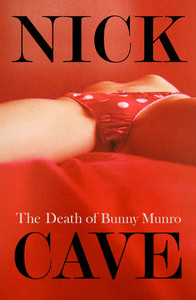
the-death-of-bunny-munro1I have to say it – disappointment.
Nick Cave’s writing here falls way behind “The Ass Saw The Angel.”
This is the story of Bunny Munro, whose wife hangs herself, prompting Bunny to take to the road with his young son. He claims to be “teaching him the business” of peddling beauty products door-to-door, while in reality Bunny has no idea where he’s going as his life falls apart around him. He loses his wife, his charisma, his raging boner, and finally his life.
Cave writes supreme characters. Bunny and Bunny Junior give us internal dialogues which seem so real in their gory detail. Even minor characters who appear and disappear have convincing details that make them as real as someone you’d just seen on the street.
Cave also gives up a myriad of fantastic one-liners. Pretty things, hilarious things, things that are real.
The problem in this novel is that it goes nowhere for 90% of the narrative. Bunny and Bunny Junior seem to play out the same scene over and over, and then finally when they do something it’s entirely obscure and doesn’t fit with the rest of the novel.
While Cave’s characters are very much 3D, and his writing is quite lovely, I didn’t feel satisfied by this book at all, especially after reading some great work by Cave previously and being a big fan of his music.
Perhaps he’s losing his touch.

Blog at WordPress.com.

Up ↑