“DAWN: Oh, I dunno, Nadine. Sometimes that’s good. I like his work, it’s fun. The best art can feel just like playing…”
In Death of a Ladies’ Man, Alan Bissett has written a novel that feels just like playing. I enjoyed this novel so much, though, because that’s not all it feels like. It’s so easy for those post-modern, tricksy texts to be fun, and that’s all. But Death of a Ladies’ Man is also serious, and relevant, and familiar, and well-written.
The novel is about ladies’ man Charlie Bain: divorced teacher with a promiscuous sex obsession. The characters are real and rounded, with Charlie always acting in ways that are true and honest, even when you squirm and wish he wouldn’t.
The prose sparkles – multiple times while reading I needed to grab my notebook to write down phrases that caught me offguard:
Close up on her eyelashes: like the skinny, regal legs of synchronised swimmers.
All Charlie saw was the bruise. Bruise! it said. Bruuuuuuise. Like a comic-book ghoul.
Alan Bissett has shown bravery with his form, with the novel presenting as something of a pastiche of film scripts, catalogues, first, second and third person narratives, shifting points of view and time. The thing I enjoyed most was that this playfulness of form perfectly matched the content. Experiments with fragmented typography match the drug, alcohol and sex experiments Charlie engages in, and his increasingly fragmented state of mind.
Even the difficulty of shifting narrative points of view is admirable: somehow Bissett manages to tell past episodes in second person present tense, and present episodes in past tense third person, mixed up with some first person interior stuff toward the end. This sounds impossible and mashed-up and wanky, but it really works.
Mostly, I laughed. This last week I’ve been sick in bed, having had my tonsils out, and Alan Bissett has kept me from going insane. It’s not a feel-good novel, far from it, but it’s got a definite dark hilarity to it, and despite its touching on some truly heavy stuff, it all still feels like playing.
“A room without books is like a body without a soul.” – Marcus T. Cicero (106-43 B.C.)
We have a technological freak-out every time something new comes along. The latest technology to whip us into this frenzy is eReaders, such as the Kindle, Kobo or Sony branded tablet things you will have seen around. There are countless discussions about whether this is the end of books and print publications – but I refuse to get caught up in all the hype. Film was not the end of theatre, DVDs were not the end of cinemas, and eReaders will not be the end of the printed word. Hell, there was even an uproar when writing itself was first introduced – what would happen to rich oral cultures if it was all written down, with only the literate upper classes able to enjoy these cultural products? Then, later, the printing press – though, surely, its part in the Reformation of the church is perhaps evidence that some new technologies can provoke drastic change. But is change such a bad thing?
Let’s just be clear about exactly what devices I’m talking about when I say ‘eReaders’. eReaders are single-purpose devices designed for storage and reading of digital books. They use a non-reflective screen made of ‘e-ink’ – a kind of carbon (like they use for actual print) which shifts about the screen to create something remarkably close to the text you’d see in a traditionally printed book. Regular computer screens tire out our eyes because backlight is being pushed through the liquid crystal display (LCD) to create a picture, and this flickers – only slightly, imperceptible to the naked eye, but after long periods in front of a screen, our eyes get tired. Single-purpose eReaders are not backlit, so there’s none of this flickering. The reading experience, then, isn’t like reading off a screen so much as a page. However, despite the similarities to traditional books, it can’t be denied that when you’re reading off an eReader, you’re holding a screen in your hands, not a book.
I’m not resistant to the change that eReaders seem to be bringing with them. Screens are now such a huge part of our lives that moving books to screens is only the next logical step. And they have a whole slew of practicalities that I approve of. Having said that, for every perk of eReaders, there seems to be a down side, leaving me altogether undecided about buying them, and feeling a little overly romantic about physical books.
…..
28th of September 2011.
‘Time to retire your Optus tablet?’ reads the message I receive on Twitter from a friend.
Due to printing costs, I’ve adopted a poor substitute for a real eReader – a backlit tablet sponsored by Optus to double as a phone. The device is a tablet, a phone, supports apps, eReading software, has a camera on it – it does almost everything, but it does it all quite poorly. The thing freezes and jumps often, and sometimes just blacks out altogether. It is about the same size as an eReader, and it carries PDF documents. This cuts down on the printing I need to do, justifying the $150 I paid for the device. Never mind the backlight and the eye strain, it quickly saves me money. It does the job alright – but if I had the money, I’d still prefer a proper eReading device.
My friend has included a link with his message, which takes me to a Wired article about the Amazon launch of the new series of their eReader, the Kindle. Amazon – those champions of the digital revolution, and inventors of popular eReader, the Kindle. They’ve brought online shopping to the point where much of the population is comfortable doing it, creating a demand for the service. The demand springs from just how easy they have made the experience – and this follows for their eReaders, too. On a Kindle device, a book can be downloaded in about a minute. When you make your first purchase on Amazon, they save your credit card details, so that in future you need only click “purchase” for the whole sales transaction to go through instantly. This is an obvious money-swallower for avid readers, but it’s just so easy! You can even download “sample chapters” from ebooks to see if you’ll enjoy them – similar to reading the first few pages before making your purchase at a book store. With books available instantly for only a fraction of the price (you’d pay around $30 for a physical book, but only about $18 digital), it’s hard to say no. The main thing that has stopped me up to this point has been the cost of the device itself.
The cost of the device is a barrier for many who haven’t adopted the technology. The first-generation Kindles cost $400 – that’s a lot of money to think about spending on anything. The price has dropped over the last few years, and the latest release of Kindles has seen the most dramatic price drop yet. The launch on September 28th saw four different versions of the device, all with different capabilities and price ranges. The basic model in the lowest price bracket is selling for just $79. This trumps my $150 for a dodgy substitute. The gap between the digital haves and have-nots is quickly shrinking.
…..
Judging people by their reading habits has long been a reliable litmus test for almost anyone I come across – from strangers on public transport to my first visit to a friend’s house.
Annie Proulx said, “Books speak even when they stand unopened on a shelf. If you would know a man or woman, look at their books, not their software.”
I believe this. If I see someone I don’t know reading Dan Brown on the tram I can immediately discard this person as vapid. Likewise, if I see someone reading maths humour – a genre I didn’t know existed until I saw Alan Brough reading some on the 19 tram – I can reasonably safely assume they’re witty and clever.
I also believe in reading bad writing in order to better know my enemies. I can’t effectively hate Dan Brown if I haven’t read any. In this case though, I don’t take it with me on public transport lest someone like myself misunderstand what’s happening. There needs to be some kind of way to tell the people around you, “I’m reading Twilight, yes, but I’m reading it ironically”. One friend of mine admits to covering shameful book covers in brown paper to avoid any judgements like mine. Once I’ve finished reading whatever awful trash it is, it is then exiled to the Siberia of my bookshelf, set apart or shoved back until I can send it off to the op-shop.
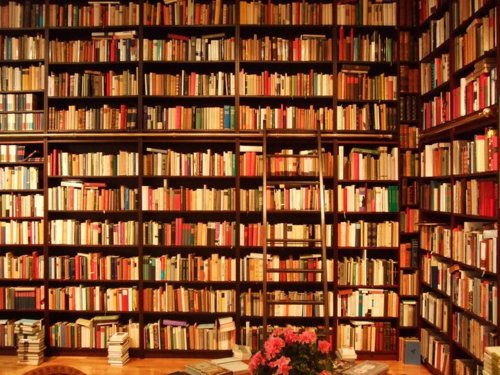
Perving on friends’ bookshelves is a great secret indulgence. They leave the room and I scuttle across to their shelves, quickly noting how things are arranged, if at all. The ratio of classics to modern texts. The overwhelming presence of one author over others. One genre over others. Whether spines are cracked, pages dog-eared. For readers wishing for greater insight into my own character: Fiction A-Z by author then title, reference books next to my desk, poetry and plays are upstairs on a separate shelf with single-author collections, anthologies and literary journals. Non-fiction has a separate shelf also. Some dog-eared, some spines cracked. Siberia is a green bag.
eReaders take away all the glorious judgements I so love making. That guy in the back corner of the tram looking at a screen? I have no indicator of what he’s reading. It could be erotica, it could be Dan Brown, it could be Twilight. I have no way of knowing. And a friend’s book shelf? What book shelf? There’s just one device containing all 200 of their books, and I can’t see any of them, let alone their condition or method of organization – those factors don’t exist at all. When a man’s books become his software, is there any way of really knowing him?
…..
I’m house sitting for my father while he’s away for a month. This is great – I can spend that time catching up on reading and writing, I’ll be in my element.
While packing my bag, I put in two books that I’m half way through. Then I look at the books I’ve bought but haven’t had a chance to read – there’s about fifty of them. I have too many to choose from, and I have to pack ten in order to have three I’ll actually feel like reading. My reading moods change, and I can’t tell in advance what mood I’ll be in when the time comes to start the next book. So in go the ten books, plus the two half-finished ones. Getting this suitcase to my father’s house is a mission, and I end up taking two suitcases: one for books, the other for clothes.
I imagine this predicament doesn’t exist for those with eReaders. They don’t even need to plan what they’ll take with them – they can decide what to read when they finish whatever they’re on now, and then they can download it from anywhere with an internet connection.
…..
Op-shopping for books is the literary equivalent of channel surfing on TV. I’m out of new material, or have plenty of new material but I’m not in the mood for any of it. Op-shops are both romantic and unpredictable.
When I walk in I can smell moth balls and death, reference books and dust. Someone’s Grandma’s china is for sale at 50c a piece, women who own lots of cats are looking through the nightgowns for something lovely, and punks try on anything ill-fitting and plaid for their next purchase. The book shelves groan under the weight of un-pillaged treasures.
Sure, op-shops are reliable for cheap classics and popular books studied in high school. They’re also great for obscure religious texts. But what I love the most is the wealth of independently published fiction that few Nora Roberts-reading housewives have heard of, or the really early work of authors who have since become best-sellers. I don’t have to order anything in as I would at a book shop, because I don’t know what I’m looking for until I get there. Often these expeditions are fruitless, but some of the best and strangest books in my collection come from op-shops. For example, Dick for a Day, in which Melbourne women writers fantasize about what they’d do if they had a penis for a day.
The element of the random is what I love. The thrill of the hunt. You can’t search for that on your eReader.
…..
It’s transportable, it’s getting cheaper, and in some ways it’s cheaper than buying physical books. It’s practical and it’s easy. But is this move to digital really one I want to make? Curling up with a screen isn’t like the romance that comes with curling up with a good book. I can’t dog-ear an eReader without doing anything bad to the electrical stuff inside it.
I can’t get many of the small press publications I so love on eReaders. Only some literary journals and newspapers are available for eReaders, and even then only certain platforms. Even if I embrace the digital shift, I have no fear that it will fully replace my love of the printed word on paper.
It’s been a bit quiet this month; I’ve only finished two books. That’s not to say that I haven’t been reading, it’s just that I’ve got a billion things on the go at the moment. AND it’s that joyous time of the uni semester where everything’s due. So my Month of Reading list is perhaps a little less impressive than usual. But hey. These things happen.
What have you been reading?
Books Bought: Our Deathbeds Will Be Thirsty, by Shane Koyczan
Voiceworks ‘V’
Library: Visitations, by Jenny Erpenbeck
Won due to (amazingly) winning the KYD Trivia Night (again): Her Father’s Daughter, by Alice Pung
Known Unknowns, by Emmett Stinson
Brighton Rock, by Graham Greene
Books Read: Olive Kitteridge, by Elizabeth Strout
Adverbs, by Daniel Handler
Currently Reading:
Consolations of Philosophy, by Alain de Botton
The Little Red Writing Book, by Mark Tredinnick
Eating Animals, by Johnathan Safran Foer
Visitation, by Jenny Erpenbeck
Disgrace, by J.M Coetzee
I’ve been reading Adverbs by Daniel Handler. He’s hilarious, and poignant, and writes in that ironic, self-conscious/unself-conscious (yes, both at once) way that cool people do.
I just found him reading my favourite chapter (so far, because I haven’t finished the book yet) from Adverbs. I had more fun reading this chapter than I have reading anything in a while. I thought it would be worth sharing.
Check it out: I wish I could write like this. I haven’t read anything this hilarious in quite some time.
Consider this something of a teaser, and chase up Adverbs.
It’s the first day of spring! Spring means cleaning, particularly our balcony, which is full of beer bottles from last summer which are all filled now with spiders and eggs from anything that crawls. Spring means reading outdoors, often with a beer or tea, on said cleaned balcony. Spring means leaving the house in things cut above my knees.
According to today’s sky, spring means muddy yellow skies. Today’s sky is a liar.
Here’s my last month of reading. I managed to buy only one book, which (if you look at previous months) is quite a rarity for me… I read four books, and have a HEAP of stuff out from the library to help with my novel research. I started a book-swap group which went well for about a week, then promptly died off. It was fun while it lasted, and I managed to swap two books I had multiples of for books I wanted.
What did you read this month?
Books Bought: A Visit From the Goon Squad, by Jennifer Egan
Library: Olive Kitteridge, by Elizabeth Strout
Reading like a writer: A guide for people who love books and for those who want to write them, by Francine Prose Forty-Seventeen, by Frank Moorhouse
Adverbs, by Daniel Handler
Fast Healthy (Women’s Weekly Cookbook)
Cook Yourself Thin, Harry Eastwood et al.
Swapped: Pride and Prejudice, by Jane Austen (out)
Unreliable Memoirs, by Clive James (out) <– don’t judge me, I have three copies.
The Plague, by Albert Camus (in)
Read This Next, by Sarah Newman & Howard Mittelmark (in)
Books Read: Reality Hunger, by David Shields Lucky, by Alice Sebold
City of Glass, by Paul Auster
Ghosts, by Paul Auster
Currently Reading:
Consolations of Philosophy, by Alain de Botton
The Little Red Writing Book, by Mark Tredinnick
Eating Animals, by Johnathan Safran Foer
Olive Kitteridge, by Elizabeth Strout
In the spirit of oversharing, which I’m very fond of (and fond of the internet for), I’m posting some of my latest writing goals here so that you can all keep me accountable if I try to let them slide away into the abyss.
Having (just five minutes ago) finished timetabling my next uni semester, I’ve realised I’m committing to some big things here:
– I plan on reading at least one essay a week. This is pretty easy to do during the semester, but outside of it I tend to let this slide. I really want to expand my short non-fiction knowledge base, as it’s something I’m interested in writing a fair bit of myself. So. That.
– This second point is bigger: I’m committing to doing at least one writing exercise every day. Furious Horses style, only without the public sharing. Perhaps at the end of each week I’ll post on here the exercises I’ve done, and whether they’ve been helpful or not, because I know a lot of this site’s readers are writers, and you never can have enough ideas for writing exercises.
– Competitions! I want to start entering competitions. There’s money to be made, folks. And recognition to be given. Might as well give it a crack. If I don’t, crap people might win. And we can’t have that.
– Every quarter, I plan on sending off a piece to a publication which I don’t really honestly believe will accept me. This is how we make impossible things real. This is what happened with The Big Issue, and it’s inspired me.
I’m hoping that making these plans public will create some extra accountability. If I try to pretend this post never happened, give me hell.
Share with us two (2) “teaser” sentences from that page.
You also need to share the title of the book that you’re getting your “teaser” from … that way people can have some great book recommendations if they like the teaser you’ve given!
“I shiver at the thought and in response, Nick takes his jacket off and places it around my shoulders. I feel safe and not cold and from the vibe the jacket gives off, I also feel fairly confident that the original Texaco Salvatore was a good family man, with perhaps a propensity for wearing his wife’s panties and betting his kids’ college money at the track, but otherwise a solid dude.”
(From p55 of Nick and Norah’s Infinite Playlist by Rachel Cohn & David Levithan)
I don’t have time or energy to do this discussion the justice it deserves today, but it is a topic I’m deeply interested in, not just as something that’s relevant to me, but as something that has pretty serious implications for reading and reviewing culture as a whole:
Should people who are writers also be reviewers? (Particularly in a literary scene as small and as close as Melbourne’s, where everyone knows everyone) Is a reviewer’s expression censored somewhat for fear of making enemies amongst their peers?
Over on Literary Life today, Megan has posted about her stress about this issue. The post (sorry, Megan, but…) is a bit of a stress-rant, but the discussion which follows is well worth a look-in.
The post comes at a particularly relevant time for me, as I’ve just submitted my next review for Catalyst, and it’s reasonably negatve. It’s of a book from a debut novelist, which is a category of writer who usually get softer reviews so as not to crush any dreams. But it’s also from a French/American, and I was a bit disgusted with myself when I was writing the review, finding myself thinking, “This woman won’t meet me.” Because of this, I somehow gave myself permission to say just what I was thinking – while I made sure all criticisms were grounded and just, I didn’t go to the pains that I would for a Melbournian or Australian writer to say these things very softly. Don’t get me wrong – I don’t generally censor myself in writing reviews about people I know or have the capacity to know in the future, and if there is an existing relationship I’ll always flag it for total disclosure. However, the way I deliver negative criticism is something I’m much more aware of for these people, than remote authors who are (in the case of classics) dead, or else so remote to my sheltered existence (as with the upcoming review of Elena Mauli Shapiro’s novel) that they probably won’t read the review or ever meet me.
Is this sort of self-preservation bias acceptable? Avoidable? Should writers be reviewers at all?
Books Bought: The Great Gatsby, by F Scott Fitzgerald
Books Borrowed/Received: Library: With Borges, by Alberto Manguel
Me Talk Pretty One Day, by David Sedaris
Books Read: The Best Australian Stories 2010, edited by Cate Kennedy
The Crying of Lot 49, by Thomas Pynchon
Lullaby, by Chuck Palahniuk
With Borges, by Alberto Manguel
White Teeth, by Zadie Smith
Reading:
Yellow Dog, by Martin Amis
Poemcrazy, by Susan Goldsmith Wooldridge

 Sam van Zweden