Search

Sam van Zweden

Writer

Tag

reading

39 down… 962 to go!

It’s really, really hard not to spend all my money on books. Working in a book store means I’m now eyeing off categories I normally wouldn’t even go to, and “trying to broaden my product knowledge” is just as good an excuse as any… In two and a half weeks I’ve bought four books. It sounds pretty controlled, but if I did that all the time I would be both poor and swamped, so from now on I’m resolving to buy things only when I have saved up the cash by putting it aside from my living and debt-paying-off expenses.

One of the many books I’m stopping myself from buying is the very cool 1001 Books You Must Read Before You Die. It’s exactly what the title suggests. In a great act of genius and self-control, I looked up the list online instead of spending the $50-odd on the book that will probably sit around for a fair while.

I’ve read 39 out of the recommended 1001. I was discussing today how much more achievable the other books in the same series are. …Songs to Hear Before You Die is pretty easy, at the average three minutes per track. …Movies to See and Albums to Listen To, likewise, at about two hours, three maximum. As a pretty slow reader, it’s going to take me a lifetime to finish that list. Or, by Estelle Tang’s calculations, about a third of a lifetime. Having said that, I’ve saved the list to my computer, and I’m going to work on crossing off a bunch more of those books in future. Many of them are on my shelf waiting to be read… So I guess we’ll see if that “39” goes up any further toward the end of the year.

If you can be bothered going through the list – how many have you read?

Just Can’t Do It

Sorry, fantasy fanatics. I just can’t do it.

I try, but I don’t find fantasy enjoyable. I just finished Obernewtyn, and all I could think about was how awful and expository the prose was, and how frustrated I was about having to learn the rules of the world. I was literally in pain when I got to the end of the book. The best I could say for it was that “It’s full of imagination!”

…Which is great, and if that’s what you enjoy, that’s great. Power to you. I just can’t do it.

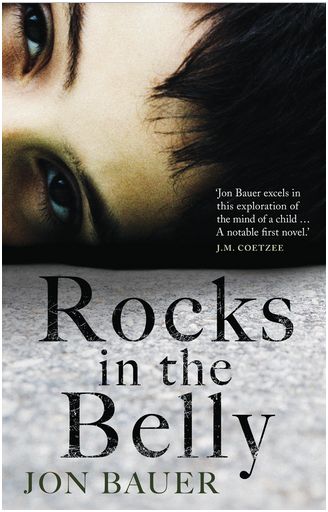
Review: Rocks In The Belly

Rocks in the Belly, by Jon Bauer
Scribe, 2010
ISBN: 9781921844539
RRP:  $24.95

I’m a slow reader, but I ripped through Rocks in the Belly. It’s the kind of book you think about even when you’re not reading it. This novel is impressive in so many ways.

The story is about a child whose mother fosters boys. She bonds with one boy in particular, pushing her biological child  to the point where he can’t deal with the prospect of having his mother love a foster child more than himself, and he acts out. The novel explores the moral and emotional aspects of that situation, and the fall out of the 8 year-old boy’s actions.

The structure of the novel is unique – it’s told in two different voices. That’s not particularly new – authors have been playing with multiple points of view for yonks. What I found interesting, though, was that the two voices are of the same character. We hear of the childhood trauma in present tense from the focalization of the eight year-old boy, while alternating chapters are from that same boy as a twenty-eight year-old returning to his childhood home to care for his terminally ill mother. While I’ve read plenty of books that use different voices, I’ve never read any books that use two different voices from the same person at different stages in their life. Bauer has executed it really skillfully, tying these two voices together convincingly through distinctive sentence structures, in-jokes and personal tics.

There’s a lot of grey area in this book, and not in a purposely vague way. The main character (who remains nameless throughout the whole novel – mechanically, surely, pretty impressive) has this huge internal conflict, constantly trying to redeem himself from being a “bad” person. All characters in this novel engage in some pretty morally ambiguous actions, and one of the main themes of the book seems to be to examine that question – what do you have to do to be a “bad” person, and then what does it take to undo that? Indeed, can any of your actions make you a “bad” person, or are we all a little bit bad anyway?

The language Bauer uses is truly beautiful. At no point did I check out and skip over chunks of description (as we all do when we don’t care) – I didn’t want to miss a thing. The language is so gripping, and so fresh, that I was hooked from the prologue, where we are offered the haunting insight that the main character’s childhood haunts him “in much the same way my fists haunt my hands”. This kind of rich language is laced right throughout the novel, and it never upstages the action. The two are perfectly balanced, so that unless you’re reading like a writer who’s consciously looking for these things, you don’t even notice what’s happening other than the book being is really great.

It’s not often that I give anything 5-stars on my Goodreads account, but this got it. It’s been a long time since I’ve found myself this emotionally invested in a piece of fiction, while also being really switched on to the language and its masterful execution. Jon Bauer’s Rocks In the Belly is a new favourite.

Teaser Tuesday

It’s been a while between drinks for Teaser Tuesdays. Let’s try again.

Teaser Tuesday is hosted by MizB at Should Be Reading.

  • Grab your current read.
  • Let the book fall open to a random page.
  • Share with us two (2) “teaser” sentences from that page.
  • You also need to share the title of the book that you’re getting your “teaser” from … that way people can have some great book recommendations if they like the teaser you’ve given!


“It doesn’t matter where you go, or what you do with your feelings, your truth lies in wait. My childhood haunting me in much the same way my fists haunt my hands.”

from Rocks in the Belly, by Jon Bauer (p1).

Reading As A Priority

In his essay, Why Literature, Mario Vargas Llosa talks about how it’s a bit disgusting that reading is regarded as an indulgent pass-time. Literature is important, says Llosa, not just as a means of escape or relaxation (though these are still some of the many great functions of reading), but as a tool which promotes an engaged and lively society. And for writers, reading is especially important – how can we expect to be great writers if we aren’t also great readers?

As at the start of every year, there’s been a lot of goal-setting happening over the last few days. My online writing group has seen everyone’s goals updated, and one person’s goals in particular really interested me. It involved adding more structure to their writing day – something I’m always trying to do. I was inspired by the fact that a full writing day for them involved three hours of reading and four hours of writing on any given day. This struck me as similar to the “Writer’s Diet” (which I saw attributed to John Birmingham, but now can’t find anywhere) – this involved four hours’ reading and four hours’ writing daily. Ambitious, yes, but a totally worthy goal. I’m not saying that to be a good writer you need to read for x hours, and write for x hours, or you’re falling short. I’m just saying that for me, and for a lot of people I know, these kind of goals usually result in tangible improvements in our work.

So part of my writing goal this year is to make reading a priority again. Toward the end of 2012 it became something I did in spare time, on public transport or lunch breaks, or to unwind before bed. While all these things are still optional and will probably still be good reading time for me, I’m making reading an important part of my writing day.

Having read about 60 pages this morning in two hours (slow reader, yes), 100+ Books seems more achievable than ever, my “to be read” pile is cowering in terror, and I will be the most informed writer I can possibly be. Without understanding writing from both perspectives (reader and writer), I can hardly expect to get any better.

Welcome to 2012, and A Month Of Reading

Two posts in one today, this first day of 2012.

I started 2012 standing on a plastic chair on a roof in South Yarra. I started 2012 with arms around me, leaning on the shoulder of a man who loves me very much. I started 2012 with red toenails. I started 2012 with a skirt on. I started 2012 with pizza in my belly. I started 2012 with a wheel of brie (yeah, I ate about half of it. Take that, 2011 belly!). I started 2012 watching fireworks. I started 2012 with a head full of resolutions, as always.

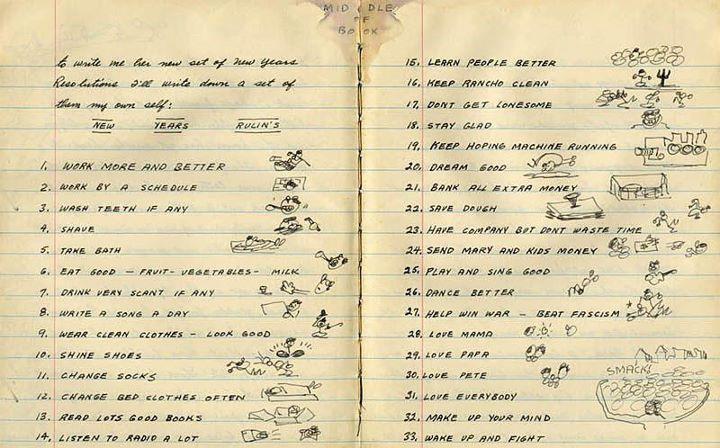
I just found this amazing resolutions list attributed to Woodie Guthrie, posted on Facebook.   Isn’t it great?

Wake up and fight!

Here’s my last “Month of Reading” from 2011, ending the year on a measly 46 books. I failed in my attempt to beat 2010’s 53 books, but hey… Welcome to 2012!

Books Bought:
A Spy in the House of Love, by Anais Nin
Squirrel Seeks Chipmunk: A Modest Bestiary, by David Sedaris
Eragon, by Christopher Paolini
Obernewtyn, by Isobelle Carmody
Unless, by Carol Shields
Flying With Paper Wings, by Sandy Jeffs
Voiceworks Summer 11/12, “Play”

Books Read:
A Spy in the House of Love, by Anais Nin
The Happiness Project, by Gretchen Rubin

Currently Reading:
Consolations of Philosophy, by Alain de Botton
The Little Red Writing Book, by Mark Tredinnick
Killing, by Jeff Sparrow


What did you read in December?

The Happiness Project, by Gretchen Rubin

I’m great at making resolutions. Not New Years’ Resolutions, I just make them all the time. I’ll exercise more, I’ll be up at a certain time, I’ll do a writing exercise every day, I’ll read a hundred books a year… I’m really great at breaking the resolutions that I set for myself.

In The Happiness Project, Gretchen Rubin makes lots of resolutions for herself, and what I like about the book is Rubin’s systematic approach to making herself follow through on her promises.

The basic premise of the book is that Rubin makes a mission of studying happiness, and spends a year making systematic resolutions that will supposedly make her happier. Following Benjamin Franklin’s idea of perfecting himself by focusing on various virtues, Rubin focuses on a different facet of her happiness every month.

It sounds trite, but I found this book inspirational. There was a lot of stuff that Rubin tries that I took on board. I found myself energized by how specific her resolutions are, and in putting some of them into practice for myself I’d have to say that I think specific, accountable resolutions are the key. Rubin doesn’t just decide to focus on lifting her energy in January of her happiness project; she breaks this focus on “vitality” down into achievable, concrete ideas: “go to sleep earlier”, “exercise better”, “toss, restore, organize”, “tackle a nagging task”, and “act more energetic”. She does this for a different virtue, every month for a year.

By breaking down her aims into these little specific ideas, Rubin has instilled in me a weird kind of tendency to think in mantras. By the end of the book, she recognizes that she does this herself. I’ve started trying to employ the resolution to “act more energetic” – and whenever I find myself tempted to be lazy, that phrase pops into my head. “Act more energetic!” – truisms are helpful.

While I found this book on the “memoir” shelf in the book store, it would probably fit just as well under “self-help”. It’s a funny little book though: Gretchen Rubin’s just an average woman. Before starting her happiness project, she’s pretty happy – she simply decides that her happiness is important, and that she should know what it’s all about, especially in preparation for the possibility of bad times in the future. So it’s not any kind of misery memoir of overcoming the odds and finding happiness. Gretchen Rubin’s not depressed, she’s not hard done by, she’s not even very unhappy. She’s utterly regular. I liked that about the book.

I wasn’t so sure about the way the book treads the line of being overly positive. I know that sounds ridiculous, reading a book about happiness and being unsure about how positive it is, but perhaps because of the utter normalcy of Rubin’s life, I sometimes felt like the obstacles she overcame weren’t very convincing as genuine obstacles. But I guess that’s how life is. Sometimes achieving something isn’t very dramatic, but the fact that you get there in the end is important.

There’s a terrifying endorsement on the back of the book: “An enlightening, laugh aloud read” – from Christian Science Monitor. Don’t let that scare you off. The book isn’t trite, and it isn’t hardcore self-help. It’s a regular lady’s story about figuring out who she is, and what makes her happy. Rubin’s overly-organized approach to that task really appealed to me, and I’d have to say I picked up a lot of good ideas from this book. We spend so much of our lives trying to be “happy” – Gretchen Rubin recognized her own happiness as a priority, and wrote a really enjoyable book about it.

Super-Early Heads Up

As you’ve probably gathered from previous posts and publications, I find non-fiction challenging and fun.

The most recent creative non-fiction I’ve read that excited me was by David Shields – his Reality Hunger blew my head clear off my shoulders, and The Thing About Life is That One Day You’ll Be Dead really made me think about family legacies and storytelling, as well as mortality and the way we write and speak about our own experiences. David Shields is exciting to read, and he’s exciting to watch speak. He has exciting ideas, and he presents them in new and exciting ways.

With all this love I’ve got for David Shields and his writing and his practice and his entire being, I screamed when I found that he’s a keynote speaker for RMIT’s  (November) 2012 conference, NonfictioNow. As an RMIT student I’m hoping to smuggle myself in backstage and get to meet the man. And if not, I’ll at least be able to drool on his brain from a distance.

So an early heads up – I’ll post again in a year when the conference is actually happening, but until then – get onto David Shields’ work so you’re all caught up by the time he’s in town.

Cherry Ripe

I picked up my copy of Cherry Ripe at the closing-down sale of City Basement Books, when they left Elizabeth Street. I got it for only $1. For this reason, it’s sat on my shelf for quite a while, and I’ve felt no pressing need to read it quickly in order to get my money’s worth. And having been written quite some years ago (1985), I didn’t feel the need to read the book or else fall behind in my reading. So now, about a year after I bought the book, I’ve finally gotten around to reading it.

The story is of three generations of women in Tasmania, mixing the real and fantastical in a way that makes the line blur – pure Carmel Bird.

I’m a big fan of Bird’s short fiction, “Automatic Teller” being one of my all-time favourite short story collections by a single author. I’ve only read one of her novels (she’s written about ten), Red Shoes. I loved Red Shoes for its amazingly rich narrative, a really intricate combination of wonderful story-telling and some really great research into myths and traditions.

While I’ve read it later, Cherry Ripe was a precursor to Red Shoes, and it certainly has that same feeling of being incredibly well-researched, and a strange mash-up of realism and magic. Like the hugely entertaining glossary in Red Shoes, Cherry Ripe is also a kind of vehicle for magical stories which sit outside the main story itself, and these stories are delivered through Aunt Agnes. She hands stories down to subsequent generations, telling of girls flying off cliffs from grief, and girls who drink vinegar until their blood runs dry. Having said that, even the action in the main story is quite fantastical – a girl eats a daffodil to show her love for a nun, and the Sacred Heart and a Fairy Queen commentate on the lives of the women.

The book is heavy with knowledge and iconography – much of it to do with tradition, femininity and religion. As a writer, I struggle to even begin to think about what the research for this novel would have looked like.

The book is a quick read, with large print. The chronology jumps around, and the reader never becomes bored with where the book is going, because the logic of the book doesn’t act in a forward-moving motion, it jumps around all over the place, linking the experience of one generation of the women with that of another, and jumping backward when reminded of another image or scene.

Though descriptions are dense (“Pearly just cred louder, big long tears, confetti runny rainbow teardrop tears”), they are also economical in a way, with every word working hard for its place on the page. Carmel Bird is a veteran of the art for a reason – she has such tight control over her words.
I regret that it took me a year to read this, and had I known it was going to be so enjoyable, I would have paid more than a dollar for it.

Blog at WordPress.com.

Up ↑