Search

Sam van Zweden

Writer

“The Ask” by Sam Lipsyte Review

I hadn’t heard anything about this book when I picked it up. Then I accepted it into my life and it started appearing everywhere, getting the thumbs up from all sorts of cool people. Having only had time to briefly peruse the blurb, I had no idea why.

By page 5 it was clear – this book is a winner. An absolute, knee-slappingly hilarious, day-changing winner.

Sam Lipsyte’s The Ask features loser protagonist Milo Burke. A failed painter, Milo gets fired from his fundraising job at the arts department of a university and his life starts going to shit. Until Purdy shows up. An ex-schoolmate of Milo’s, Purdy forces the university to get Milo back on board as one of the conditions of Purdy making a sizeable donation to the university. Milo steps back into his old job, but this time it also involves being some kind of horrible-errand-pimp for Purdy.

Sam Lipsyte has written a novel that is incredibly well-balanced. The story is understated, and the language subtle. The story unfolds so that it begins like we’ve just wandered into Milo’s life, and it ends like we just wander out. Nothing grandiose, but by no means a boring story or lack of plot either.

Lipsyte has an amazing ear for dialogue, with his characters saying absolutely inane things that all of us know we’ve said from time to time. All characters in this novel also seem incredibly adept at slinging insults and horribleness at one another, one of my favourites being when Purdy shoves a big wad of cash at Milo:
“…here’s our severance to add to your other severance. Mix all that severance together. It’s like a jambalaya of fucking severance. It’s tasty and you can stuff your fat treacherous face with it.”
Ah! Would that I could be so coherently hateful!

Milo’s son Bernie brings an incredible amount of poignancy to the novel, however he also has some of the best comedic moments:
‘Do superheroes have foreskins? Like my guy?’
  He held up his headless hero.
  ‘Yes. No. I don’t know. Probably.’

  ‘Do foreskins help you fly?’  ”

Bernie’s full of moments like this, but in typical not-quite-four year old fashion, he peppers his speeches and musings with wisdom that he doesn’t even know is there, always ready to add a nice commentary on Daddy’s action.

While The Ask is a freaking hilarious read, don’t let that fool you. There’s a truly decent story under all the knee-slapping; a nice sort of questioning of values and what it means to grow up true to yourself.

I’m glad to have spent time between the covers of this one in the last week or so; I was always glad to be there, I never wondered when the book would finish. I’ll be eagerly looking out for whatever Sam Lipsyte brings forth into the world next.

Two Options: Write or Die.

Dr Wicked’s Write or Die is an online writing tool that promises to “put the ‘prod’ in ‘productivity'”.

Write or Die enforces the above (“two options”) ultimatum on your writing. You tell Write or Die how long you’d like to write for (from 10 mins up to 2 hours) and how many words you’d like to achieve in that time. You then select your “consequences”, which range from “gentle” to “electric shock mode”, each with its own consequences. Write or Die lets your choose a “grace period” too, (“forgiving”, “strict” or “evil”) which is the amount of time the program allows to pass before there are consequences. Write or Die opens a document in your browser, and then you start writing.

Consequences for not writing are incredibly well thought-out. They encapsulate your worst nightmares. They differ in degrees of malice, from a pop-up telling you to keep writing, to “MMM-Bop” playing, to the program actually deleting your work. It deletes it in a really horrible way too, working backwards, you see your lovely words disappearing – the only way to stop this happening is to start writing again.

These things don’t just happen randomly, there is the grace period you nominated, and then the background screen starts turning red, and then the consequences happen.

I’m great with procrastination. And I’m terrified of a blank page or document. This program battles all these things in one place, stops me from staring out windows or just reading a page or two of whatever is in front of me, or deciding that the dishes simply can’t wait until after I’ve written.

There are also a heap of handy little widgets that Write or Die gives you at the end of your session, along with your stats (eg “I wrote 200 words in 10 minutes”), which you can copy the code for and upload to a blog or facebook or whatever you please.

The only thing the online version of Write or Die doesn’t do is save your work. The website contains a warning to writers, asking them to copy and paste whatever they type in the browser into a document they can save so they don’t lose it.

There is also a desktop edition of Write or Die ($10), which looks like it remedies a lot of the issues of its online counterpart. It works on your desktop, so you can’t access all the tempting things that will stop you from writing in the first place. There are also a heap of customizable entertaining and smart bits n pieces: disabling the backspace button so that the only way is forward; making it impossible to access any windows behind Write or Die; not being able to save your work until you reach your goal; and heap of awesome stats things, one of which links to Twitter so you can wage “#wordwar” against anyone in the Twitterverse who may wish  to compete.

While I have a billion things to pay off right now, the next spare $10 I get will be going towards the desktop edition of Dr Wicked’s Write or Die… Until then though, the online version gives me plenty of impetus to write. Or die.

The Emergence of the Writer’s Festival Program

It’s official! The date I’ve been hanging out for since last year is finally here. The Emerging Writers Festival program was launched last night, and you can now view the program on the EWF website.

I’ve already started ranking what I simply must go to, what I might go to if I come into some money, and what’s not helpful for me at all.

Things that have caught my eye:
“The First Word” ($20/$10) on the 21st of May… I went to this event last year and it got me so excited. It’s a panel event, this year’s line up includes some names I know well and others I’ve never heard… just a great way to kick of the festival.

“Express Media Skill Share” ($10ea./$30 for all four) on the 22nd of May… Express Media do some amazing work with young people, and Melbourne’s absolutely blessed to have a constant resource for our young and emerging writers. Express Media are running a bunch of workshops on the 22nd May, and have an awesome deal that you can go to all four workshops (so you’ll be there all day soaking up fantastic knowledge and skills) for $30. I’m only interested in two of these workshops, but they both look pretty great – one is run by Jo Case and it’s about writing good reviews, and the other is run by Davina Bell and Julia Carlomango and it’s about editing your work for publication… looks like some really worthwhile stuff happening with Express Media.

“Page Parlour” (FREE!) on the 23rd May is a big zine fair at the Fed Square atrium. It’s a really great place to meet people, as a lot of the stalls are manned by important people from those publications (editors etc), and also a good way to stock up on some publications that are a little harder to find.

From the 24th-28th of May, there’s something called TwitterFEST (FREE), where EWF are running interviews, discussions debates etc on Twitter, making it really democratic and interactive, everything’s just organised using #hashtags. …you don’t even have to leave the couch for this one! I’m most interested in the 28th of May at 2pm, when a slew of fantastic writers and important people will be discussing “how is Twitter helping writers?”

From the 24th to the 27th of May, Estelle Tang is hosting “15 Minutes of Fame” (FREE), at The Wheeler Centre, 7pm daily. These events will be mini book launches of books from a variety of fields. Well worth a look-in.

There’s a heap of (FREE) “guided writing exercises” from 6-7pm daily at the City Library, as part of “Creative Writing Bootcamp”… a good excuse to be forced to do something?

The 27th of May sees a regular Wheeler Centre event, “Lunchbox/Soapbox” (FREE) as part of the EWF, with Chris Flynn talking about “the role of heroic dogs in literature and movies”….sure. I’ll be there.

 “Wordstock” is always a huge event for the EWF, and it happens on the 27th May. It’s a night of performances from writers who have written in response to a certain band or artist. Last year was Nick Cave; this year is AC/DC. I met Emilie Zoe Baker not so long ago, and she’s a really amazing woman and poet. She’s performing here, as well as Sean M Whelan and some other great poets/writers, so get on down there. ($20/$10).

There’s some amazing stuff going on at the Town Hall on the 29th and 30th of May. Discussions about the writing process, what makes a good interview and all the hard parts of being a writer – the Town Hall program is a little pricier, but it’s where the bigger events happen and from the look of the lineup this year there will be some worthwhile discussions taking place in that building.

On the 29th May is an event the EWF have been talking about a lot in the lead-up to the program launch. “The Zine Bus” (FREE) is a bus which takes zines around Melbourne, and “culminates in a guerilla zine market” at Fed Square.

…The entirely too-long list of events above are only those I’m interested in. And I’ve just skimmed over the program, especially the Town Hall side of things. Get onto the EWF website, check out the program, get yourself down to some of the awesome events that will be on in just a few weeks’ time.

Creative People’s Needs?

One of the fantastic links from the Creative Liberty post from last night was over at JourneyJuju.com.

This awesome post looks at a creative person’s hierarchy of needs (as opposed to everyone else’s, which were outlined by Abraham Maslow in 1943). Creative people, according to Cynthia of JourneyJuju.com, have ten basic needs additional to those Maslow talked about.

They are:
1. Need for creative space.
2. Need for creative peers.
3. Need for creative fuel.
4. Need for imaginative space.
5. Need for the body to be expressed.
6. Need for your creative edge.
7. Need for ample amounts of faith and belief.
8. Need to have our work responded to.
9. Need for certainty.
10. Need for time.

Cynthia goes into more detail on all these points, and they’re quick interesting, so hit that link above and check it out.

I have creative space. It’s covered in washing, and under that there’s books and pens and ink and paper. But it exists, even if I rarely get work done there. Work is usually done in bed – so I guess that’s my creative space too.

I’ve recently gained some creative peers. Genuinely creative people, who want to get together and do creative things. I’ve never had that before, and I’ve been surprised by what it’s done for my creative process. It forces me to produce things, and share those things. It gets me excited again about the act of creating. So I think Cynthia’s hit the nail on the head with this one – creative peers are incredibly important and helpful. And they also help cover the “need to have our work responded to” while trying to figure out how to get published.

Creative fuel… in abundance. Thank god I live in Melbourne, where there’s something writing-minded on every day, fantastic festivals, and also a plethora of unusual things to get the creative juices flowing. No shortage of creative fuel, sometimes just a shortage of time or money to absorb it all.

One of my teachers has recently introduced me to a great idea that covers both “imaginative space” and “body being expressed” – she calls it the three-idea walk. She walks, for as long as it takes for her to have three ideas for her work. She doesn’t take her notebook or anything, and walks no longer than this, because more than three ideas in your head will lose their potency… I’ve taken up this idea and I think it’s awesome.

Also in terms of bodily expression – I miss yoga. I used to love going to the gym for bodybalance classes… Recent circumstances mean no gym for me anymore, but just concentrating and stretching really does something for me. I love it. It’s calming.

Creative edge – Cynthia calls it problem-solving “the publishing game”… oh, and what a game it is! Knowing the Right Names and Right Faces, going to The Right Events, reading The Right Publications… it’s such a huge thing to tackle, and there’s so much to know!

I think perhaps Cynthia’s gone a bit off-track when she talks about a creative person’s need for “certainty”… I think that’s everyone’s need, and Maslow covered this with his “need for security”. We’ve all got it, this isn’t new.

The need for time… I think this is a little like the need for security, that it’s something everyone needs. But perhaps it’s more of a priority for creative people. Time is a constant battle for me, and making time to write means giving up something else I enjoy doing, like sitting down to watch a movie…

So what do you think? Where do you stand with these needs? Do you think they’re right?

Link-a-polooza Keepy Sammy Busy

So tonight I planned to do lots of homework after I got home from work. I have to read “Metamorphoses“, get a decent(er) handle of Foucault, work on a poem, and lots of et ceteras.

Then I thought, “I’ll just check Twitter…and Facebook…and WordPress.”
And WordPress is where I got stuck.

In an “oh my god, must share this awesome post!” way.

The post is by Creative Liberty, a blog that provides countless fantastic references for creative people.
They’ve recently compiled a post called “Link-a-polooza: The Best of Surf’s Up 2008-2010“.

And a few of these links are so fantastic that there will be posts later in the week about them, just in case this one doesn’t get you to the sites.

For now, I’d better actually get on to the reading I had planned…

Teaser Tuesday

Teaser Tuesday is hosted by MizB at Should Be Reading.

  • Grab your current read.
  • Let the book fall open to a random page.
  • Share with us two (2) “teaser” sentences from that page.
  • You also need to share the title of the book that you’re getting your “teaser” from … that way people can have some great book recommendations if they like the teaser you’ve given!

“It never appeared to bother us much, unless we watched one of those cable dramas about a sexless marriage. Then we’d curse the inanity of the show, its implausibility, switch over to something where the human wreckage was too crass and tan to touch us”

                                                                                                                -from “The Ask” by Sam Lipsyte

Really, truly in the clutches of The Muse

I don’t even remember the last time this happened.

I’m typing a poem and I cannot stop, I’m crying and watching this clip over and over. (Thankyou Jorja Kelly for sharing it on your blog). Such intense physicality affects me in a weird way.

I’ve got a throw-away sentence in my head, and it means so much to me, it’s been torturing me since I heard it. It’s beautiful.

I’m in the clutches of the Muse, and there is nowhere I’d rather be. Truly.

Sue Miller, Limited?

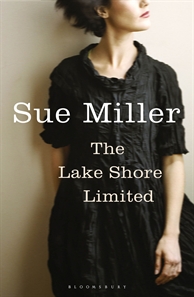
I’ve recently finished reading Sue Miller’s “The Lake Shore Limited“.

The Lake Shore Limited” looks at the relationship dynamics between a group of people, all more or less connected by the death of a man named Gus in the events of September 11. His lover, his sister, his brother-in-law and two men that his lover gets involved with. These characters are all linked not only by Gus but by the incredibly complex emotion of guilt over secretly wishing a lover was gone, even though they’re a good thing.

For starters, I have some mysterious aversion to the use of September 11 as a plot device. Particularly in a poorly-written novel. I’m not even sure what this is about, really – I don’t feel this way about the use of world war 2, or even using more recent stuff from Afghanistan and Iraq. But somehow, the use of September 11 in this novel left a really sour taste in my mouth. It may be the way it was executed… I’ve also recently read Melina Marchetta’s “The Piper’s Son“, which used the following year’s bus bombing in London as part of its story. But somehow Melina Marchetta’s use of such a sensitive subject didn’t seem disrespectful – Sue Miller’s writing feels somehow like she’s laying claim to the emotions of the September 11 victims in a way I really don’t feel comfortable with.

A lot of this book was internal dialogue. The feeling I get is that Sue Miller wrote it as entirely internal dialogue, and then an editor told her that she’d written a bath story. Sue Miller gasps in shock, and promptly plugs in many “as he opened the window, he thought…” and “scooping dog food out of the tin, Billy recalled…” -type things to force her characters to do things rather than just be pensive all day long. With all these obviously forced actions, the writing process Sue Miller’s gone through becomes absolutely plainly visible. When I realised what had happened about three-quarters of the way through the book, I found it so distracting I had trouble reading past my frustration.

When action occasionally genuinely happens, it doesn’t feel strained – the book really might have benefited from a lot more of it.

I have no big problem with books that look at complex emotions. “Lolita” looked at pedophilia in an amazingly empathetic way.  “A Heartbreaking Work of Staggering Genius” looked at guilt and family dynamics beautifully. “Notes From Underground” features a torn-up and incredibly changeable narrator. I’m totally down with all these books, and many others that tackle really big and difficult feelings: it’s one of the most interesting and important things that literature can do. “The Lake Shore Limited” however, made a really difficult emotion one-dimensional by over-using it.

I like linking characteristics in characters, and maybe Sue Miller had a good idea in doing this. It’s a nice way of creating some continuity in a story, and as far as people go I belive there are those parts that all of us have in common. What’s happened though, is that all the characters have exactly the same feelings. The same reactions, the same guilt, the same struggle. And while I’m sure it’s a somewhat universal emotion, I don’t think that people could possibly all feel it in the same way like the characters of “The Lake Shore Limited” do.

Sue Miller has tried to tackle some really tough things with this book – September 11, universal emotions, the complexity of human relationships. There’s some really strong ideas, but Sue Miller’s limited writing of them means the story falls on its face. Hard.

Thought-stalking Jacinda Woodhead and Google Reader “test”

Right when I was thinking about whether I read enough, Jacinda Woodhead (of Meanland) blogs about Reading Anxiety.

Through that post, I was convinced that Google Reader was worth a look-in. So for the last week I’ve been giving it a test-run. And then Jacinda Woodhead blogged about Google Reader stealing all your reading time.

Dear Jacinda Woodhead – props on some awesome writing, but you’re stealing my blog posts. And I’m feeling mildly creepy for this unintentional thought-stalking. S

Okay, now that’s out of the way: Google Reader.

I’d seen a little mention of it via Gmail, and disregarded it as part of the Google-plan-of-taking-over-the-world. Then I started to see mentions of it everywhere: on Twitter, on trams, on blogs. Everyone’s been mentioning this magical program that takes hours off your online-reading time.

How? Well, Google Reader is a program to which you plug in all the websites you would ordinarily go to every day to check for updates. For me, this is many many. Many.

I’m a hardcore advocate for Gmail. I wouldn’t go back to any other email client if you paid me. So when I got onto Google Reader I was pleasantly surprised by the fact that it runs in much the same way as Gmail. It constantly updates itself (while you’re in it) and makes it really easy to organise material.

You can “star” things in the same way as on Gmail, to come back to important things later. You can search through a huge amount of blog posts to find just the right one. You can view posts in a heap of different ways according to what suits you best.

The only thing is, now there’s NO posts that I miss, anywhere, ever. Now Google Reader is something that adds to my reading anxiety. Having said that, Google Reader saves these posts like unread emails – it sits in bold until I have an afternoon free to catch up on things that aren’t priority.

It’s great though. I’m chuffed. Now, along with Twitter, Facebook and WordPress, I have Google Reader constantly open. It runs calmly in the background. Right now it’s telling me that there is “(1)” new post that I haven’t read. “(1)” website that I would have had to trawl for new content, but now I don’t.

Google Reader is like hiring someone to do all the inane click-and-scroll shit that takes up a heap of your reading time. I don’t know how I did without it.

Blog at WordPress.com.

Up ↑