Ideas fall from my fingers like dead fish, slapping stinky into an ever-expanding word document a’la shit. Lucky dead fishes make lovely dishes if you know how to prepare them correctly -bring on the editing, say I.
I’d had enough. I’d had my head in philosophy and theory books all morning, been staring at screens, had enough. I had to do something else. All my mind saw was “rhizomes, rhizomes, rhizomes”. I love thinking about and working with rhizomes but for today I’ve had enough.
So I made myself a garden. I bought potting mixture and walked the trolley all the way home before returning it for the $1 I put in to use it. I weeded the terrace. I pulled rhizomes out of the ground. I laughed at the irony of my garden.
I am growing tomatoes. I am growing cucumbers. I am growing peas. I am sustainable. I am creative, even when I’m not creating. I made something good in the world, because I put a piece of life into a pot and I plan on loving it.
Today’s post is by my good and very talented friend Misha Adair. He’s sorely missed in the blogging world (responsible in an earlier life for Adair on Books), but I talked him into coming out to play on the question of listening to music while you write. Thanks, Mish!
I can’t write while listening to music. I just can’t. And I’ve just tried. I stared glumly at the computer screen for the three minutes and nine seconds it took for Bob Dylan to get through The Man in Me. Then I gazed stonily at the computer screen for the six minutes and fifty-two seconds it takes Wynton Marsalis to redefine the first movement of Hayden’s trumpet concerto in E flat. Not a word was typed.
Now the only sound in my flat is the steady sharp crunch of the cat having her second breakfast. She crunches in triplets, by the way. And the words, if not flowing in a torrent, are coming at least in a steady trickle.
The challenge that my gracious host has set me in this piece, I suppose, is that I’m going to have to try to unpick two great loves of my life: music and the written word. And try to explain the fact that they seem not to get along in a creative sense. I’ll start with the music.
I absolutely adore music. It’s been a tremendously important part of my life for as long as I can remember. Exactly as long as I can remember, in fact. My very earliest memory is of my father swinging me through the air. There was music playing. When I was about twelve I heard a song that immediately – almost painfully – took me right back to that memory. Water of Love, by Dire Straits. That’s what was playing, and I have to brace myself for a brief moment of rapid remembered motion every time I play it.
The sense of smell is cornily and repeatedly cited as the most powerful trigger for memories. I’ve never understood that. It’s music for me every single time. There are songs I dare not play because I know that they’ll have me sobbing brokenly in the opening bar. At the moment, my girlfriend is teaching English in South Korea. She’s been there for six months now, and I miss her terribly. We used to listen to Nick Drake’s Fly a lot. Even thinking about that song has me in gentle tears now.
When I was about five, my parents got me a piano teacher. The proper kind – Eastern European. If you’re ever looking for a piano teacher, accept no substitutes. Maryla would make me play scales with erasers balanced on the back of my hands until I cried. Her most powerful gesture of affectionate praise was to grab a handful of my hair, yank it, and make a curious ‘Teeeeeeeeeeee!’ sound. When you’d been defoliated in this way, you knew that the week’s practice had paid off. I’m not for a second saying that it’s necessary to learn the grammar of music to appreciate it profoundly, but I do think it makes a difference to the way you listen. Trying to write a sonnet, analogously, gives you a new appreciation of how hard it is to write something like Shakespeare’s incomparable number seventy three.
When I was in high school, I had an astonishing music teacher called Hugh McKelvey. I’ll never forgive him for the confidence trick he pulled off to saddle me with playing the tuba, but I’ll never be able to thank him enough for the time and trouble he took with me, and for turning a gentle blind eye to the fact that I faked having music lessons to get out of PE.
By that time, I had a new piano teacher too – the darling Mrs MacKay. Not Eastern European, but so delightfully nervous on the day of her students’ piano exams that you could smell a faint whiff of brandy around her, and never mind that that was at nine o’clock in the morning.
The first paying job I ever had was in the orchestra for a production of Hello Dolly! I’ve played in a symphony orchestra (conducted by Hugh McKelvey, who got me the gig – another thing to thank him for) and in my early twenties I played bass in a hip-hop outfit that I still think had the greatest band name of all time: ‘The Catholic School-Girl Appreciation Society’. Music is a huge part of my life. I’ve given up the dream of being a hip-hop bass sensation, I knew when I was about twelve that I was never going to be a concert pianist and the first time I ever lifted a tuba I knew I wasn’t going to be lugging one of those bastards around for the rest of my life. Music was never going to be my profession, but it was never going to be something I took for granted.
My iTunes library will play for forty two days, starting with AC/DC and ending with a Russian hard-rock group whose name I can’t decipher since I don’t read Cyrillic, and I’ve got a small but stunning collection of vinyl. Ever heard the Dave Brubeck Quartet playing their 25th Anniversary Tour? It feels like sacrilege even to consider converting that stuff to MP3, and the same goes for the incomparable LP of Mikis Theodorakis’ Mauthausen songs.
Music, broadly and not entirely accurately speaking, is something I can do. So when I listen, I think about how I’d do it. And that, I think, is why I can’t write while I’m listening to music.
Now, limping towards the writing part of this…
I grew up in a house that was blessed to be free of television. The first time I had regular access to a television, I was seventeen. And my father is a literature teacher. Not just any literature teacher. He’s quite simply the greatest (non-Eastern European) teacher I’ve ever met. The classic description of a competent teacher is of someone who can muster some enthusiasm for a subject and explain any given point in three quite distinct ways. My father can do that in his sleep. But then he can do something more: he can transmit his love for something (a poem, a play, a novel) in such a way that the love is contagious. You cannot not love John Donne after you’ve heard my dad riff on him for a few minutes. And you can’t do anything other than listen spell-bound while he reads.
I grew up in a home that had no TV, but about three thousand books. I didn’t miss out on anything important.
And my mother, who won’t mind me saying that her husband is the better and more sensitive reader, wasn’t ordinary either. She was born in Melbourne, but she’s as Russian as you get without a long black leather coat and a propensity to be gloomy and hurt people. And she used to read Chekov short-stories to my sister and me on trips home from school. And she was translating them as she went.
When I was fourteen, I read a radio play called Under Milk Wood by Dylan Thomas. It changed the way I approached literature. I realised for the first time that the English language was music – and that script on a page was notation.
Language and music are, for me, alarmingly similar. At their best they are both so utterly bound up in creating aural beauty that they make it impossible for me to listen to one and practice the other.
If I listen to music, it changes the way I write, if I can write at all.
Get me listening to Beethoven’s Seventh (one of the great human achievements in all of history) and I’ll write you something that sounds like a cross between a Human Rights screed and a manifesto in favour of the immediate invasion of the nearest militarily inferior country. Set me up with the Sixth, and I’ll write a diary entry that would be the pride of any six year-old girl.
Play me some Bach, and I’ll just stop. How can anyone, anywhere create while listening to that man’s creativity? It’s just not possible. You don’t even want to breathe while listening to Bach, in case you’re doing it the wrong way.
I’m reasonably eclectic in terms of my musical taste – so please don’t think that I listen to what the uninformed automatically call ‘classical’ music exclusively. In a moment, I’ll listen to Bryan Adams, Sting and Rod Stewart singing All For One, and it will be one of better five minutes of my day.
But I won’t be able to write a single word while I listen.
When I listen to great music, I very often get ideas. Sometimes I even think I get great ideas. But I can never write them down until there is silence, punctuated only by a cat eating in triplets.
We have a small slam scene, and a young one, but last night it felt so strong.
Last night was the Tell It Like It Is slam at the Footscray Community Arts Centre. Crowd and performances aside, this is an amazing space. An ex-tannery on the industrial side of down, right by the river, there’s a vibe to it. I can say nothing more concrete and positive than that it’s aesthetically pleasing and has a good vibe, but who needs more than that?
Tell It Like It Is is a regular slam run by Luka Lesson and Alia Gabres, and these guys have teamed up with the Centre for Poetics and Justice, who have teamed up with Overload Poetry Festival to present last night’s pants-wettingly good show.
The evening began with local poets, with the usual suspects wow-ing. Luka performed a piece backed by Meena Shamaly, which talked about the strength of his roots leading him to write powerful words, as if it were an inevitability. Joel McKerrow told the stories of some of his students, talking about bullies who are only bullies because they don’t have pens. Mel Hughes gave us a moving and personal piece about her little boy – I applaud her bravery in sharing, but I also applaud her gift with words and her ability to perform.
The fuss about the evening though was the international guests. With such a small and young slam community, we’re incredibly lucky to have gotten these amazing performers to join us for Overload: Ken Arkind, Jive Poetic, and Shane Koyczan.
All three of these guys know how to do the personal and the political in perfect balance, and how to weight the serious and the humorous so an audience feels the light and dark from their insides.
Ken Arkind (self-proclaimed “sexiest garden gnome at the yard sale!”) bounced around, all beard and wonder. He performed the pieces I love him for – Maggie, and For Wes. Then he pulled out some I’d never seen or heard before (the video’s of Slam Nuba, he’s in there, and it’s as electric as it was last nigth), and now I love him even more. This man is small, but he’s explosive.
Jive Poetic knows how politics are done – without sentiment, without black and white. He also knows how the laughs are done, and I don’t think I’ve laughed as much at a slam as I did while Jive Poetic performed. Something about the way he performs is personable, and as Luka said, he connects with his crowd, whether that’s three people or a stadium full.
A note on last night’s numbers: at a rough guess, this place sat about 150 people. By the end of the first round, the seats were all full, plus beanbags had been pulled out for people to sit down in front, and extra chairs around the side of the stage. And many were faces I’ve never seen before – this is exciting. A small slam scene means the same faces all the time, and crowds rarely getting very big. This crowd was the biggest I’ve ever seen at a slam, and all were engaged and excited to be there.
Shane Koyczan finished the night up and mannnnn….everything I expected and more. Like Ken Arkind, he did some pieces I knew and loved, and others I’d never heard. There wasn’t a dry eye in the house when he read a newer piece about the death of his best friend. Shane’s performance style is really understated, but sure and strong. He’s quite static, and the power is all in his voice. And such a voice.
Shane is performing again tonight at the closing night event for Overload, alongside Sean M Whelan, Eleanor Jackson, Emilie Zoey Baker and other Melbourne Awesome. Discounted tickets are available now, so you have no excuse not to be there.
Centre for Poetics and Justice are also doing an up-close-and-personal panel event with Ken Arkind, Jive Poetic and Shane Koyczan on Monday night. There’s only 40 seats for this thing, and it’s a “secret” event – sign up to the CPJ mailing list, and Joel will send you out the details, but not the full details until Monday. Go! Now! You don’t want to miss this.
I really, really enjoyed Sophie Cunningham’s essay in Issue Six of Kill Your Darlings, titled “A Prize of One’s Own: Flares, Cock-forests, and Dreams of a Common Language.” Now it’s online, so you can read it too. And it’s not just a great title (which it really, really is) but it’s also got some really shocking statistics in there. Very much admire Sophie’s work to correct this, because it’s so easy to pinpoint a problem and whinge about it, but to make moves toward a better state of things is hard. I am looking forward to seeing the Stella Prize take off.
Well, not me personally, but my blog. It’s been two years today since I started blogging.
In that time I’ve had the opportunity to meet some great people, to interview international and local awesomes, to have guest posts from people smarter than me, to become part of a TV show, got a rad banner, media passes and mentions from festivals and shows which have allowed me to access all sorts of exciting places and people… And most importantly, to engage in a dialogue with you, Dear Reader, which I always find exciting.
I still can’t believe people read this blog, so good on you and good on me. Good on us.
Happy Birthday!
I’ve been reading Adverbs by Daniel Handler. He’s hilarious, and poignant, and writes in that ironic, self-conscious/unself-conscious (yes, both at once) way that cool people do.
I just found him reading my favourite chapter (so far, because I haven’t finished the book yet) from Adverbs. I had more fun reading this chapter than I have reading anything in a while. I thought it would be worth sharing.
Check it out: I wish I could write like this. I haven’t read anything this hilarious in quite some time.
Consider this something of a teaser, and chase up Adverbs.
I’ve let the ball drop on my one-exercise-per-day goal that I set a few months ago. I’d decided I was going to do a different writing exercise every day, and when I hit on something worth keeping, I’d work that up to something presentable, but keep doing the exercises. The point though, was to keep the brain active and challenged. It’s easy to get stuck on one project, or to find yourself writing the same story over and over again. And I know so many people that produce so much work. I’d love to be one of those people. But it takes a lot of dedication and hard work.
So today I got back into it, and mean to stick with it. It’s about routine, I think. When I get up early and write, I do well. When I push it to the end of the day, what I produce is a half-arsed nothing.
Today’s exercise was one I’d done before, but hadn’t known where it came from. I did the exercise originally in a creative non-fiction unit at school, but it was well worth repeating. The exercise was from Now Write! Non-Fiction. It involved writing down every detail I knew (without looking) about my writing space, and then boiling that down to the salient details. I was amazed by how many tiny details I knew about the space without looking, but when I did look I was surprised by the size of some of the things I’d missed: the heater. The light hanging from the ceiling, and the water damage in one corner. The fact that the mantle is coming away from the wall some. I missed these things, but I remembered some tiny tiny details, like what notes were on my pinboard, and what was in my box of stationery.
The salient, tangible and telling details I kept about my writing space:
– The heater’s missing a caster, and is propped up by a thick book so that the heat doesn’t direct at the floor and set all my words on fire.
– There’s a Chinese charm hanging above the door (which we call Narnia) between our house and the shop we share the building with. This door is part of my study. My partner hung the charm there when we moved in, but won’t tell me what it means.
– Notebooks spanning about eleven years have their own pigeon-hole in my bookshelf, and another for writing books and dictionaries. The rest is fiction, A-Mo, and on the mantle is Mo-Z. There are still books which don’t have a space. Non-fiction is on a steel shelf, $17 from Ikea, the kind you’d find in a garage. I love my books the way chumps love their cars.
– Unused notebooks, waiting.
– WRITERS ARE MADE, NOT BORN is hanging above my desk.
I worked these details up into a scene, and put some action in there.
I’m sharing this exercise because I found it useful. I realised that I sometimes miss some really, really prominent details, and that some details can say a lot about someone.
What does your writing space say about you?
Today’s is a guest-post from a good friend, Rafael S.W. When I talk about those people that support me with my writing, Raf’s one of those I’m referring to.
He’s weighed in on what I wrote about last week – about the conditions under which we need or prefer to write.
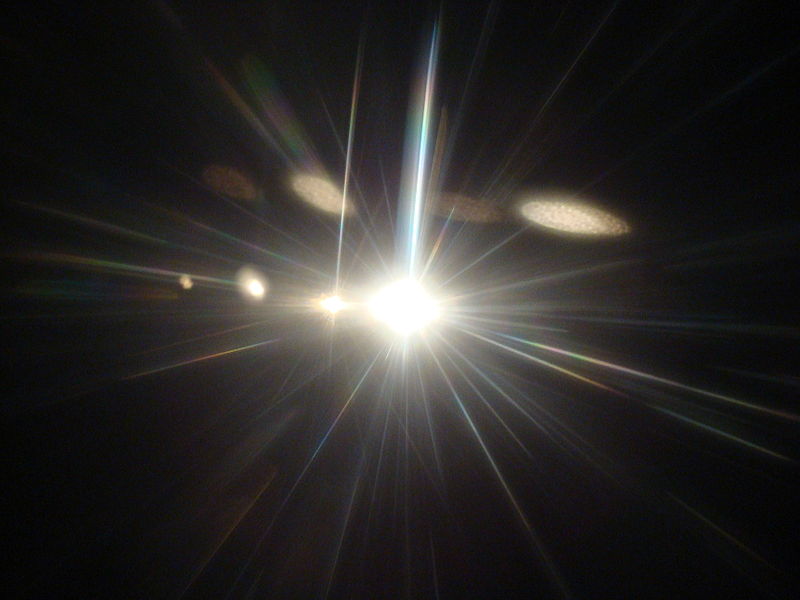
I have started to be very aware of light levels in my writing. As I type this, I am in my grandmother’s kitchen because that is the only place I can be in her apartment that means I can have some lights on but none that are in my face. I spent a fair few minutes flicking different lights on and off before deciding on how I wanted it. This might sound weird, but I have become somewhat of a light connoisseur. I used to have one of those touch-lamps that could change the level depending on how I felt and what I wanted to write (the brightest setting for seriousness, essays / a completely dark room except for the lowest setting when I wanted to write poetry). Then I broke it. And now at home I write while my new lamp (which doesn’t dim) is covered in paper, with one of the two bulbs taken out, and it sits behind my door.
Where did this come from? Was it in the single moment where a girl first took me to her room and it was lit by nothing by Christmas lights? Was it when I walked home from 4 am parties and spoke poetry into my phone while the streetlights dimmed the road ahead of me? Was it when I first noticed how beautiful skin looked in the blue wash of a laptop screen? I don’t know, but ever since I’ve been writing with a light level that reflects my mood, my writing has felt smoother, less forced.
I have heard that the converse is true too. I have a friend who is completely impacted by the halogen brightness of trains at night. If he sits on a seat underneath one of the ones that flickers, however minutely, he might not even notice, but after a few stations his mood will sour, he sometimes even gets headaches. And only when he sees the spasmodic winking of the light overhead will he have an explanation for while he suddenly feels terrible.
I’m a strong believer in writing in a way that works for you, however weird. If it’s upside-down to candlelight, then so be it.
“That’s bad light there.” Says my grandmother, coming out from her room, squinting a little in the gloom. “Can you see alright there?”
Enough, yes, I can see enough.
 Sam van Zweden