Once a year, Melbourne throws open its doors for Open House Melbourne. The poem below was prompted by my day at Open House today, touring the Harry Brookes Allen Museum of Anatomy and Pathology (Melbourne Uni). We also walked through the tunnels that run under the Royal Melbourne Hospital. Both these areas are usually closed to the public.
The line is long, and we are fierce. “We arrived together!” insists the group with bikes “But we aren’t together,” we correct, and the woman lets us through. We wait half an hour, more, anyway.
Moulages masquerade – Mermaids are manufactured – all horse-hair and wax, Topped with a flute for proper exotic flair. A woman gives her daughter a brilliant explanation of what an umbilical cord is, and I miss my mum.
Body parts are shattered, separated, strewn across a room I can’t imagine the function of all these bits I can’t place them in my own body. A woman’s tumour has grown its own hair. What was the purpose of that?
Picture from ed_needs_a_bicycle of Flickr creative commons
Yesterday someone came into work to ask if we stock Tiny Beautiful Things. We don’t, but we ordered it in for her, and in the meantime I exploded in a lovefest for Cheryl Strayed.
Last year at NonFictioNow 2012 (at RMIT in Melbourne), I was lucky enough to see Cheryl Strayed speak, and read her piece “Write Like a Motherfucker“, which originated as a Dear Sugar column. This reading moved me, in a really important and fundamental way. Everything Elissa Bassist writes is something I’ve felt before, and something I suspect that most 26 year-old female writers have felt. Most writers in general, really.
Cheryl (Sugar)’s response is spot on too. Hearing her read it that first time at RMIT made me go home and write, and whenever I feel unable to work because of those self-doubting thoughts, I read it again and then get up and write. I bought a mug from The Rumpus, with WRITE LIKE A MOTHERFUCKER written on it. I drink coffee out of it, and it reminds me, and sometimes that helps. It’s a rare piece of writing that can consistently move me in that way.
In light of all this, when that poor customer asked me if I knew of Cheryl Strayed, I exploded on her about how much I love Strayed, how much her words mean to me, and how real I find her. Proceeded to sell her Wild, and order in Tiny Beautiful Things, and encourage her strongly to go read all the Dear Sugar columns on the Rumpus. Poor customer. She had no idea what she was getting herself into!
I also just found this fantastic follow-up interview between Elissa Bassist and Cheryl Strayed up on the Brevity blog (tied to Creative NonFiction mag). I particularly love what Strayed has to say about drafting and re-writing.
In other nonfictional news, I’ve made a decision. I’ve been dreaming of going overseas to a lit festival, and I’ve decided that NonFictioNow 2014 is it. Iowa, here I come!
It’s been a pretty massive week. Between work at the book store (flat out and feral due to school holidays), interning, playing social medium, and trying to maintain a social and love life, it’s been CRAY. And I’m not even doing that much. Big #loveattack for those who are making it all happen.
Hence, a general post to bring together all the exciting things that have happened/been announced in the last week:
Things are really ramping up at Melbourne Writers Festival HQ. Names are being released left, right and centre ahead of next week’s program launch. It’s been exciting knowing these things before the public, but it gets exponentially more exciting when people start reacting to the news that certain guests are coming to town. I can’t wait to see everyone lose their shit when the full program goes out.
I’ve been busy with various whatnot, and haven’t had a chance to blog these exciting announcements straight away, so I’ll just go ahead and put it all together for you now:
Busy bee! Photo via Saibal~M Fotografy on Flickr
A few weeks ago it was announced that the Edinburgh World Writers Conference is coming to Melbourne, and taking place as part of the MWF on the 23rd August at Deakin Edge (which used to be BMW Edge). This is a really switched-on conference, with guests from (literally) all over the world. What I love is that it punches way above the regular session you’ll see at writers festivals. Usually you’ll see a writer talking about their work, plot points and character development. The hows and whys of their particular book. The EWWC is fantastic because it’s a chance to see big-name authors talking about the wider implications of writing and the state of the industry. The list of delegates for EWWC is great, and what’s been released so far: MJ Hyland, Tony Birch, and Junot Diaz.
Then last Wednesday the Tavi bomb dropped. Style queen, young feminist and all-round admirable young lady Tavi Gevinson is coming to town for MWF too! She started blogging when she was 11, and is now editor-in-chief of the blog Rookie, which publishes young women from all over the world. Tavi will be talking to Estelle Tang at the festival – match made in heaven! Australian Rookie contributor Minna Gilligan will be joining Tavi, along with a bunch of other brilliant girls for Rookie Day, the full details of which will be released on 19th July with the full program. Approved teaser words include ‘under-20’, ‘questions’, ‘panelists’, ‘dancing’. That’s all you get.
And this morning the opening keynote speaker Boris Johnson, the quirky literary mayor of London, was announced. I’ve been Google-imaging pictures of him all morning. It’s great, big-happy-making stuff.
Also, MWF and EWF are teaming up again to get baby bloggers into the festival and on the radar. I was lucky enough to be an Emerging Blogger at last year’s festival, and this year they’re calling them Digital Reporters. You can apply here.
Other than MWF, the latest KYD has just been published, and that’s pretty great.
I’ve also been loving the issue of The Lifted Brow that’s just come out. The more I read of it, the more I want to be in it. The Lifted Brow, consider yourself squarely on my list of targets. I promise I won’t send you any metaphors as bad as the one I just wrote. Square listed targets. Pfffft.
Last night was the first annual fundraiser for SlutWalk (which is happening on August 31st), with the fantastic name SlutFest. There was poetry, comedy, singing, dancing, a dancing vagina, a singing dancing naked lady… I almost cried, it was so full of strong women, and the turn-out of men was really encouraging too. So congratulations to Karen Pickering and all the great people behind SlutWalk, your cause is so accessible and important!
On that note… consider yourself caught-up, dear reader.
Lucy’s coming to town for the Melbourne Writers Festival in August, and a copy of this was floating about the office. With a combined love of memoir and food, this book really spoke to me. The daughter of two foodies, Knisley combines recipes, travel stories, and coming-of-age memories in this gorgeously illustrated graphic memoir. Get on it – very fun.
Madness: A Memoir, by Kate Richards
This first caught my eye for the cover design. It looks beautiful, but it also feels beautiful. Those scribbles are actually embossed so that it feels like someone’s picked up each and every book fresh off the printing press and done that design by hand.
Like with Relish, I picked up Madness: A Memoir because it hit close to home. Between my mum’s and my experiences of mental illness, it’s always a topic I’m keen to read about. I guess the intangibility of mental illness means that it’s anything but universal, and every memoir or account that comes out of it will offer something different.
Unfortunately, it’s also dangerous territory. Many mental illness memoirs only touch on the physical experience, and look no deeper. Madness really hit the mark for me. Kate Richards is medically trained, so she has a different understanding of her illness, and seems to understand that she can play a bridging role (between medical establishments and patients) that many psychiatric patients cannot. Madness managed to explain some things I’ve never understood about Mum’s experience, and prompted me to consider the role of writing as an advocacy tool.
High Sobriety by Jill Stark
High-selling nonfiction books make a bigger dent on my radar than high-selling fiction books. So all the talk around High Sobriety earned it a place on the reading pile, and I was lucky enough to co-chair the #kydbookclub this month with Jessica Alice, discussing High Sobriety. Unfortunately, Australian politics exploded within ten minutes of the book club starting, but the discussion that did happen over the top of #auspol on Twitter was good fun, and interesting.
High Sobriety follows Jill Stark, a newspaper health reporter, as she takes a year off booze. Like diet, drinking habits are deeply personal, and it’s almost impossible to read this book without weighing in on it somehow. As a not-particularly-heavy-drinker, I still had a lot of eyebrow-raising moments. Stark made me think about the cultural role of alcohol, and the things we take for granted that are actually a bit messed up.
Certain settings really inspire me. I don’t mean settings for myself to write in, but settings for my stories to take place in.
Many of the settings that get my imagination going are foreign to me. Perhaps I can be creative with these settings because I’m doing all the work in my head. If the fundamental element of place is true for me largely because of what my imagination can do with something foreign but interesting, then other elements like character and plot flow on much more smoothly. Putting faith in my imagination for place and setting means that the rest becomes more pliable and willing to follow suit.
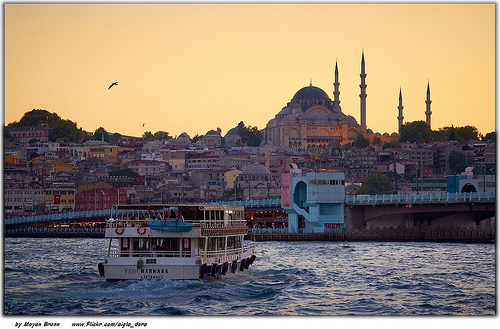
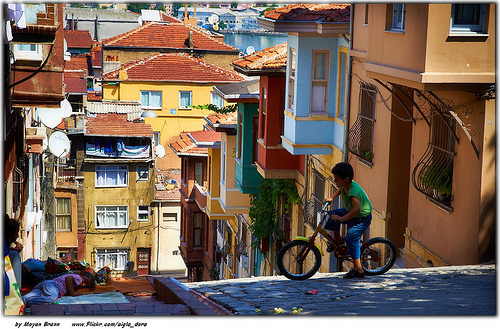
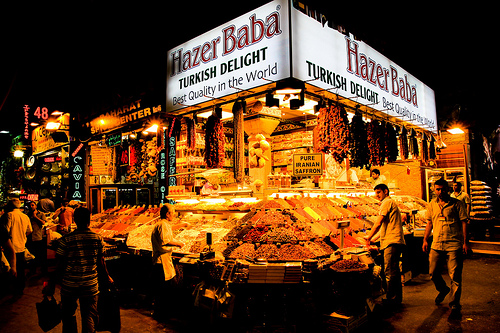
Istanbul: The food tinted with rosewater and pistachio, the call-to-prayer, djinns and mosques… Istanbul isn’t somewhere I’ve ever been, but I’ve read it evoked so beautifully by other writers that it holds a special place for me. My favourite evocation of Istanbul is Alice Melike Ulgezer’s The Memory of Salt. Istanbul exists in my mind as a place where a certain kind of story happens. The version of Istanbul that I have in my head, is tinted with some magic.
Image credit: Ollie T on FlickrA building in Chernobyl from Pedro Moura Pinheiro on Flickr
Abandoned anything: I guess this one’s kind of foreign to everyone. We live in a world where we have conquered just about every space that can be conquered, and we seem to want to develop everything. Once we’re in a place, we don’t leave. So it’s rare and very creepy when for some reason, a place is abandoned. Chernobyl fascinates me, because it’s one of the very rare instances that even squatters won’t brave – we can see what happens when the land takes back.
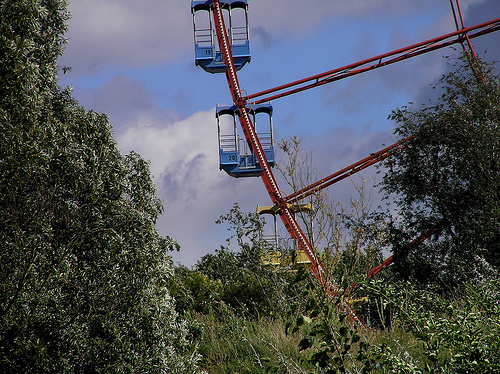
Over the weekend, Scott Westerfeld posted a link on Twitter, to this amazing collection of pictures of abandoned theme parks. For a place that once created so much joy and happiness to be abandoned – well, I don’t think there’s anything much more melancholy than that.
Image credit: Patrick Donovan on Flickr
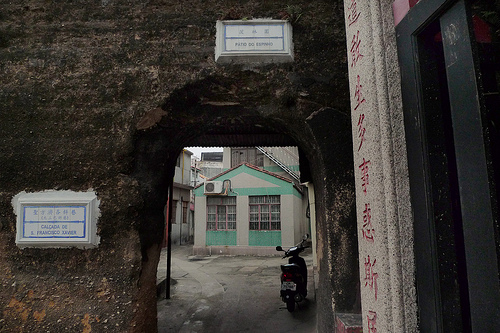
Macau: I only heard about Macau yesterday, during an episode of Anthony Bourdain’s No Reservations. He’s interested in Macau because the cuisine is a melting pot of Chinese, Portuguese, and the stuff that happens organically over time. I’m interested in Macau because it seems like a place that operates entirely outside of any worlds that I know. It’s not quite an Asian country, because its Portuguese heritage still has such a heavy influence on it. It’s not a Western culture, because it’s still very Asian in many ways. I like that a whole culture can sit in that ‘neither/nor’ space.
What settings do you find yourself drawn to in your writing?
Busy life is busy! The Melbourne Writers Festival office is experiencing a population explosion, the book store still stands and sells books, and KYD social media is busy as always – I’m currently diving into Jill Stark’s High Sobriety in preparation for next Wednesday’s #kydbookclub discussion. If you’d like to take part in it, I’ll be chairing the book club with Jessica Alice on Twitter, on the @kyd_journal account from 1-2pm.
In between all this business I have, however, found time to write a post for Killings, about recent awards given to short story writers, and whether we might be heading into a boom for short stories.
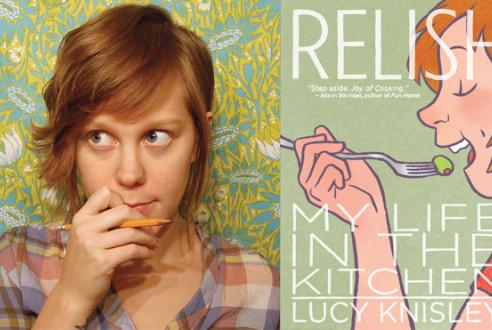
I have just finished reading Lucy Knisley‘s Relish. It’s a gorgeously drawn graphic memoir.
Last year at MWF, Estelle Tang waved Alison Bechdel’s Are You My Mother around before a panel, and when I chased that up, I discovered that graphic memoirs are amazing things. I loved Bechdel’s work, so when I heard about Knisley’s graphic memoir, I couldn’t say no. I love Knisley’s book. I’m not an avid comic reader, so I’m not judging with any kind of criteria other than, “it spoke to me”.
Relish is a collection of Knisley’s memories that are tied to food. The daughter of two foodies, she’s grown up around a lot of tasty things, but food functions here as something way more than sustenence or source of wonder. Food, for Knisley, provides a trigger for memories, and a framework through which she can understand her life. Experiences can be categorized by their food allegiances – Mexican sweets and coming of age. Choc-chip cookies and comforting rituals. French jammy croissants and losing her mind in pursuit of recreation. Many of Lucy’s food triggers are tied to family members, like her pearl-wearing grandmother, “the pickle whisperer”.
Also scattered throughout the book are recipes and cooking tips. Last week I made carbonara according to Knisley’s graphic recipe and it was delicious. Books that pair recipes with memories are delightful (I was also a big fan of Charlotte Woods’Love and Hunger), and Knisley’s consistently beautiful, funny drawings make this book a warm and welcoming reading experience.
I’m currently (sporadically) working on a memoir project which looks at the connections between food and words. My father and brother are both chefs, and food has played a big part in our relationships. As a writer, I constantly look for the places where food and words meet – these are the things that potentially be exciting to all three of us; a meeting-point of sorts.
In researching for this project, I’ve had no trouble finding memoirs written by chefs, or by people who’ve stumbled across cooking and food as some kind of saviour. There are far fewer books that are closer to what I’m trying to do. Knisley’s Relish has been a thunderbolt moment for me – I’ve found someone who’s done what I’m trying to do, talking about family relationships with foodies, from the perspective of someone who’s not a great gastronome, but a perfectly adequate cook.
I had this point with my memoir work about my mum, too. Reading Sandy Jeffs’ Flying With Paper Wings showed me that there is space for intellectual ideas in mental illness memoirs, and that a balance can be struck between the personal and the broader world of ideas. Similarly, Knisley has shown me that a memoir concerned with food can be about much more than direct experiences involving food, and that there is a way to combine my own non-foodie interests with the foodie stuff that has shaped me.
By combining her growing-up and food stories with a love for art and drawing, Knisley has produced an honest, non-food-porn-y memoir. I love her. I love this book. Thanks, Lucy Knisley, for your amazing work and for helping my research along at just the right time!
Occasionally two entirely unrelated pieces of reading will clash, and they result in wonderful breakthroughs, ideas, or realizations. The other day I bought myself a copy of A Year of Writing Dangerously by Barbara Abercrombie. It’s a bit of an awesome book.
The first entry in the 365 Days of Writing section of the book talks about Abercrombie’s attachment to this little cabin she’s got up on a mountain. She loves to go out to that sacred space, cosy herself up in it, and get her work done.
On the same day that I read this, while going through my Feedly content I came across a new post from Ruth Fields. Fields is the author of the fantastic guide for baby runners like myself, Run Fat Bitch, Run! She’s more recently published a new book called Get Your Shit Together, which is about organization and working efficiently. As promotion for the new book, “Grit Bombs” have been going up on her blog, which give a taste of what the book offers.
This grit bomb appeared on last week: the basic message is that we need to stop making excuses about having the ideal circumstances, and just get on with things.
Fields and Abercrombie connected in my mind. I think that I too often wait for is the ideal circumstances to write, and unfortunately they’re rare.
My week is currently (and for foreseeable future) structured so that I don’t have two days off together. I always aim to spend my Wednesday writing, but often it gets spent catching up on washing and dishes, cooking and TV. Sleeping. I get home on work days and only have an hour or two before my partner’s home – he’s pretty loud when he’s home, and I struggle to concentrate when there’s noise. But that hour or two after work isn’t ideal – I’d rather relax, check emails, or watch the news.
Okay, so it’s not ideal, but what the Fields/Abercrombie mash-up made me realize is that it’s never going to be ideal. What matters is that the time is there, and I can use it if I pull my finger out. It’s nice to dream about cabins in the woods, or my ideal, home alone for a whole day with no other commitments, but it just doesn’t happen.
We’re all busy people. How do you make your writing work despite your other commitments?
This is a wrap-up of Day 1 of the Emerging Writers’ Festival Town Hall Writers’ Conference
#1: It was said in the first event of the day, Seven Enviable Lines, though I can’t remember who by – that famous Samuel Beckett quote: “Ever try. Ever fail. No matter – try again. Fail again. Fail better.” It’s one of my favourite quotes, one that I try to keep foremost in my mind as I wade through desk-days and while cursors flash at me accusingly.
It came up again in the second panel I attended, Critical Conditions, this time from Nick Tapper. The echo made it stick.
#2: Melinda Harvey, in Critical Conditions, urges us to think of criticism as a creative act. She mentions Post Secret, and says something vague and aspirational enough to be exciting, about the possibility of new forms of criticism. Fellow panelist, Ella O’Keefe: ditto.
#3: John Safran says that “pride and sloth” are the sins of the creative. We have one stupid idea, and we cling to it and are too lazy to go out and be crazy about having ideas. “Here’s what’s wrong with you,” he says. “You’re lazy, and too in love with your one stupid idea.”
In Writing the Personal, Walter Mason tells us that he recently sent his editor 125,000 words. His editor has slashed and burnt it down to 75,000 words. This is just the process. Between Safran and Mason, the message is to be creative in a ravenous way – your brilliance isn’t limited, numbers are what they are and if you create more, the numbers are on your side.
#4: Walter Mason again, in Writing the Personal. He talks about Twitter and Instagram, and how he’s over people’s objection that they don’t want to see what everyone’s eating. It’s relevant, he says. It’s the most personal, and the most interesting. I agree.
Two years ago at this conference, at an ‘in conversation’ in the Melbourne room, Philip Thiel talked about the way that people do want to know what you had for breakfast, and that it’s what gives a blog flavour. That night I went home and wrote about what I had for breakfast.
I forget points that are made, quotes that I love, possibilities that exist, until events like these. The EWF provides a space full of echoed reminders, and I am buoyed; enthusiasm renewed. I come home to write, with abandon and without restrictions.




 Sam van Zweden