Search

Sam van Zweden

Writer

Category

Uncategorized

Now We Are Four

Last night when I went to post my Eat Pray Love piece, I had a notification waiting for me from WordPress.

“You registered on WordPress.com 4 years ago!” it said. “Thanks for flying with us. Keep up the good blogging!”

Weird airline metaphor aside, I was pleasantly surprised by this message. With everything that’s been going on in the last few weeks and months, I’d totally forgotten that it’s LGWABP’s birthday.

Yesterday I also returned The Wheeler Centre keys to Melbourne Writers Festival, received a thank you gift, and had a business meeting regarding stuff that will probably fill up the day a week that previously belonged to MWF. It was a day full of “Moving Forward…” type thoughts, and receiving that Happy Birthday message last night made me ponder just how far I’ve come.

While at uni, we had a few guest speakers who plotted their career trajectory in some detail for us. They were never neat or tidy. They often involved happy accidents as the result of hard work. I think that almost all of the happy accidents that have gotten me to this point with my writing have linked in some way back to my blogging. If I hadn’t blogged, I hadn’t met, I hadn’t interviewed, I hadn’t applied for, I hadn’t gotten, I hadn’t been invited to, I hadn’t received… It’s all traceable, it’s all connected, and it all starts here.

Last weekend I sent off a job application for an editorship. In it, I was able to talk about my blogging experience. Whether I get that job or not, I am proud of this blog, and proud that I have it as something that I can point to and say, “Look what I’ve done. My hard work has become this thing.” It’s like my career’s a tree, and this blog is the trunk, with all these limbs and shoots sprouting off it.

I know that people read this blog, and I thank you for trusting me and coming back to me. I thank you for engaging, and for sometimes discussing the things I write. I thank you for subscribing, and for putting in a good word, and for taking me seriously.

Happy Birthday, blog! Now we are four.

I Don’t Want to Be A Book Snob

I’ve been reading Eat Pray Love. And I’ve been really embarrassed by it. And I hate myself for that.

My time to read is primarily in transit, or in bed. Usually I’m not fussed by who watches me read on public transport, but this last week has been really tough for me. The first in-public session with this book happened at the Melbourne Writers Festival, where I went to a café that I felt confident nobody I knew would go to, then I felt the need to Tweet my excuse for reading it, as a preventative measure – just in case someone I knew walked in.

ImageThe excuse is that it’s a work thing – I’m reviewing Elizabeth Gilbert’s forthcoming historical fiction novel for The Big Issue, and in order to write about it in context I need to know what Elizabeth Gilbert’s other work is like, especially Eat Pray Love, because it was so wildly successful. This doesn’t change the fact that I already had a copy on my shelf which I’ve “been meaning to get to” for six months or more. Someone I respect a lot told me that it’s really not that bad, and I wanted to test this out for myself. I’m also a big believer in having to read the bad books to hate them sufficiently and articulately. Without reading Twilight I’d never have known that repetitive phrases like “topaz eyes” and the fact that everyone in Forks “lopes” everywhere are just little indicators of really clunky writing. I’d also not have known that I’d race through the book, the pages practically turning themselves. Wildly popular books become wildly popular for a reason – I’ve said all this before.

On the tram, reading Eat Pray Love, I found myself holding the book against my lap, or tilting it forwards in such a way that anyone near me could see the pages, but had absolutely no hope of seeing the title. A few weeks ago I saw an old lady who’d covered her book in a makeshift slip made of junk mail. I considered this tactic briefly, and decided that doing this post-Fifty Shades tells people that you’re reading erotica, and you’re ashamed of it. To be honest, I’ve read erotica on public transport, and I was fine with it. Eat Pray Love was a more embarrassing experience..

I got a little out of the book I didn’t see coming, but it mainly lived up to my expectations. Elizabeth Gilbert reads as privileged and hard to relate to, and her ‘transformation’ from privileged woman in the US to privileged woman in Italy, India and Indonesia didn’t exactly change my life or make me feel empowered. This is what I expected. I didn’t expect to enjoy bits of it, like her record of ashram life in India – this is where she seems to touch a little on the wider-world awareness that the rest of the book lacks.

What I got mostly out of reading it though, is the fact that I’m an incurable book-snob. Tipping my book away from fellow commuters lest they judge me, I knew this said more about me than it did about them. I’d pre-judged this book and its readers – it doesn’t matter whether I was right about the book or not.

So I didn’t love your book, Elizabeth Gilbert, but I’m not sorry for that. I am sorry for thinking myself above it, and for deciding I knew what it was before opening it. I don’t want to be a person who draws lines around what’s worthy without consideration.

I will continue to read bad books, listen to bad music, and watch bad films just to be sure. 

The MWF That Was

We’re now a few days post-festival. I knew it would take time to adjust when all the action came to a sudden stop – now that I’ve caught up on some sleep, and gotten back on top of various other commitments (see: laundry, eating vegetables that are not potatoes, reintroducing myself to my partner and family), my life seems slower than it was before the festival started. 

These last two weeks – indeed, the last six months – have been amazing and crazy. In the lead-up to the festival, in my role as program intern I was helping to plan the professional development stream of events, input a HUGE amount of data into the festival management program, and help out with general odds and ends. I appreciate the insane amount of work that goes into making a festival happen, and absolutely tip my hat to the whole team behind MWF – hardest working office in Melbourne.

The last two weeks have involved lots of running and a diet almost entirely made up of chips, and I’ve loved it. I’ve learned a lot about how events run, and met some really fantastic people. There’s a definite weirdness about living in other people’s pockets for two weeks – it brings barriers down, and the need for problems to be solved now means you get to know people on a faster time frame than relationships normally progress. Festivals are life in fast-forward, for a very limited time, but there’s no option for stopping, pausing, or taking the tape out. 

Now that we have stopped, I thought I’d briefly dot-point some highlights:

Moshing with Tavi Gevinson. A room of about 100 girls under the age of 20, jumping around in the Queen’s Hall at the State Library, Taylor Swift pumping, I cried a little out of happiness. I still haven’t quite nutted out what was so moving about this, but it most certainly was moving. I suspect it was only the dorky grown-ups who had a little tear, but I know I’m not the only one who was overwhelmed by it. Perhaps it’s about young people and possibility and openness and lady power. Perhaps. Or maybe I just hadn’t realized how much I like Taylor Swift.

– Andrew O’Hagan’s hilarity/seriousness mashup. Andrew O’Hagan speaks in a way that’s really exciting to listen to: he’s a very, very funny man. He also covers incredibly serious topics in his work (child jihadis, paedophilia in light entertainment industry, the toll fame takes on young people, mass murder, etc…) in a way that brings the most awful things in the world to your doorstep – he speaks in a way that puts those things RIGHT next to each other. He comes across as someone whose life is intense as hell – definitely one of the best speakers I’ve seen.

– Magda. On opening night, The Moth Storytelling presented stories of Moxie and Might. Magda Szubanski told a story about her father’s involvement in World War II, and what it taught her about fear and bravery. Overcome by emotion in the final moments of her story, there wasn’t a dry eye in the house, and I feel absolutely privileged to have seen this side of Magda. 

– Strangers connecting. There was a tweet-up, and KYD had drinks where contributors, staff and readers could meet, and I had a few people introduce themselves to me as readers of this blog. I saw two women meet up in the Wheeler Centre foyer after a session on Memoir, and decide to go for coffee and share their stories. They’d never met before. I love that the festival was a way to connect for everyone, no matter what their role or involvement was.

– Capable vollies. Next time you’re at a festival, think about the volunteers, and how incredibly hard they work. The volunteers behind me at the Wheeler Centre during the festival really held it up and I have so much respect for them. Thanks, guys!

Being told that I can. Professionally, I’m a huge self-doubter. I have trouble pinpointing my strengths, and looking at large projects and believing in myself. So huge, massive, inexpressible thanks need to go to Lisa Dempster and Mike Shuttleworth for telling me that I could do the job, and well. Now, on the other side of it, I believe I can.

Right, getting a little teary just writing about it, so I’m going to wrap it up here. The whole experience is so huge that I’m having trouble pulling it together neatly into a “lessons learnt” type of coherence – this is probably something that will happen in weeks to come. Overall, this has been such a great learning experience, and I’ve met so many great people. Having an excuse to introduce myself to Claudia Karvan, Tavi, Andrew O’Hagan and so many other people was rad. Fangirl with a title. Heck yes.

I hope everyone from the MWF team is recovering and catching up on sleep, that Festival Director Lisa Dempster is having a fantastic time with the Bookwallahs, that you’re enjoying the many wrap-up posts that are coming out now that it’s over, and that you had a great festival experience.

Hanging out for next September!

Blogging for City of Melbourne

In the last few weeks, you might have seen my name up on the City of Melbourne blog. I’ve been writing teeny-tiny posts for them about what’s happening at Melbourne Writers Festival. 

The first post was about the digitally-focused events the festival has to offer.

The next was about good cafes to visit during the festival for reading and writing bliss.

And the last one, which went up yesterday, is about the very exciting upcoming event, Meet the Editors

Thanks so much to City of Melbourne for having me – hopefully my tiny guides have given a few people an idea of what to do with their festival time!

When Everything Is New

Very soon I’ll be heading into the city for the first of many Melbourne Writers Festival events.

The festival launches today, with keynotes from Boris Johnson and The Moth tonight. On Friday shit gets real, with the start of actual programming at Federation Square, and the first professional development session at The Wheeler Centre. The Professional Development stream is my home for the next two weeks, ushering incredibly talented people around, providing biscuits, making chats, making happy. I’m excited, but nervous too – I suspect this is normal. The air around festival people zaps with this feeling – “Did I check everything? Thrice? What’d I forget? Is there pen on my face? Have I got stress hair? Breathe.”

As director Lisa Dempster has said of both MWF and Emerging Writers’ Festival (which she directed before MWF), there’s a point where all you can do is sit back and see your good work pay off. …I’m not sure we’re at that point just yet though. Today is for MAJOR BRAIN FREAK-OUT AND PANIC STATIONS. I’m sure that tomorrow, when that first event is under my belt, I will feel better.

Image
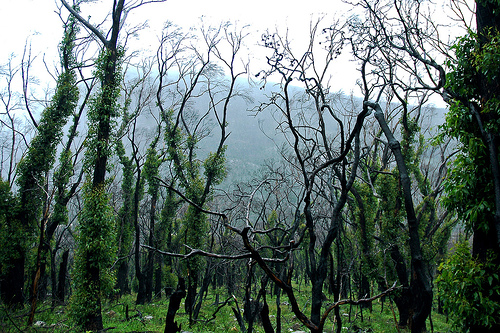
New Life by MemaNH on Flickr

It occurred to me this morning that so much about my situation right now is new. I’m new to the production end of Melbourne Writers Festival. I’m new to meeting such big-name guests and being responsible for their events going smoothly. Emotionally, this is making me need to use all sorts of new skills – I need to separate myself from things enough to get the job done, and not get upset if things don’t go absolutely as planned. I need to be a normal person, and realise that all the other people I’m dealing with here are normal people too, and it’s possible to meet everyone on a personable level.

There’s currently a slew of miscellaneous other disasters in my life (friends and family in hospital), and this is new – coping. Getting my back under my commitments and juggling it all – the time to collapse is after the festival, after I’ve met deadlines, after my loved ones are safe and well back at home. 

It’s new for me to have such a sensible outlook at this point. Maybe I’m growing up a bit.

All the actual grown-ups I’ve been working with at MWF have done an AMAZING job, and I’m really looking forward to seeing this fantastic festival come to life after all their hard work. And happy first festival, Lisa! 

The Regenerative Power of Feedback

I’ve written a lot of half-pieces lately. Non-deadliney pieces, I mean. The pieces I have to choose to write (‘choosing’ and ‘having to’ – the seeming paradox of writing). These pieces are opening thoughts, which I feel the need to get down and work out of my system, then seem to lose the will to return to. I’ve written about running, and about The Drover’s Wife, and about Landscape with the Fall of Icarus (like William Carlos Williams did), and about Don Draper. Those pieces were all started before being left alone, abandoned in my WIP folder.

Image care of Walmink on Flickr.

Recently, a few of my friends needed help with their own work. Proofing a review, reading fiction and memoir, reading a novel manuscript… I’ve found that there’s something about reading other people’s work that makes me return to my own. People I know, and who I know are incredibly busy (masters, honours, travelling through Europe) are still finishing pieces. But knowing about and seeing proof of their productivity isn’t what makes me revisit my lonely half-pieces. Perhaps the act of providing feedback on their work puts me in a critical/writing headspace. Perhaps it’s knowing that pieces have to go through imperfect stages before they’re finished, and that writing friends are willing to help.

Getting to read other people’s work-in-progress is one of the things I miss most about the university setting – I’ve always found it exciting and inspiring. I’ve been glad to find in the last few weeks that it’s not exclusive to that space. It’s important to me to keep writing-friend connections strong, because it can be such a lonely and echo-chambery thing to do. Writing buddies will keep you alive! Reading each other’s work is part of it.

People always need help with their work, and if you’re anything like me, you might find that it actually helps you get on with your own work. Feedback on other people’s writing can bring new life to your own, totally unrelated, writing.

Books and Writers Q&A Meme

Book Q&A Rules

1. Post these rules

2. Post a photo of your favourite book coverImage

3. Answer the questions below

4. Tag a few people to answer them too

5. Go to their blog/twitter and tell them you’ve tagged them

6. Make sure you tell the person who tagged you that you’ve taken part!

What are you reading right now?

Fuck You, I Was Ducking!  – it’s a manuscript of a work-in-progress by Jo Day, and I’m loving it.

Do you have any idea what you’ll read when you’re done with that?

The Orchard of Lost Souls – I’m reviewing it for The Big Issue.

What five books have you always wanted to read but haven’t got round to?

Great Expectations by Charles Dickens

What is the What by Dave Eggers

The Immortal Life of Henrietta Lacks by Rebecca Skloot

Extremely Loud and Incredibly Close by Jonathan Safran Foer

The Hours by Michael Cunningham

What magazines do you have in your bathroom/ lounge right now?

Lucky PeachCreative NonFiction

What’s the worst book you’ve ever read?

Oh, that’s tough… I read multiple Dan Brown books, I’m not proud of that.

What book seemed really popular but you didn’t like?

Diary of a Bad Year was critically well-received and analysed to death, but I just didn’t like it. Sorry, Coetzee.

What’s the one book you always recommend to just about everyone?

A Heartbreaking Work of Staggering Genius by Dave Eggers.

Where do you usually get your books?

Depends what it is… Work (Dymocks), op-shops, reading copies. 

When you were little, did you have any particular reading habits?

Same books, repeatedly. I loved The Worst Witch and Sweet Valley books. As I got a bit older I went for John Marsden. I loved trips to the Frankston library with Dad. 

What’s the last thing you stayed up half the night reading because it was too good to put down?

The Knife of Never Letting Go by Patrick Ness

Have you ever “faked” reading a book?

I struggled to finish The Man Who Loved Children in time for the week we were studying it, so I kept pretty quiet in the tute but didn’t own up. The discussion was so good that I chose to finish it rather than abandon it, as I probably would have otherwise.

Have you ever bought a book just because you liked the cover?

…No.

What was your favourite book when you were a child?

It depends what age we’re talking about… in order of age: Goodnight SammySilvester and the Magic PebbleThe Worst Witch series, The Magic Faraway Tree, Tomorrow When the War Began series.

What book changed your life?

A Heartbreaking Work of Staggering Genius

What is your favourite passage from a book?

Oh, there’s many, but we’ll go with this one for now:
““In the shop window you have promptly identified the cover with the title you were looking for. Following this visual trail, you have forced your way through the shop past the thick barricade of Books You Haven’t Read, which were frowning at you from the tables and shelves, trying to cow you. But you know you must never allow yourself to be awed, that among them there extend for acres and acres the Books You Needn’t Read, the Books Made For Purposes Other Than Reading, Books Read Even Before You Open Them Since They Belong To The Category Of Books Read Before Being Written. And thus you pass the outer girdle of ramparts, but then you are attacked by the infantry of the Books That If You Had More Than One Life You Would Certainly Also Read But Unfortunately Your Days Are Numbered. With a rapid maneuver you bypass them and move into the phalanxes of the Books You Mean To Read But There Are Others You Must Read First, the Books Too Expensive Now And You’ll Wait Till They’re Remaindered, the Books ditto When They Come Out In Paperback, Books You Can Borrow From Somebody, Books That Everybody’s Read So It’s As If You Had Read Them, Too. Eluding these assaults, you come up beneath the towers of the fortress, where other troops are holding out:

the Books You’ve Been Planning To Read For Ages,

the Books You’ve Been Hunting For Years Without Success,

the Books Dealing With Something You’re Working On At The Moment,

the Books You Want To Own So They’ll Be Handy Just In Case,

the Books You Could Put Aside Maybe To Read This Summer,

the Books You Need To Go With Other Books On Your Shelves,

the Books That Fill You With Sudden, Inexplicable Curiosity, Not Easily Justified,

Now you have been able to reduce the countless embattled troops to an array that is, to be sure, very large but still calculable in a finite number; but this relative relief is then undermined by the ambush of the Books Read Long Ago Which It’s Now Time To Reread and the Books You’ve Always Pretended To Have Read And Now It’s Time To Sit Down And Really Read Them.” 

from Italo Calvino’s If On a Winter’s Night a Traveller

Who are your top five favourite authors?

Dave Eggers
David Foster Wallace
Donna Tartt
Shane Koyczan
Nick Flynn

What book has no one heard about but should read?

Get Jiro by Anthony Bourdain – it’s a hilarious graphic novel about a future where food is the ultimate goal for everyone, and whoever has the food has the power.  

What books are you an ‘evangelist’ for?

If on a Winters Night a Traveller, by Italo Calvino

Rocks in the Belly, by John Bauer

House of Leaves, by Mark Z Danielewski

The Happiness Trap, by Russ Harris

Another Bullshit Night in Suck City, by Nick Flynn

Automatic Teller by Carmel Bird

Non-fiction by Chuck Palahniuk

I’ll stop there.

What are your favourite books by a first time author?

Asymmetry, by Josephine Rowe
Rocks in the Belly, by John Bauer (first novel, anyway)
Neon Pilgrim, by Lisa Dempster

What is your favourite classic book?

Little Women or Jane Eyre

Five other notable mentions?

Gaysia by Ben Law
Madness: A Memoir by Kate Richards
Flying With Paper Wings by Sandy Jeffs
Consider the Lobster by David Foster Wallace
Burial Rites by Hannah Kent

Thanks to Laurie Steed for tagging me in this post. I’m tagging Jo Day, Veronica Sullivan, Tully Hansen, and Ruby Mahoney.

Your thoughts: You don’t have to be tagged to take part in the meme. You can respond in the comments or on your own blog – just share the link in the comments section. (These are Laurie’s thoughts, but I agree!)

A Cure For What Ails Ye!

ImageI’m so excited about this. The Novel Cure landed in my post box last week, care of the good folk at Text Publishing. The concept of the book is good – a bibliotherapy guide of sorts. Reading the promotional material on Text’s website, I wasn’t exactly jumping out of my skin – I pictured something akin to Ramona Koval’s By The Book, or any of the other many many many reading guides. Walk-throughs of the worthy stuff; a memoiresque telling of why we should read what the author deems deserving. I don’t have a problem with these kinds of books – they’re fun.

But that’s not what The Novel Cure is at all. It’s an A-Z reference book, with a listing for every kind of ailment (both physical and emotional) that you could possibly have. From losing your job, to being a parking inspector, to feeling lonely, to having a toothache, The Novel Cure can suggest something to make you feel better. Sometimes it’s something that takes your mind off the problem, while other listings give examples that you’ll be able to relate to. The entry for ‘Depression’ lists books that will make you laugh and feel good, as well as books that talk about depression really well, and will make you feel less alone in the world.

This book is not just a cool gimmicky book about books – it’s a considered attempt to help people through literature.

I can’t review this in its entirety, because it’s not a book I’ll be sitting down to read from cover to cover – though, if I were feeling enthusiastic, I imagine this might be possible and even enjoyable. There are entries throughout that make good dipping-in reading – I’ve found the ‘Cures for Reading Ailments’ fun. There’s entries like “Amnesia, reading-related”, “Overwhelmed by the number of books in the world” (there’s another “overwhelmed” entry for the amount of books in your own house), and “Live instead of read, tendency to”, and each of these have suggested cures too.

It’s also a lot of fun going through the index to find books you love, and see what they’re prescribed for. Some of my favourites – Black Swan Green (David Mitchell) is listed beside ‘Speech impediment’, Beloved (Toni Morrison) beside ‘Haunted, being’, and Little Women is beside ‘Sibling rivalry’.

The Novel Cure has been dipped into a few times already, and has been shelved with the rest of my reference books, to be consulted in times of need. It’s being released on the 21st of August.

A Month of Reading

It’s the end of another month, and we’re officially moving into MWF festival-month. Working festivals is paradoxical – you’re surrounded by writers and books, but have increasingly less time to read the more actual the festival becomes. Never fear though, there’s a massive binge on the other side, and it happens with a renewed passion after seeing many amazing writers speak.

But that’s next month. I got through a few books this month, two of which are by MWF guests.

Image

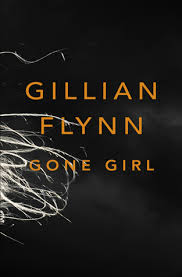
Gone Girl by Gillian Flynn

Gone Girl has been such a popular book in the last few months that I couldn’t just ignore it. Like most best-sellers, it was compelling stuff. A murder mystery, which is something I generally wouldn’t be interested in reading. It’s impossible to review, because of its Fight Club-esque twist – you can only do it once, and after it’s done everything is changed. So I won’t go into the plot, I’ll just say that Gillian Flynn has a good eye for society, and I enjoyed this about her book. Some of the writing is a bit icky, you can almost see Flynn at her desk writing around cliches so much that they’re obvious. But the pages turned themselves, and the twist got me.

Image

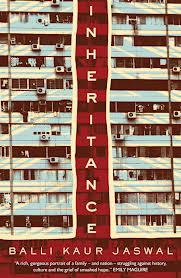
Inheritance by Balli Kaur Jaswal

Anything from Sleepers Publishing is generally a good bet. I found Inheritance to be a really strange book, in a good way. It’s just as much about the passage of time within a family as within a nation, following one Indonesian family through Singapore’s coming of age. It’s a bit of a quiet story. While I was reading I wasn’t particularly struck by the beauty of the prose, or the plot, or anything much at all. But when I finished the book and put it down, I felt like I’d just been through something with some very real characters. And that probably means more than the loud books. 

Image

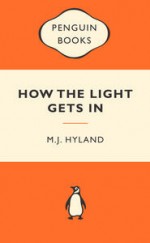
How The Light Gets In by MJ Hyland

I knew nothing about this book, or MJ Hyland, apart from her presence at MWF 2013. Thought I’d better read it, and I’m so glad I did. How The Light Gets In is about a teenage girl, Lou, who goes to the US on exchange. She comes from a low socio-economic background, and is hosted in the US by quite a wealthy family. Despite her fantasies of escaping her life in Sydney to this new trouble-free zone, Lou manages to bring her problems with her. This book made me question a lot though, like whether Lou was dysfunctional, or just had trouble fitting in and had troublesome coping mechanisms. And what it is about teenage thinking that makes everything sparkle, and how MJ Hyland managed to harness that so well in this novel.
How The Light Gets In is intelligent, quirky and funny. So many passages needed to be read-aloud to people around me. A great many others were written in my notebook, squirreled away. 


What did you read in July?

Blog at WordPress.com.

Up ↑