Search

Sam van Zweden

Writer

Category

reading

Daniel Handler reads “Collectively”

I’ve been reading Adverbs by Daniel Handler. He’s hilarious, and poignant, and writes in that ironic, self-conscious/unself-conscious (yes, both at once) way that cool people do.

I just found him reading my favourite chapter (so far, because I haven’t finished the book yet) from Adverbs. I had more fun reading this chapter than I have reading anything in a while. I thought it would be worth sharing.

Check it out:  I wish I could write like this. I haven’t read anything this hilarious in quite some time.

Consider this something of a teaser, and chase up Adverbs.


A Month of Reading

It’s the first day of spring! Spring means cleaning, particularly our balcony, which is full of beer bottles from last summer which are all filled now with spiders and eggs from anything that crawls. Spring means reading outdoors, often with a beer or tea, on said cleaned balcony. Spring means leaving the house in things cut above my knees.

According to today’s sky, spring means muddy yellow skies. Today’s sky is a liar.

Here’s my last month of reading. I managed to buy only one book, which (if you look at previous months) is quite a rarity for me… I read four books, and have a HEAP of stuff out from the library to help with my novel research. I started a book-swap group which went well for about a week, then promptly died off. It was fun while it lasted, and I managed to swap two books I had multiples of for books I wanted.

What did you read this month?


Books Bought:
A Visit From the Goon Squad, by Jennifer Egan

Library:
Olive Kitteridge, by Elizabeth Strout
Reading like a writer: A guide for people who love books and for those who want to write them, by Francine Prose
Forty-Seventeen, by Frank Moorhouse
Adverbs, by Daniel Handler
Fast Healthy (Women’s Weekly Cookbook)
Cook Yourself Thin, Harry Eastwood et al.


Swapped:
Pride and Prejudice, by Jane Austen (out)
Unreliable Memoirs, by Clive James (out) <– don’t judge me, I have three copies.
The Plague, by Albert Camus (in)
Read This Next, by Sarah Newman & Howard Mittelmark (in) 

Books Read:
Reality Hunger, by David Shields
Lucky, by Alice Sebold
City of Glass, by Paul Auster
Ghosts, by Paul Auster

Currently Reading:
Consolations of Philosophy, by Alain de Botton
The Little Red Writing Book, by Mark Tredinnick
Eating Animals, by Johnathan Safran Foer
Olive Kitteridge, by Elizabeth Strout

A Month of Reading

It’s the end of the month again!


Books Bought:
Lucky, by Alice Sebold
Now Write! Nonfiction, edited by Sherry Ellis
Reality Hunger, by David Shields
The Gathering, by Anne Enright
Black Swan Green, by David Mitchell
Human Smoke: The Beginnings of World War II, the End of Civilization, by Nicholson Baker

Library:
Cat’s Eye, by Margaret Atwood
What Would Your Character Do? By Eric Maisel
The Landscape of Desire, by Kevin Rabalais

Gifted:
Triptych Poets Issue One
Caught In The Breeze: 10 Essays, by various authors. (I won a Blemish Books prize from Express Media for my effort at Blackout poetry – thanks guys!)
Eating Animals, by Johnathan Safran Foer

Books Read:
Consider the Lobster, by David Foster Wallace
Nick & Norah’s Infinite Playlist, by Rachel Cohn & David Levithan
New Moon, by Stephenie Meyer
The Lovely Bones, by Alice Sebold

Currently Reading:
Consolations of Philosophy, by Alain de Botton
The Little Red Writing Book, by Mark Tredinnick
Lucky, by Alice Sebold
Reality Hunger, by David Shields


Goals: Making Them, Kicking Them, Putting Them Out in Public

In the spirit of oversharing, which I’m very fond of (and fond of the internet for), I’m posting some of my latest writing goals here so that you can all keep me accountable if I try to let them slide away into the abyss.

Having (just five minutes ago) finished timetabling my next uni semester, I’ve realised I’m committing to some big things here:

– I plan on reading at least one essay a week. This is pretty easy to do during the semester, but outside of it I tend to let this slide. I really want to expand my short non-fiction knowledge base, as it’s something I’m interested in writing a fair bit of myself. So. That.
– This second point is bigger: I’m committing to doing at least one writing exercise every day. Furious Horses style, only without the public sharing. Perhaps at the end of each week I’ll post on here the exercises I’ve done, and whether they’ve been helpful or not, because I know a lot of this site’s readers are writers, and you never can have enough ideas for writing exercises.
– Competitions! I want to start entering competitions. There’s money to be made, folks. And recognition to be given. Might as well give it a crack. If I don’t, crap people might win. And we can’t have that.
– Every quarter, I plan on sending off a piece to a publication which I don’t really honestly believe will accept me. This is how we make impossible things real. This is what happened with The Big Issue, and it’s inspired me.

I’m hoping that making these plans public will create some extra accountability. If I try to pretend this post never happened, give me hell.


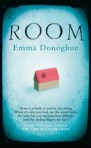
ROOM review

ROOM by Emma Donoghue
PICADOR
ISBN: 9780330519021
RRP: $22.99

Shortlisted for the 2010 Man Booker Prize, ROOM tells the story of five-year-old Jack and his Ma, who live in a space measuring 11 feet by 11 feet. Captive for seven years, Jack is born in Room, and Ma teaches him that Room is all there is. They have a TV, but all that’s seen on there isn’t “real for real”, it’s “just TV”. Jack’s entire reality is confined to Room, where the sky measures only as wide as Skylight, the sea isn’t real, and Old Nick (who Jack sees as akin to an unfriendly God) brings them food and “Sundaytreats”. One day Ma “unlies” to Jack, telling him that most of what’s on TV is actually true, and that Room is only a tiny part of a much bigger world. Jack is reluctant, and finds it “hard to remember all the bits, none of them sound very true,” but eventually helps his Ma escape.

Told from Jack’s point of view, the narrating voice of ROOM is both wonderfully strange and very familiar. Jack has the questioning nature and speech patterns of a five year-old, but this familiar voice is put into a very foreign situation. Limited viewpoints are fun for a while, but can usually grow stale unless executed precisely (a’la Mark Haddon’s The Curious Incident…) – Emma Donoghue hit the nail on the head – Jack’s is one of the most original voices in recent fiction.

Throughout the novel, the reader and the author look over young Jack’s head and wink at one another in recognition. Jack describes awful things happening to Ma, but in an uncomprehending way. Every weekday, Ma and Jack get to “play Scream”, where they bang things and yell as loud as they can. Jack sees this only as part of what constitutes the world of Room, part of the daily routine. This reader/author cahoot-feeling continues when Jack gets out into the world (only about 50 pages into the novel – not a spoiler!). Donoghue has managed to see the world through incredibly fresh eyes, wondering at things we take for granted. A writer of historical fiction, she has a knack for finding the strange in the familiar, and vice versa, and this works perfectly for Jack.

Both the main characters, Jack and Ma, ring very true. At times you love them both, but at other times they’re just too human to be liked – these are honest characters, not caricatures or thought-experiments. Taking as inspiration the case of Austrian captor Josef Fritzl, Emma Donoghue has thoroughly researched all the implications (both medical and psychological) of such cases. However, these characters are so memorable and true because at their centre, they are simply human.

Tears. I’m warning you now, there will be tears. There will be laughter also, and happiness – ROOM is easily the most moving novel I have read in a long time, one of those ones you want to dive into and never return.

This review originally published in RMIT’s flagship publication, Catalyst, in May 2011.

Teaser Tuesday

It’s been a long while between Teaser Tuesdays, but I’m reading a lot of stuff I want to share lately, so it’s back.

Teaser Tuesday is hosted by MizB at Should Be Reading.

  • Grab your current read.
  • Let the book fall open to a random page.
  • Share with us two (2) “teaser” sentences from that page.
  • You also need to share the title of the book that you’re getting your “teaser” from … that way people can have some great book recommendations if they like the teaser you’ve given!
“It is to the 30+ testosteronically afflicted males whose cases have been documented in the past two years that your correspondents wish to dedicate this article. And to those tormented souls considering autocastration in 1998, we wish to say:  “Stop! Stay your hand! Hold off with those kitchen utensils and/or wire cutters!” ”
(From Consider the Lobster by David Foster Wallace) 

Picking The Pockets of a Dying Business

Yesterday I received an email from Borders, finally admitting that they’re closing. Up until now it’s all been very carefully-worded “We’re in administration, which means nothing!” emails. Yesterday’s email said I’d better hurry, because they’re selling everything for 40-50% off RRP. This seems the right point for me to hit the sales – the prices are significantly reduced, but it’s new enough that there’ll probably still be some decent stuff left.

A dying store is a weird place to be. As I wandered through the Carlton Borders, I noticed stickers on everything. It was like being in Ikea, but a really sad, distorted Ikea with a different mood to the frenzy. In Ikea, there’s stickers on everything – “Look at this bathroom sink! You want it? Look up at the thing that’s lighting it – THAT is for sale TOO!” Likewise in Borders today – I was looking through the hundred or so biographies left in the store (displayed cover-forward, making them look even lonelier), and I realised that if I had the inclination and the money, I could buy the shelf. I could also buy the chair next the shelf. I could buy the stand-up racks they fold wrapping paper over, or I could buy a card stand – all I had to do was “Talk to the shop fitting mgr.”

And the frenzy! In Ikea, there’s a frenzy. It’s students hauling around flat-packs and mothers discovering that you can freeze ice in the shape of space invaders. It’s a weird over-consuming hum in Ikea – in Borders today it was that, but melancholy. You could hear the reverberation getting deeper as things flew off the shelves. One poor sales assistant kept getting requests for books that she just couldn’t fill. All that’s left in that store is the obscure, the non-fiction and the pulpable.

The non-fiction thing’s a bit weird – by no means a revelation, but the fact that the average readers doesn’t seem to read non-fiction in anywhere near the quantities of fiction is sad. There’s so much great stuff out there! I do though, and the four books I bought myself from this Borders’ closing-down sale are:

  • The Ticking Is The Bomb, by Nick Flynn
  • Zeitoun, by Dave Eggers
  • A Dull Roar, by Henry Rollins
  • From Hipsters to Gonzo: How New Journalism Rewrote the World, by Marc Weingarten


The sadness in Borders today was really weird and empty. People were there to buy up big, to CONSUME! …but only because time was running out. Only because of the death of one of the book stores who really encourage people to read, who otherwise wouldn’t. I’m not particularly sad that Borders is going or gone – I never really shopped there anyway, I’m just glad I got some cheap books out of their demise. I am sad, however, that those people who were in such a panic today to get their books before time ran out, may not bother to track down their local independent book-seller to seek out what was easy to get at Borders. They might just give up.

…But enough of that. As far as I know the sale’s going until they run out of books. So go pick the pockets of this dying business while you can.

CHEAP BOOKS!

Thought that’d get your attention. It certainly always gets mine.

Popular Penguins, the collection of distinctively-covered popular books which sell for just $9.95, are releasing another 26 titles in September.

As always, this gets me going. Books I’ve been meaning to read for a long time for less that $10?! Yes please! Also making me ridiculously happy is the fact that Borges’ “Labyrinths” is on this list – a book the whole world should read multiple times, and now at $9.95 they’ll have no more excuses.

Not sure I can get behind the Bryce Courtney, but… you win some, you lose some.

Miles Franklin Brouhaha

This morning the shortlist was announced for the 2011 Miles Franklin award. This award honours novels “portraying Australian life in any of its phases”. The award itself is a point of debate for the great Australian novels ignored due to its criteria – Christina Stead’s The Man Who Loved Children, despite being written by an Australian, composed of mainly autobiographical material, and maybe an Australian attitude, would be unable to contend for the prize because it was set in America – of course, this text was published before the award began, but it’s the most readily available example from my dead brain this morning. Many novels written by Australians would fit this same bill.

But this year there is talk for a different reason. The short list released this morning is very much that – short.

It is only three works long:
Bereft by Chris Womersley
That Deadman Dance by Kim Scott
When Colts Ran by Roger McDonald

For a comprehensive and updating run-down of said ‘brouhaha’ check out Angela Meyer’s post, which will also no doubt generate some decent discussion in its comment section.

The general unrest seems to be about the narrow scope of the definition of “Australian life”. As mentioned before, many great novels have been discounted from the running for this award in the past, but never before has the shortlist been as short as just 3 titles – and those three titles favour the rural male voice in a historical setting. The criteria for the award is narrow to begin with (and fair enough – it’s an important goal, to be writing about Australian life), but at what cost? This year’s shortlist might suggest that the preferred depiction of “Australian life” is narrowing still.

–> No judgement is being passed here on the texts themselves – I haven’t read any of them yet, but have heard they’re great. Speculation is on the nature of the award itself and this year’s incredibly short shortlist.

–> How great is the word “brouhaha”? Damn straight, I put it in a sentence!

LATER:

I just found this post by Jennifer Mills, which makes some interesting points in the debate, including this brilliant one:

“I think that the prevalence of such stories is a result of living in a colonising culture which still has fractures along its frontiers. Yeah, we need diversity in our voices. But we also like to scratch the itches of our culture and i don’t think writers are the sole determinants of where their cultures itch.”

Blog at WordPress.com.

Up ↑