Search

Sam van Zweden

Writer

Category

musings

Picking The Pockets of a Dying Business

Yesterday I received an email from Borders, finally admitting that they’re closing. Up until now it’s all been very carefully-worded “We’re in administration, which means nothing!” emails. Yesterday’s email said I’d better hurry, because they’re selling everything for 40-50% off RRP. This seems the right point for me to hit the sales – the prices are significantly reduced, but it’s new enough that there’ll probably still be some decent stuff left.

A dying store is a weird place to be. As I wandered through the Carlton Borders, I noticed stickers on everything. It was like being in Ikea, but a really sad, distorted Ikea with a different mood to the frenzy. In Ikea, there’s stickers on everything – “Look at this bathroom sink! You want it? Look up at the thing that’s lighting it – THAT is for sale TOO!” Likewise in Borders today – I was looking through the hundred or so biographies left in the store (displayed cover-forward, making them look even lonelier), and I realised that if I had the inclination and the money, I could buy the shelf. I could also buy the chair next the shelf. I could buy the stand-up racks they fold wrapping paper over, or I could buy a card stand – all I had to do was “Talk to the shop fitting mgr.”

And the frenzy! In Ikea, there’s a frenzy. It’s students hauling around flat-packs and mothers discovering that you can freeze ice in the shape of space invaders. It’s a weird over-consuming hum in Ikea – in Borders today it was that, but melancholy. You could hear the reverberation getting deeper as things flew off the shelves. One poor sales assistant kept getting requests for books that she just couldn’t fill. All that’s left in that store is the obscure, the non-fiction and the pulpable.

The non-fiction thing’s a bit weird – by no means a revelation, but the fact that the average readers doesn’t seem to read non-fiction in anywhere near the quantities of fiction is sad. There’s so much great stuff out there! I do though, and the four books I bought myself from this Borders’ closing-down sale are:

  • The Ticking Is The Bomb, by Nick Flynn
  • Zeitoun, by Dave Eggers
  • A Dull Roar, by Henry Rollins
  • From Hipsters to Gonzo: How New Journalism Rewrote the World, by Marc Weingarten


The sadness in Borders today was really weird and empty. People were there to buy up big, to CONSUME! …but only because time was running out. Only because of the death of one of the book stores who really encourage people to read, who otherwise wouldn’t. I’m not particularly sad that Borders is going or gone – I never really shopped there anyway, I’m just glad I got some cheap books out of their demise. I am sad, however, that those people who were in such a panic today to get their books before time ran out, may not bother to track down their local independent book-seller to seek out what was easy to get at Borders. They might just give up.

…But enough of that. As far as I know the sale’s going until they run out of books. So go pick the pockets of this dying business while you can.
It’s a Process

The word “process” implies some sort of replicable ritual, something which can be followed to the end to get results. The sad truth, alas, is that usually it doesn’t all go down in the right order, it’s usually heavily punctuated with coffee, washing, or walks to the library, and it often lacks really satisfying results. Creating a ritual around my writing is important, but perhaps the most helpful part of that ritual is when it doesn’t go to plan.

While walking through the cemetery early this week, I discovered the Springthorpe Memorial. It really moved me, but I had no idea how I could use that. I came home and executed some boring pages about nothing much.

Next evening, I was playing with the magnetic poetry-makers on my fridge and came up with the following, which I somehow feel was inspired by the character of Sonmi-451 in David Mitchell’s Cloud Atlas. The poem read:
“How the monkey did wander
science-like
but sad.”

I wrote that down, because it made me sad.

The next morning I started working on a poem about the Springthorpe Memorial, using the idea of sad wandering, and talking about the fierce angels which guard the doctor’s “O Sweetheart Mine”. I’ve been researching all the sculptors who created the many statues around Melbourne, and I have no idea where that’s going to go but it seems useful.

And that’s the trajectory of just one piece. Just one piece which is still unfinished, so the “process” which guides me to the end of it may take a bunch of twists and turns along the way. The point is that I planned time to write about the Springthorpe Memorial, and it was balls. This doesn’t mean that I think getting up and making myself write is balls – far from, I find it very important. But in this case, the unplanned stuff was my way in – it was helpful.

The Facelessness of Writing

Writing is a weird business. The main part of what we do is faceless – we spend time alone, curled over keyboards or notebooks, looking inside ourselves and picking things apart. When we do send things out into the world, it rarely involves live-action relationships with editors and the like. Emails, forums, blogs. So much of what we do happens under layer after layer of facelessness.

I don’t know what many of my favourite authors look like, or how they present in person. I was shocked to find John Marsden is such a confronting mixture of crude and intelligent. I’ll admit that Camus’ theories are more palatable than Sartre’s based on their author pics. Last week at the Emerging Writers’ Festival I was surprised by how much Carmel Bird just looked like someone’s mum. I love Alan Bissett’s writing all the more for his outgoing personality, and I’m reading Death of a Ladies’ Man in his very attractive accent. The way authors look and present themselves in person, face-to-face, can be worlds away from how we imagine them through their writing.

This made the Emerging Writers’ Festival an amusing space to meet and greet. The main thing that struck me over and over again during the two weeks was how weird it is that the two sides of our job are such polar opposites. Absolute isolation versus schmooze-fest. I’m not saying that either is preferable – I love both. But when someone talked about me without knowing I was in the room, or when I had the “a-ha!” moment where I connected someone’s writing projects to that person I’d been talking to for the last hour, it really struck me how singularly bizarre writing is.

The Shame!

Tomorrow night, I will be meeting the author Linda Jaivin. Being utterly unfamiliar with her work, I thought it best to seek some out.

Only when I got to the library did I realize that the novel of hers that is available there, Eat Me, is erotic fiction. I thought perhaps the “CLASSIC EROTIC BESTSELLER” proclamation and bright pink, embossed cover (bringing to mind the phrase “pink bits”) was just for show, but flicking through the novel quickly a few indicative words jumped out at me.

Checking it out, I felt like the librarian was judging me. “This is a girl who looks for sex in novels!”, she must have been thinking. I wonder – is telling people you’ve been reading erotic fiction akin to telling people you just watched porn?

Don’t get me wrong – from the first few pages, the quality of writing seems very high. I don’t mean to infer that erotic literature is all trashy in the same way that porn is. The link between porn and erotic literature is perhaps in the reasons we seek it out. Sex for entertainment value? Is it curiosity, fantasy-fulfillment?

Maybe it’s got something to do with the people I discuss reading with. I don’t recall anyone ever telling me they’d just read a really good piece of erotic fiction. Yet I don’t recall ever really telling anyone the same thing either. This is probably because I haven’t really read any – with the exception of The Bride Stripped Bare, which is admirable not just for the story but for (*ahem*) pulling off a second person perspective so successfully. I own a copy of Story of O, but haven’t gotten around to reading it. I wonder whether I’d tell people it’s good in the same way I did with The Bride Stripped Bare, since it’s well known as an “erotic novel”, and is a bit taboo in a way that The Bride Stripped Bare was not.

Checking out this book today felt like the first time I bought condoms. So do we all read erotic literature and not talk about it? Is it a bit of a taboo? Or is this just a genre I haven’t discovered?

Later:
I’m 21 pages into Eat Me and feeling less shamed about checking it out – turns out it’s fairly humorous. Even so, the librarian probably doesn’t know that. Questions about porn and erotica still stand.

My First Domestic Business Trip

I do a lot of market research surveys online. A lot of them ask about travel – where to, why, when, how. Generally my answers are about travelling for leisure, usually with one of my parents or a group of friends.

Today, ladies and gentlemen, my answers change! Today I embark on my first trip “for business”!

I have to do a piece of “immersion journalism” for a literary non-fiction subject at school. Originally, I was planning on getting a bike and making it my sole means of transport, bit of a project ala Sarah Wilson. Even getting my hands on a bike proved too difficult for the time frame I’ve got, and I figured if it was that difficult without having even started, perhaps the idea itself wasn’t feasible for the assignment. I will be doing it some time, when I have my own bike and time (probably over the holidays) – it’ll be interesting. But for this assignment, not ideal.

So my project changed to kitchens. In particular, the kitchen at the Commercial Wine Tavern in Rochester, which my brother runs. Both my father and my brother are/were chefs in high-end, big business kitchens – some of it I understand, some of it I live by (“What’s said in the kitchen stays in the kitchen!”), but there are definitely things I’ve never got about it. It’s a stressful job, people generally don’t stay in commercial kitchens all that long – if it’s so stressful, why come back night after night? Is it like writing is for me, where it’s generally a little shitful, but in the end I’m happy with that I’ve produced? Is it creative, or a power thing? Both? Is it the adrenaline?

This is why I’m off to Rochester today, and I can officially say that I’ve taken a weekend trip for business. I’m a little terrified that I’ll get there and discover that there’s no story. But maybe it will just be something I wasn’t expecting.

Writing What You Know

“Write what you know!”, that’s the advice. That’s how we end up with a lot of the same characters, and they’re much like ourselves or people we know. “Write what you know” is scary – why would anyone want to read about my life? Disaffected youth – unless you’re an amazing writer or have an amazing twist, surely that’s just same/same, yeah? No, what I know is boring!

Henry James (in “The Art of Fiction“) wrote that “writing what you know” can be almost anything, as long as you’re “one of the people on whom nothing is lost!”. Even so, it feels like I’m writing something pretty imagined or untrue if my experience of a thing only extends as far as having seen it from a distance. For James, this is okay. But he, too, says that writing what you know is the way to go.

For a long time I did this – I wrote the same poem over and over, I wrote characters who were my age and in my relationships. Nothing differed very much – I spent a long time producing similar work. When I broke from this, I swung the other way – writing characters very unlike me, in situations which required a lot of research. Sometimes this worked; some of this stuff I’m proud of. Some of it is also just plain rubbish.

This semester, I have to pitch and submit an extract of “My Novel” (such an optimistic thing to call this nebulous being) for a university subject. I started to plan out a novel about a character I’ve had on the back-burner for some time. He’s a structural engineer who’s obsessed with the possibility that if his buildings aren’t sound, people could die. He’s a solid character, I do like him. He’s based loosely on someone I know (so this would count in James’ definition of “what I know”), and I am interested in writing him, eventually. However, in trying to start planning a novel about this guy, I realised it didn’t ring true. I was writing yet another story I wasn’t sure about, that was trying too hard to be NEW! I realised that by avoiding “What I know” in the strictest sense, of characters like myself or my immediate family, I’ve been denying some amazing material from my own life.

My family history is mostly a mystery to me. It’s a light that shines (dimly) only as far back as my grandparents on Mum’s side, and to my father on his side. Even within that limited space, I have the makings of a novel. It’s a matter of being comfortable with the fact that it warrants writing, and it will make a good story. Deep down I know it will, but I’ve been so afraid of being the stuck, clichéd writer who can only write what they know, that I’ve avoided it and gotten stuck in the other extreme.

I’ve talked to both my parents about writing our story, or some fictionalised semblance of it, and they’re both fine with that. What comes next, I suppose, is about the ethics of writing what you know. This question, I suspect, is much harder to answer.

On a panel called “Mining The Personal” at last year’s EWF, Benjamin Law talked about how he handed everyone in his family a red pen and a copy of his manuscript before it went anywhere. I think this is the most honest approach, and one I’ll certainly be following myself. But how do I wrangle the material in the first place?

What do you think about the ethics of writing (fictional or non-fictional) personal stories?

Bowen Street Blues

I have trouble stilling my mind in order to take in what’s around me, but after a few minutes I manage to push myself back and just be in this space.

I am tucked into the stairwell of building 9, which leads onto Bowen Street and looks onto the basketball courts. Of those boys and men I have joked that they are “majoring in basketball”, but I haven’t ever watched them properly. It seems like a strange kind of suspension out there where nobody is anybody; everyone just plays ball. They aren’t black kids or white kids, or engineering students or sound engineers, or guys in branded clothing or those who aren’t. One guy falls down and another offers a hand to help him up before laughing and lunging for the ball. The basketball courts might be in RMIT, but in a way they aren’t here at all.

These courts and the basketball majors are the only constant in this part of Bowen Street, and I feel a bit connected to them when I force myself still and silent for this exercise.

Everything else moves – people on the way to classes with half-read photocopies in hand, a girl stands next to me and her pocket explodes in sound – she yells something into her phone and hands up without waiting for an answer. A parade of AV students wheel carts of expensive gear across cobbled stones.

Every third person is on their phone. all trying desperately to connect in this hurried place, ignoring those around them. Only the basketball players seem to have got it.

Salve

This morning I couldn’t World. I couldn’t Brain. I couldn’t force my mind into any one thing, I couldn’t be.

I wish this black dog weren’t chasing me,
I wish my life sung with symmetry,
But I’m ragged, I’m jagged, I’m hollow and haggard
And I fear it’s how I’ll always be.

After losing myself in tears for too long, I pushed myself into the world. I had a cupcake. And I took myself down to my local book shop. I had a good chat with the lady behind the counter. And I purchased two books with money I certainly don’t have.

The Best Australian Stories – A Ten Year Collection.
I’ve been eagerly waiting for this one since I heard it was happening, and just flicking through the contents pages I feel like the Black Inc crew have made some fantastic decisions of what to include. (My favourite Nam Le story is in there! Just can’t get enough.)

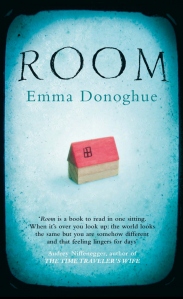
Room, by Emma Donoghue. I read an extract from this somewhere, though I can’t remember where… It really grabbed me. I’ve been looking for something exciting for my next Catalyst review, and I think this is it.

While I’m not quite Person yet, I feel like at least I have something I can put myself into as a distraction for the afternoon.

Writer/Reviewers

I don’t have time or energy to do this discussion the justice it deserves today, but it is a topic I’m deeply interested in, not just as something that’s relevant to me, but as something that has pretty serious implications for reading and reviewing culture as a whole:

Should people who are writers also be reviewers? (Particularly in a literary scene as small and as close as Melbourne’s, where everyone knows everyone) Is a reviewer’s expression censored somewhat for fear of making enemies amongst their peers?

Over on Literary Life today, Megan has posted about her stress about this issue. The post (sorry, Megan, but…) is a bit of a stress-rant, but the discussion which follows is well worth a look-in.

The post comes at a particularly relevant time for me, as I’ve just submitted my next review for Catalyst, and it’s reasonably negatve. It’s of a book from a debut novelist, which is a category of writer who usually get softer reviews so as not to crush any dreams. But it’s also from a French/American, and I was a bit disgusted with myself when I was writing the review, finding myself thinking, “This woman won’t meet me.” Because of this, I somehow gave myself permission to say just what I was thinking – while I made sure all criticisms were grounded and just, I didn’t go to the pains that I would for a Melbournian or Australian writer to say these things very softly. Don’t get me wrong – I don’t generally censor myself in writing reviews about people I know or have the capacity to know in the future, and if there is an existing relationship I’ll always flag it for total disclosure. However, the way I deliver negative criticism is something I’m much more aware of for these people, than remote authors who are (in the case of classics) dead, or else so remote to my sheltered existence (as with the upcoming review of Elena Mauli Shapiro’s novel) that they probably won’t read the review or ever meet me.

Is this sort of self-preservation bias acceptable? Avoidable? Should writers be reviewers at all?

Blog at WordPress.com.

Up ↑