Search

Sam van Zweden

Writer

Month

October 2010

Coming home and The End Point

That’s it. Semester over! This semester was big. Really big. Fourteen novels for just two of my subjects and that’s only the stuff with covers. At least two reams of paper, lots of ink, hours and hours of reading off my screen because I couldn’t afford to print any more. Twelve weeks of sacrificing the reading I actually wanted to do, to make room for things that were mostly worth reading, but not always what I wanted to do.

But that’s over now! It’s holidays! It’s lovely weather! The real reading can begin. I can cross billions of things off my “to-do” list, and work through the huge stacks of books that I’ve been buying but not had space or time to read. I can make sense of my writing desk, make some narratives happen, rather than torturous essays comparing texts which should never, ever be compared (Camus’ The Outsider and Jean Rhys’ Wide Sargasso Sea being the most recent hideousness).

So here I am, back at home in the blogosphere. I can blog whenever I like, I can dedicate that section of my brain to planning posts as I live. I can work my way through my poor, neglected Google Reader feed! Oh poor Google Reader…

Today I read a piece that really got my attention, which was re-tweeted by Angela Meyer. The article, “Where Did The Web Go?“, talks about a lot of things that got my attention.

First point of interest: A quote from Stephen Mitchelmore: “Finding a way to talk about the reading experience is, I’ve realised, the greatest pleasure of writing; where it ends is of no importance.” I love this quote. Stephen’s talking about how it doesn’t matter if your online literary efforts never really take off, because that’s not the point. The point is to find a way to talk about your “reading experience”. Reading is a strange thing in a similar way to writing – it’s a necessarily lonely activity, but there’s a definite pleasure in finding ways to share that loneliness. For me, LGWABP is a major way that I do that. I’m not sure that I always (…ever) provide insightful contributions, but I enjoy doing what I do. Stephen’s right – it is “the greatest pleasure”.

Second point of interest: “Choose what you want your site to be, and then do it” – I like this. Sometimes I feel like my blog misses the mark because I’m not sure what I’m doing with it. Successful blogs have something that is specifically theirs, whether that’s a layout, a tone, a bunch of memes, whatever. They own it.

Other than these two superficial things that caught my eye, the article itself is actually a great contribution to the discussion of the role of online media, in particular online literary criticism. Check it out.
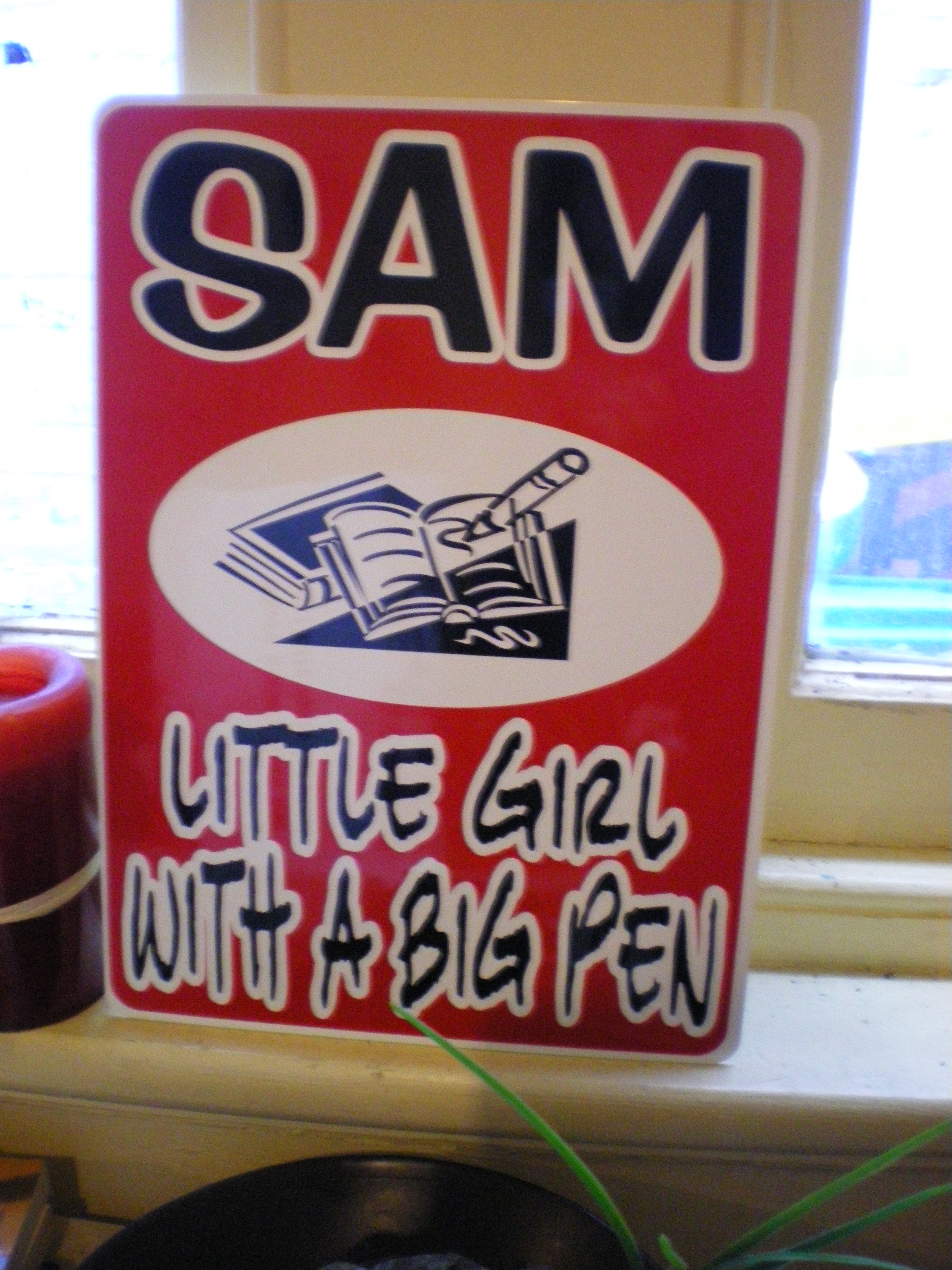
The Literary Legacy of a Trip I Never Took

My father and stepmum recently got back from a 3-month holiday. We caught up yesterday, and they gave me some presents from around the world – they did well.

This sign now sits in my study looking endlessly cool. It marks my space as mine. This is where the genius happens!

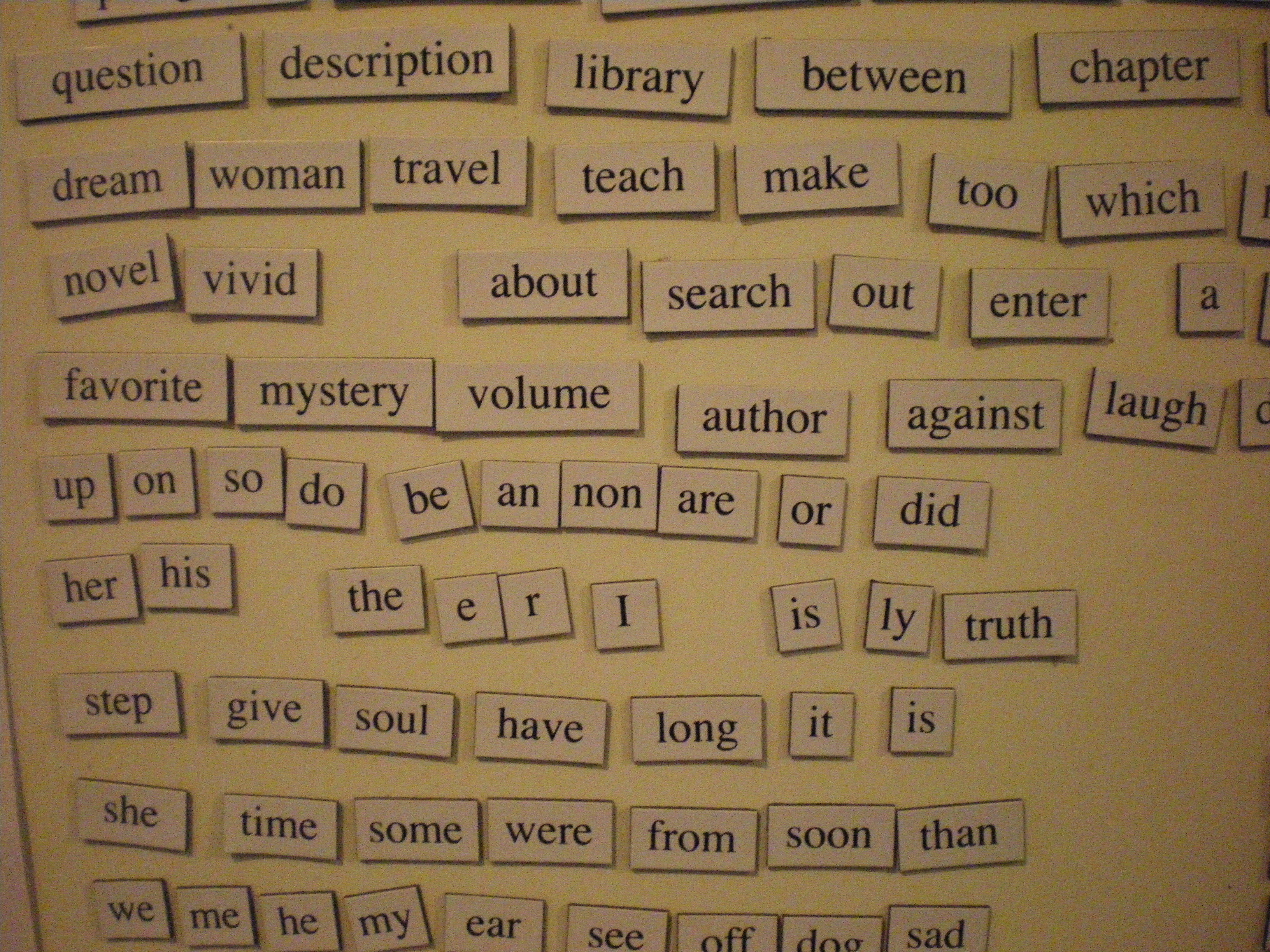
Also a fantastic gift – magnetic fridge poetry! These are those little words that stick onto your fridge, and you can arrange them as you please, making fantastic little poems with a limited set of ideas. I spent about an hour at the fridge last night messing around.

Results that are still on our fridge:

“explore the cracks
in every spine
this villain could never tell
of beautiful poetry
beneath human monsters”

“always create
inspire another wisdom through fiction”

and

“empty
above science I can wander
and begin whispering magic”

a Aren’t they great? Get yourself a set, they’re fun, and they’ve provided me with a real excuse for walking out of my study and into the kitchen when I should be writing – I’m making poetry! I want to build up a big set of these, because I know there’s other sets (this one being the ‘book lover’ one, containing words like ‘page’, ‘chapter’, ‘hero’, ‘villain’ etc), and have a huge choice of words. With a small collection, though, it’s a lot of fun to get all Oulipo and see what you can do with a limited set.

Thanks, travelling family!

Remembering

I used to do plays when I was younger. The roles I had usually only required me to remember choreography, maybe a line or two. The one play that had a larger speaking part wasn’t too bad, because it all seemed to have an internal logic which forced me to easily remember what to do, where to be, what to say.

Memorizing poetry, however, is something new to me. I was thrilled by the discovery that I perform better without a page in my hand. My hands move freely and they keep rhythm, they provide markers for the words to sit on, making it all easier to remember. I’m glad of this, as a hazard of reading poetry seems to be shoving a page in front of your face, disconnecting yourself and the audience.

How to remember in the first place though? I wrote out the piece on my computer, and read it over and over. I eventually stopped looking. Then I said it aloud to myself as I went about everyday things. In the shower. On the way to the tram. For the most part, this worked.

I put a call-out on Twitter for any tips anyone might have for memorizing. Veronica Cybluski was very helpful, providing the following ideas:
1) Find a beat or rhythm.
2) Stick a copy of the words around the house so you see it everywhere. Laminate it and put it in the shower.
3) Record yourself reading the piece, and listen back to it, possibly just before bed.

The laminating idea appeals to me. I heard once about people who record themselves reading their pieces at double-time, and learn them at that speed. That way when they’re on stage and have a brain-freeze, what feels like a big pause to regain their train of thought is actually only a slight pause.

My simple “repetition, repetition” theory worked well enough, but I’ll be trying everything mentioned above eventually to see how I can best remember my poetry for performance. Pieces really are stronger when you get rid of that page.

What’s your trick for remembering your work?

“My Thing”?

Some writers have a certain thing about them. You know what to expect of their work.

I expect my own work to be a bit unstable in this way. I’m a young writer, I’m still trying to find my voice. I’ll most likely work my way through many clichés before I find it. I’m fine with this.

I didn’t expect my work to have its own thing yet. This morning I had a strange conversation with my partner, who was talking to a friend about my work. The friend asked what kind of writing I do.

D’s reply?

“Depressing”.

Depressing? Really? Oh dear. I know he said it with respect, he’s one of my most helpful ears to test things on. He’s honest.

But I don’t want to be that! There are writers I no longer want to read because they produce the same story over and over. While I know that I’m young and producing a reliable stream of crap, I also thought my writing had a certain amount of newness. I thought I told more than one story, had more than one tone.

Depressing? Excuse me while I have an existential crisis!

Teaser Tuesday

Teaser Tuesday is hosted by MizB at Should Be Reading.

  • Grab your current read.
  • Let the book fall open to a random page.
  • Share with us two (2) “teaser” sentences from that page.
  • You also need to share the title of the book that you’re getting your “teaser” from … that way people can have some great book recommendations if they like the teaser you’ve given!


“Nothing was missing. There was nothing at all to say officially except: ‘Ah, Captain Matthews, I thought you should know that someone apparently broke into my apartment and left a Barbie doll in my freezer.’ ”
From Darkly Dreaming Dexter, by Jeff Lindsay. (p124)

Blog at WordPress.com.

Up ↑